Most people don’t think about the shower valve until it starts acting up. The handle gets stiff. The water runs lukewarm no matter which way you turn it. Somebody flushes a toilet downstairs and you get a blast of hot. Then it starts dripping at two in the morning.
Shower valve replacement cost in Seattle runs $300 to $750 for a straightforward job, and $900 to $2,200 when the valve sits behind tile with no access panel. That’s a wide spread, and the reason is almost never the valve itself. It’s how we get to it.
Here’s how the pricing actually works, what changes the number, and what we run into in Seattle homes specifically.
All prices in this guide are estimates for the Seattle area in 2026. Your actual cost depends on your valve, your wall, and what’s behind it.
Shower valve replacement cost in Seattle — 2026 estimates
| Job | Typical Seattle cost (estimate) |
|---|---|
| Cartridge replacement only | $150 – $400 |
| Pressure-balancing valve, existing access panel | $300 – $650 |
| Thermostatic valve, existing access panel | $450 – $950 |
| Valve replacement through tile (cut + patch) | $900 – $1,800 |
| Valve replacement through back wall (drywall patch + paint) | $750 – $1,500 |
| Add: cutting and repairing tile | $7 – $25 per sq ft |
| Add: drywall patch behind the shower | $300 – $900 |
| Add: installing a new access panel | $75 – $200 |
| Add: King County plumbing permit | $137 base + $27 per fixture |
| Add: replacing corroded galvanized nipples at the valve | $250 – $800 |
| All-in, easy access, standard valve | $300 – $750 |
| All-in, behind tile, no access panel | $900 – $2,200 |
| All-in, valve + trim upgrade during a bath remodel | $600 – $1,600 |
National cost guides put a plain valve swap at $225 to $575. That’s a fair national number. Seattle labor runs at the top of the range — plumbers here bill $125 to $185 an hour, and a valve takes 1.5 to 3 hours before anybody touches tile.
Cartridge or the whole valve? This is the first question
A lot of calls we take don’t need a new valve at all.
Inside the valve body is a cartridge — a replaceable insert that does the actual mixing. It’s the part that wears out. If your shower drips, runs lukewarm, or the handle got stiff, the cartridge is the usual suspect, and swapping it is a $150 to $400 job with no wall work.
Replace just the cartridge when:
- The valve body is in good shape and the brand is still in business
- The problem is dripping, temperature drift, or a stiff handle
- The valve is under 20 years old
Replace the whole valve when:
- The body is corroded or the threads are shot
- Nobody makes a cartridge for it anymore (common on 1970s and 1980s valves)
- You’re retiling anyway and the wall is already open
- It’s a two-handle valve with no anti-scald protection
That last one matters more than people expect, and it’s a code issue.
Washington code won’t let you put the old valve back
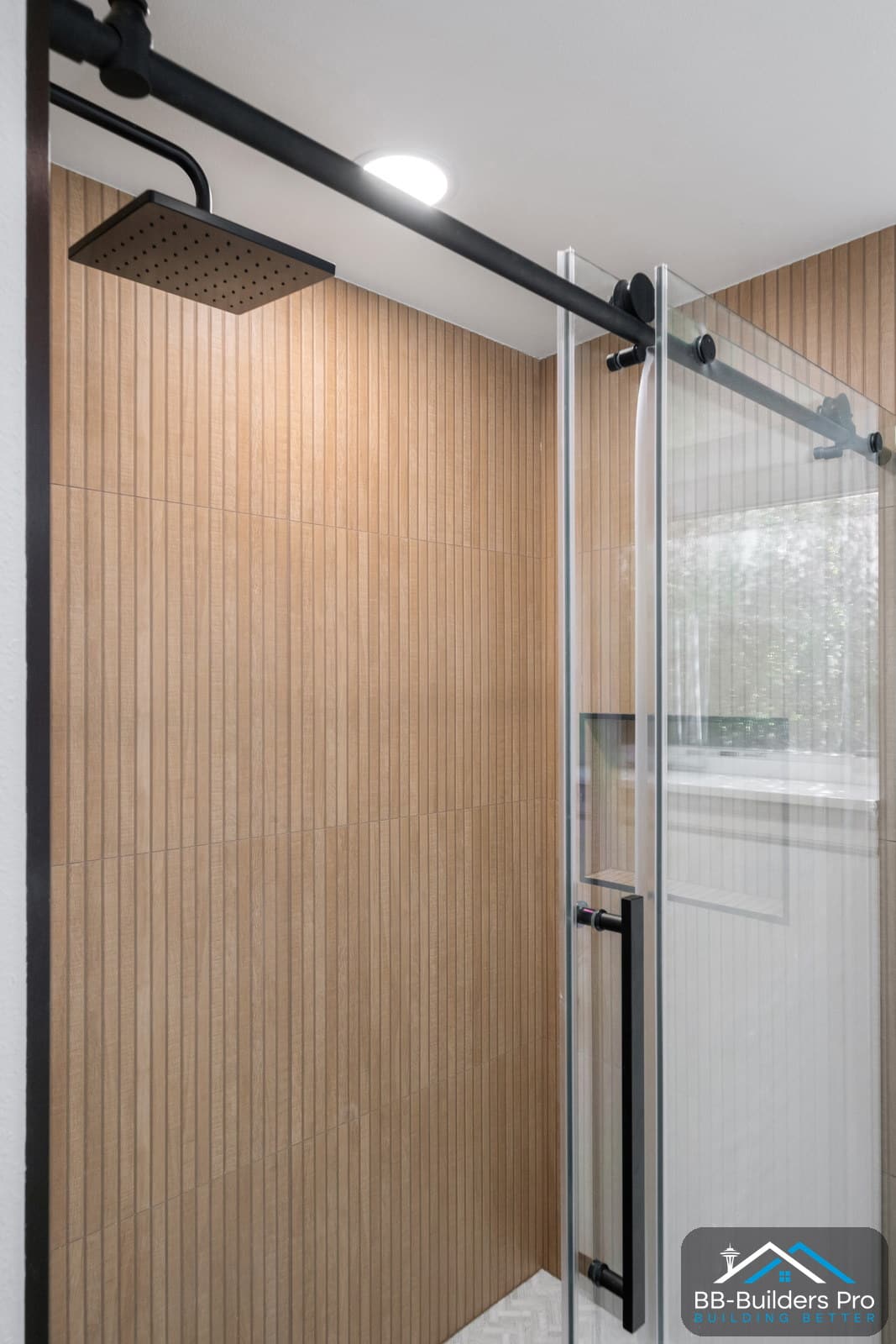
Washington follows the Uniform Plumbing Code. Individual shower and tub-shower valves have to be balanced-pressure, thermostatic, or a combination of the two, with the maximum output set to 120°F.
In plain terms: if you have an old two-handle setup with separate hot and cold, you can’t replace it with another two-handle setup. It has to become a code-compliant anti-scald valve. That’s not a contractor upsell — it’s the code, and it’s why some “simple” valve swaps turn into a slightly bigger job.
It’s also a genuinely good change. Pressure-balancing is what stops the scalding blast when someone runs the dishwasher.
Access is what you’re really paying for
The valve is a $50 to $300 part. Thermostatic valves run $150 to $600. Everything above that number is getting to it and putting the wall back.
There are three ways in, cheapest first:
Through the trim plate. Sometimes the opening behind the escutcheon is big enough to work through. Best case, and it keeps the job at the low end.
Through an access panel. If there’s a closet or hallway on the other side of the shower wall, we open it from the back. Drywall patch and paint, no tile touched. If there’s no panel, adding one costs $75 to $200 and saves you real money the next time.
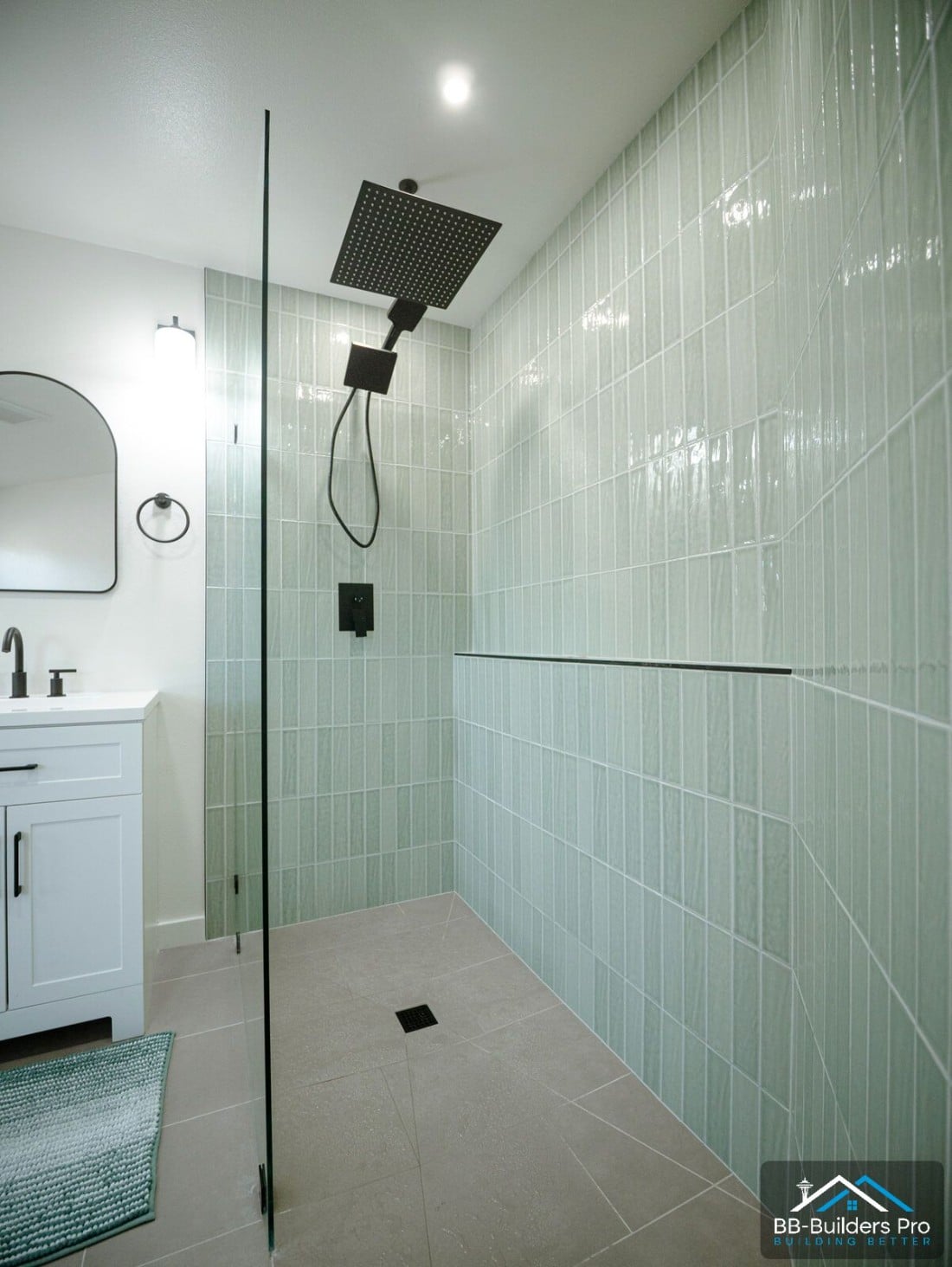
Through the tile. Worst case. We cut the tile, do the work, and then you need matching tile. Tile repair runs $7 to $25 per square foot, and matching a discontinued tile from 1998 is usually impossible — which is how a valve job turns into a conversation about redoing the whole bathroom.
If you’re already planning bathroom work, this is the moment to deal with the valve. The wall is open, the tile is coming off anyway, and the valve costs a fraction of what it would as a standalone call. Same logic applies to a shower pan replacement or a tub-to-shower conversion.
The Seattle surprise — what’s behind the wall
Here’s the one that catches people out, and it’s specific to our housing stock.
A lot of Seattle homes — Ballard, Wallingford, West Seattle, Beacon Hill, plenty of Renton ramblers — were plumbed with galvanized steel supply lines. Zinc coating, steel underneath. Over 60 or 70 years the zinc wears off and the steel rusts from the inside out.
We open the wall for a routine valve replacement and find galvanized nipples so corroded they’ll crumble if you put a wrench on them. You can’t thread a modern valve onto that. So the job grows: cut back to sound pipe, transition to copper or PEX, then install the valve. Add $250 to $800.
Sometimes it’s bigger than that. If the galvanized is failing at the valve, it’s usually failing everywhere, and you’re looking at a partial or whole-house repipe — $6,000 to $10,000 for a typical three-bath Seattle house. Nobody wants to hear that on a valve call, but it’s better to know than to patch one spot and do it again in eight months.
One piece of good news: Seattle’s water is soft. The Cedar and Tolt supplies run around 1.3 to 1.8 grains per gallon, among the softest municipal water in the country. Our valves and cartridges don’t scale up the way they do in hard-water cities. When they fail here, it’s age and grit, not mineral buildup.
Do you need a permit? In Seattle, probably — and not from who you’d think
This trips up homeowners and out-of-area contractors alike.
Plumbing permits inside the City of Seattle are issued by Public Health – Seattle & King County, not SDCI. PHSKC has jurisdiction in Seattle, Clyde Hill, and unincorporated King County. Everywhere else in King County, you go to that city’s own building department.
- Seattle → Public Health – Seattle & King County
- Bellevue → City of Bellevue building department
- Renton → City of Renton building department
King County’s rule is that a permit is required whenever you install, relocate, or change a plumbing system. A like-for-like cartridge swap is a repair and generally doesn’t trigger one. Replacing the valve body, moving it, or changing the piping does. The 2026 fee is $137 base plus $27 per fixture.
Worth noting: King County started requiring permits for replacement water heaters as of July 1, 2026. The direction of travel is toward more permitting on fixture work, not less. Any licensed contractor should be pulling the permit and scheduling the inspection as part of the job — if someone tells you it’s not needed on a valve body replacement, ask why in writing.
What drives the price up
- Thermostatic instead of pressure-balancing. Two handles, independent temperature and volume, better experience. Adds $150 to $350.
- Brand. Kohler, Grohe, Rohl and similar high-end assemblies can run $500 or more for the valve alone. Moen and Delta are the workhorses and cost less.
- Matching the trim. Trim kits are brand-specific and usually not cross-compatible. If you replace a Moen valve you’re buying Moen trim.
- Two shower heads or body sprays. More outlets means a diverter or transfer valve and more plumbing behind the wall.
- Second-floor bathrooms. If there’s finished ceiling below, we’re more careful, and careful costs more.
- Tile you can’t match. The single biggest cost jump on this job.
How to keep the cost down
Find out what you have first. Look at the handle or trim plate for a brand — Moen is an “M,” Kohler a “K,” most others print the name. If we know the brand before we arrive, we show up with the right cartridge and it’s often a one-visit fix.
Ask about the cartridge before the valve. A good plumber will try the cheap fix first. If yours leads with a full valve replacement without looking at the cartridge, get a second opinion.
Check the warranty. Moen, Delta and Kohler warranty many cartridges for life. The part can be free — you’re paying labor only.
Put in an access panel while the wall is open. $75 to $200 now, and the next valve job is a $300 call instead of a $1,400 one.
Bundle it. If a bathroom remodel in Seattle is on your list in the next year or two, wait and do the valve as part of it. You’ll pay for the valve, not for the demolition and tile. The same goes for bigger upgrades like a new bathtub or a steam shower.
Why homeowners call us for this
We’re a remodeling contractor, not a plumbing service, so we’re honest about which jobs suit us. If your cartridge is dripping and the valve is fine, call a plumber — it’s a quick service visit and you’ll pay less.
Where we’re the right call is when the valve is part of something larger: the tile has to come off, the pan is failing, the layout is changing, or you open the wall and find galvanized. That’s remodeling work, and it’s what we do across Seattle, Bellevue, Renton and the rest of King and Snohomish County. We handle the permit, the licensed plumbing sub, the tile and the finish work as one job with one number.
We’d rather tell you it’s a plumber’s job than sell you a remodel you don’t need.
Frequently asked questions
How much does it cost to replace a shower valve in Seattle?
Expect $300 to $750 with good access and a standard pressure-balancing valve, and $900 to $2,200 if the valve is behind tile with no access panel. A cartridge-only replacement runs $150 to $400. These are 2026 Seattle estimates — the valve itself is a small part of the number.
Can I just replace the shower cartridge instead of the whole valve?
Often, yes. If the valve body is sound and the brand still makes the part, a cartridge swap fixes dripping, temperature drift and a stiff handle for $150 to $400 with no wall work. You need the full valve when the body is corroded, the cartridge is discontinued, or you have an old two-handle valve that has to come up to code.
Do I need a permit to replace a shower valve in Seattle?
Usually yes for a valve body replacement. Permits inside Seattle come from Public Health – Seattle & King County, not SDCI — Bellevue and Renton issue their own. The 2026 King County fee is $137 base plus $27 per fixture. A straight cartridge swap is a repair and generally doesn’t need one.
How long does a shower valve replacement take?
A cartridge takes 30 minutes to 2 hours. A full valve takes 1.5 to 3 hours with good access. Add a day or more if tile has to come off and be replaced, plus drying and curing time for the patch.
Why does my shower go cold when someone flushes the toilet?
That’s a pressure-balancing valve doing its job badly, or an old mixing valve with no balancing at all. It’s one of the clearest signs the valve needs attention — and Washington code now requires a balanced-pressure or thermostatic valve on any replacement.
What if you find galvanized pipe behind my shower wall?
We stop and show you before we do anything. Corroded galvanized at the valve usually adds $250 to $800 to transition to copper or PEX. If it’s failing throughout the house, a repipe runs roughly $6,000 to $10,000 for a typical three-bath Seattle home. You get the number before we proceed, not after.
Is a thermostatic valve worth the extra money?
If you have young kids or elderly parents, yes — it holds temperature precisely and won’t let the water climb. For a standard family bathroom, a quality pressure-balancing valve is plenty and saves you $150 to $350. It’s a comfort upgrade, not a safety requirement.
Thinking about a shower or bathroom project in Seattle?
If your valve is part of a bigger plan — new tile, a new pan, a layout change, or a full bathroom — we’ll walk the space, tell you honestly what needs doing, and give you one number that covers all of it.
Call 206-851-4233 or request an estimate.
BB-Builders Pro — remodeling in Seattle, Bellevue, Renton and across King and Snohomish County.