If you’re tired of stepping over a bathtub you never use, you’re not alone. Swapping the tub for a walk-in shower is one of the most requested bathroom projects we see across Seattle and the Eastside. The first question is always the same: what does it cost? A straight swap is simpler than a full bathroom remodel in Seattle, but the plumbing and waterproofing still have to meet code.
Here’s the honest answer. In 2026, tub to shower conversion cost in the Seattle area typically runs $2,000 to $12,000, depending on whether you go with a prefab shower kit or custom tile. Most homeowners land somewhere in the middle. Below, we break down where the money goes, what surprises to watch for in older Seattle homes, and how permits work in King County.
All prices in this guide are estimates based on 2026 industry data and our experience on local projects. Every bathroom is different — the only real number is a written estimate for your home.
Tub to Shower Conversion Cost: The Quick Numbers
| Project type | Typical cost range (2026 estimates) |
|---|---|
| Prefab shower stall or kit, installed | $1,800 – $8,000 |
| Custom tiled walk-in shower | $3,500 – $15,000+ |
| Seattle-area average project | $3,300 – $4,500 |
| Permits (Seattle/King County) | $250 – $1,200 |
| Plumbing updates | $500 – $2,500 |
Labor makes up roughly 40–60% of the total. Seattle labor rates run above the national average, so if you’ve seen a $2,500 “average” online, plan for the local number to be higher.
What Drives the Price Up or Down
Three things move the needle more than anything else.
The shower you choose. A one-piece acrylic surround is the budget option. It installs fast and keeps water where it belongs. Custom tile costs more because you’re paying for waterproofing, tile setting, and glass — skilled work that takes days, not hours.
Plumbing changes. If the new shower drain stays where the tub drain was, you save money. Move the drain or the valve, and the plumber’s time adds up. There’s also a code detail most homeowners don’t know: showers need a 2-inch drain, and most older tubs have a 1.5-inch drain. Upgrading that line is a normal part of the job — but it has to be in the budget.
The condition behind your tub. This is the big one in our area, and it’s next.
The Hidden Costs Nobody Budgets For
Industry surveys show about 70% of tub-to-shower projects run into at least one surprise: structural repairs (38%), water damage (32%), or unplanned plumbing upgrades (29%).
In Seattle, we see this constantly. A lot of the housing stock in Ballard, Wallingford, West Seattle, and the older parts of Renton and Bellevue was built between the 1940s and 1970s. Tubs in these homes have been collecting slow leaks for decades. When the tub comes out, it’s common to find soft subfloor, rotted framing, or old galvanized plumbing that should have been replaced years ago.
You can’t always predict it, but you can plan for it. We recommend holding back 10–15% of your budget as a contingency. If the walls open up clean, you keep the money. If not, you’re covered and the project keeps moving.
Prefab Shower vs. Custom Tile Walk-In
Go prefab if: you want the most durable, low-maintenance option for the money, the bathroom is a rental or a kids’ bath, or the budget is firm. Modern acrylic and composite surrounds look far better than they did ten years ago.
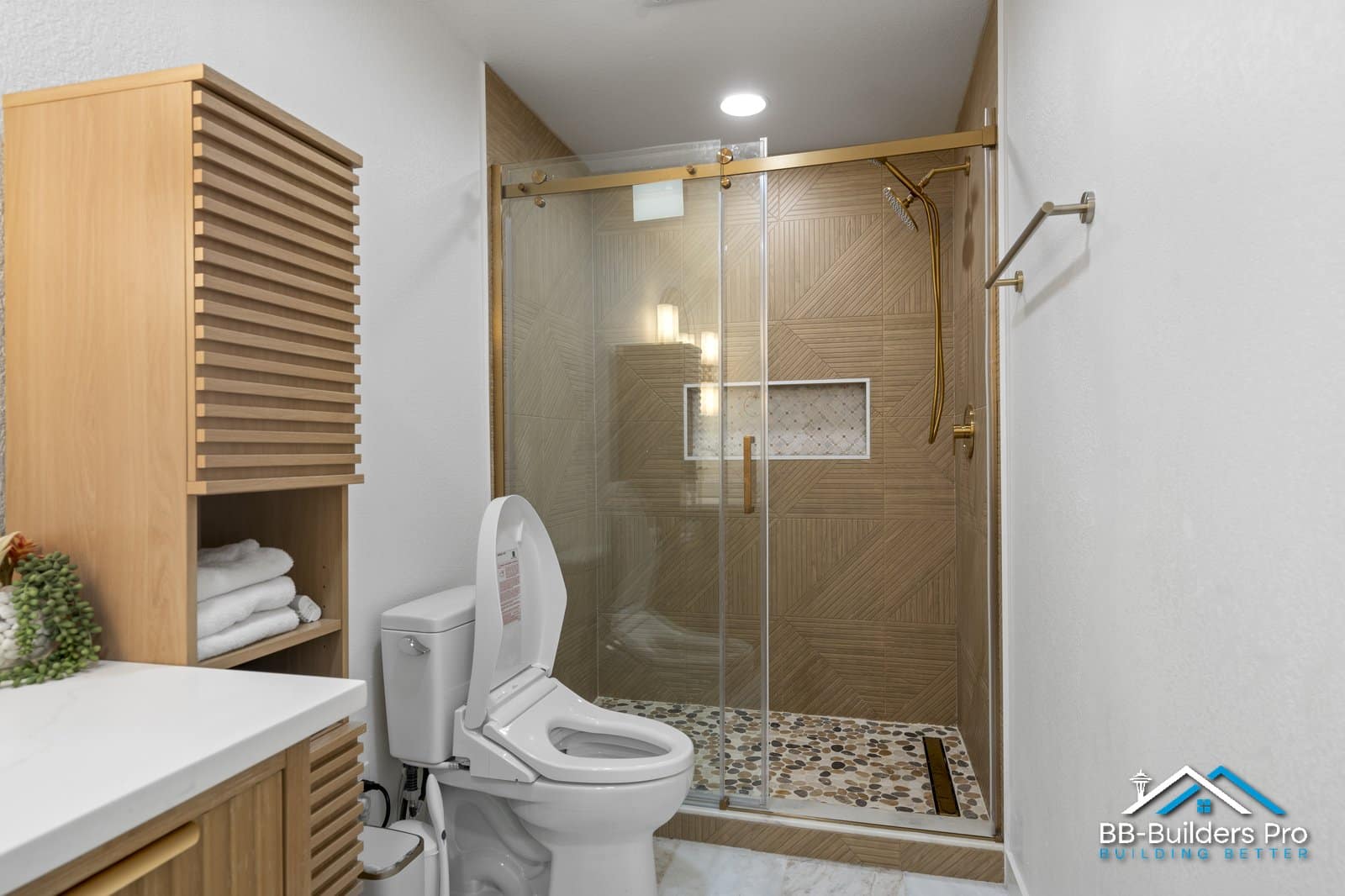
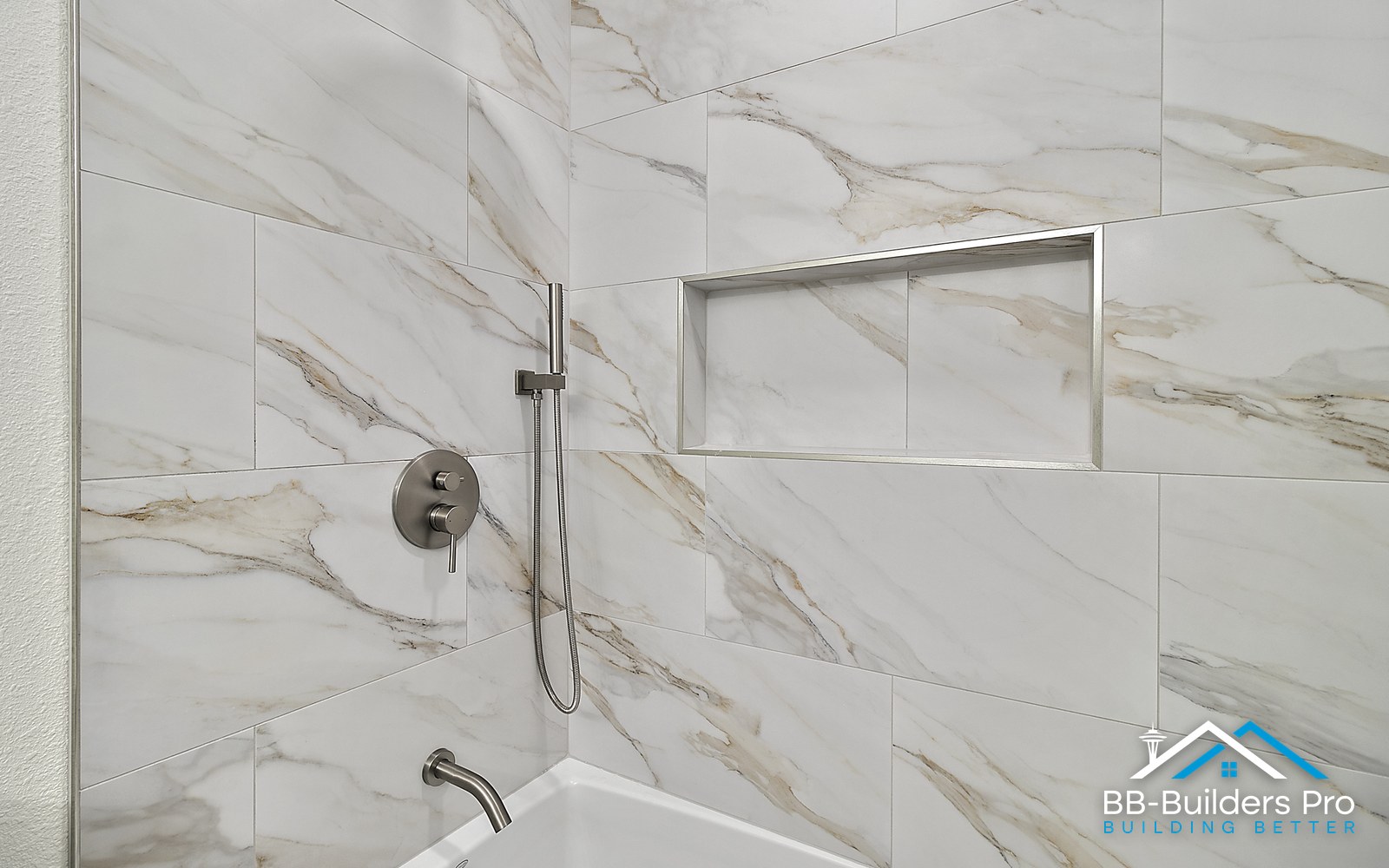
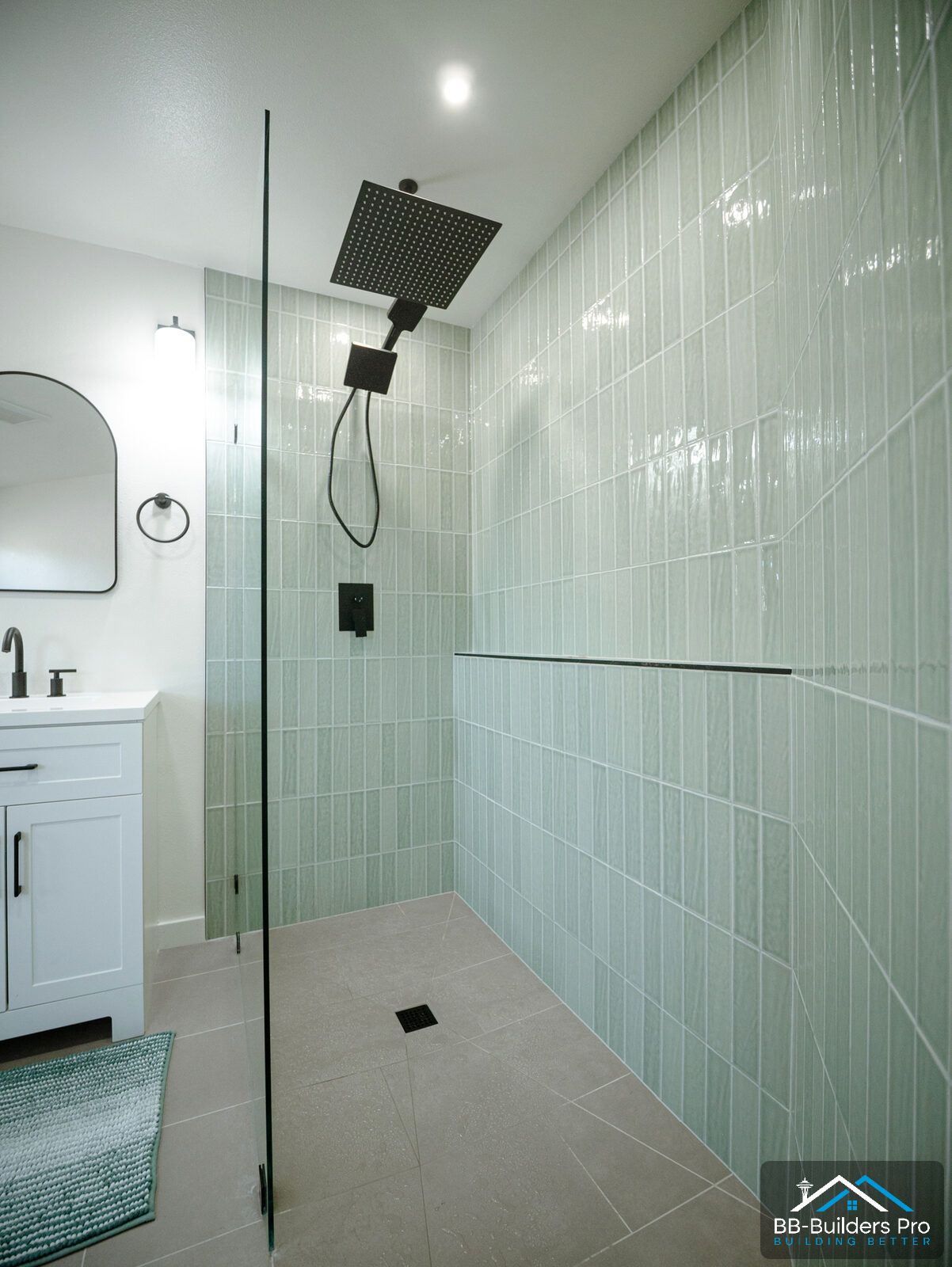
Go custom tile if: this is your main bathroom, you plan to stay in the house, or you want a true walk-in with a bench, niche, and frameless glass. The walk in shower cost is higher, but it’s the version that makes the whole bathroom feel finished — and it’s what buyers in Bellevue, Kirkland, and Mercer Island expect at resale.
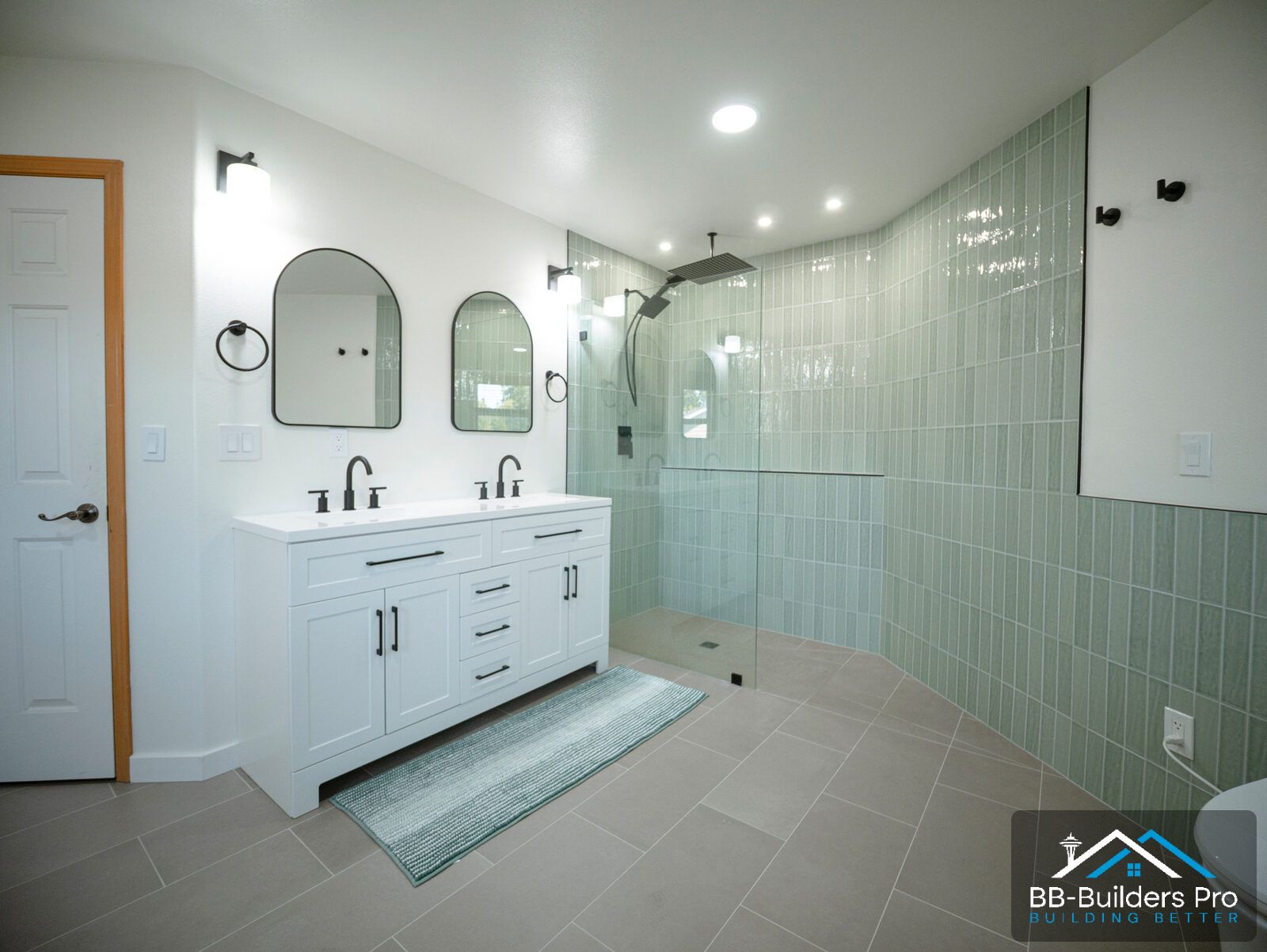
Either way, the cost to replace a bathtub with a walk in shower is mostly in the labor and waterproofing, not the fixtures. Cheap waterproofing is how you end up doing the project twice. If you’re weighing a bigger project than just the shower, see our guide on how much a full bathroom remodel costs.
Permits in Seattle and King County
A liner dropped over an existing tub usually doesn’t need a permit. A real bathtub to shower conversion usually does, because you’re changing the plumbing.
Inside Seattle city limits, that means a plumbing permit through Public Health – Seattle & King County, and possibly a building permit through SDCI if walls or framing change. In Bellevue, Renton, Kirkland, and other King County cities, each city handles its own permits, but the plumbing rules are similar. Budget roughly $250 to $1,200 for permit costs depending on scope.
A licensed contractor handles this paperwork for you. If a bid seems cheap because “we don’t bother with permits,” walk away — unpermitted plumbing work can bite you at inspection time when you sell.
Will Removing the Tub Hurt Resale?
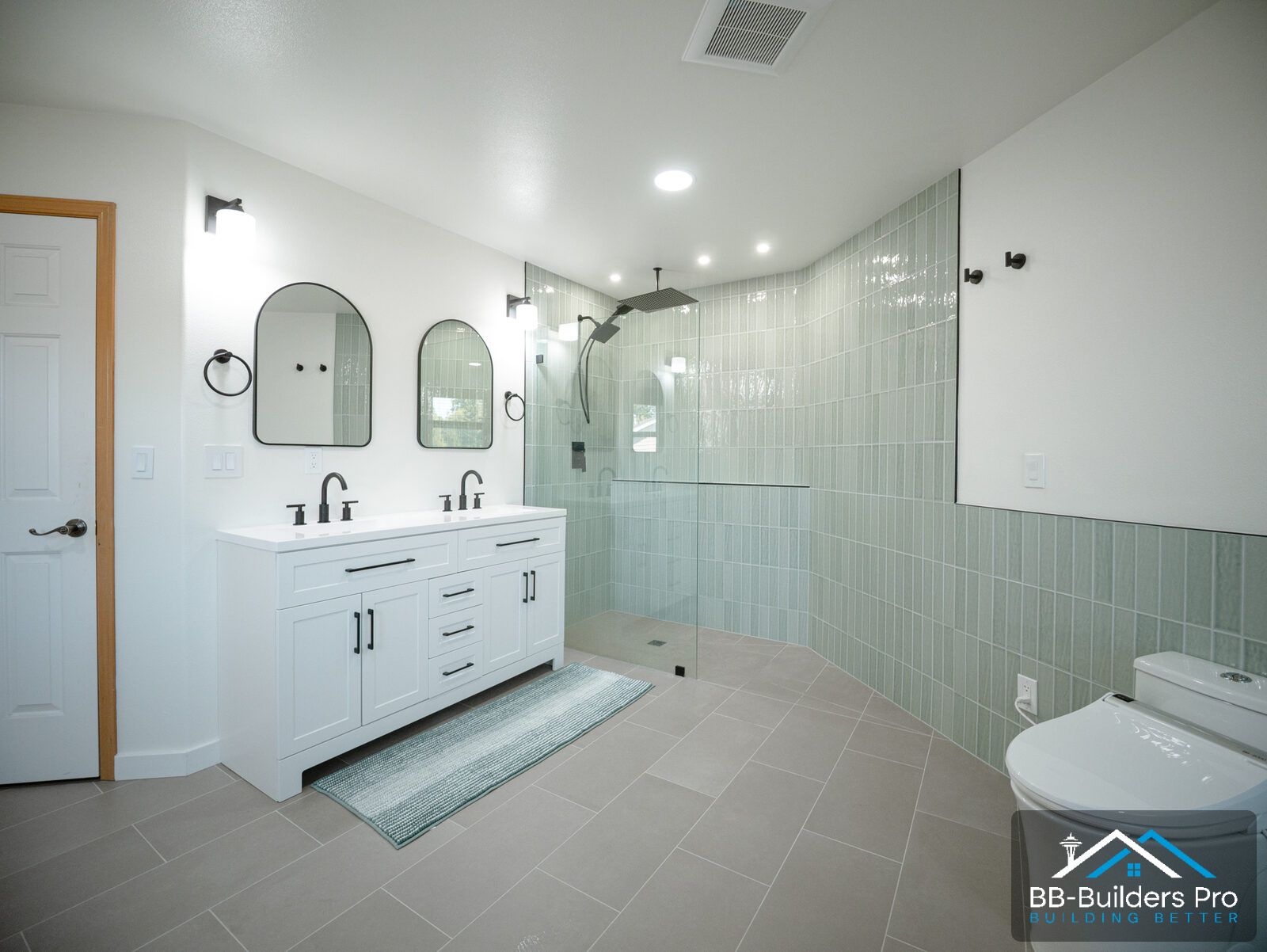
The rule realtors repeat: keep at least one bathtub in the house. If your home has a second bathroom with a tub, converting the main one to a walk-in shower is a safe move — surveys put the return on a tub-to-shower conversion at around 60%, and walk-in showers are a selling point for buyers thinking about aging in place.
If it’s the only tub in the house, think harder. Families with young kids still want a tub, and in family neighborhoods that can shrink your buyer pool.
How to Keep the Budget Under Control
Keep the drain where it is. Pick the shower system before demo day, not after. Hold a 10–15% contingency for what’s behind the wall. And get the scope in writing — a real estimate should list the shower system, waterproofing method, plumbing work, and permits as separate line items, so you can see exactly what you’re paying for.
Thinking About Converting Your Tub?
BB-Builders Pro handles tub to shower conversions and full bathroom remodels across Seattle, Bellevue, Kirkland, Renton, and the rest of King County. We’re licensed and insured in Washington, we pull the permits, and we give you a written, line-item estimate before any work starts.
Call 206-851-4233 or request a free estimate through our contact form. We’ll take a look at your bathroom, flag anything that could turn into a surprise cost, and give you a real number — not an internet average.
Tub to Shower Conversion FAQ
Do I need a permit for a tub to shower conversion in Seattle?
Usually yes. Changing a tub to a shower involves plumbing work, which requires a plumbing permit in Seattle and most King County cities. Simple liner-over-tub installs may not need one. Your contractor should pull the permit — if they won’t, that’s a red flag.
How long does a tub to shower conversion take?
A prefab conversion typically takes 2–4 working days. A custom tiled walk-in shower usually takes 1–2 weeks, mostly because waterproofing and tile need time to set properly. Add time if hidden damage shows up during demo.
Will removing my bathtub lower my home’s value?
Not if you keep at least one tub in the house. Converting a second or main bath to a walk-in shower typically returns around 60% of the cost and appeals to buyers planning to age in place. Removing the only tub can narrow your buyer pool in family neighborhoods.
What’s the cheapest way to convert a tub to a shower?
Keep the plumbing where it is and use a quality prefab shower kit — that combination typically lands at the low end of the range, around $1,800 to $4,000 installed in the Seattle area. Skipping waterproofing or permits saves money now and costs far more later.
Is a walk-in shower better for aging in place?
Yes. A low- or zero-threshold walk-in shower removes the biggest fall risk in the bathroom — climbing over a tub wall. Add a bench, grab bars, and a handheld shower head and the bathroom works for every age. Many of our Eastside clients convert for exactly this reason.