A backsplash is one of the smallest line items in a kitchen and one of the biggest visual changes you can make. It’s also the job homeowners most often underestimate — not because the tile is expensive, but because of what’s behind it.
Backsplash installation cost in Seattle usually lands between $700 and $2,200 for a standard kitchen, with most homeowners paying somewhere near $1,200. That’s an estimate, and the spread is wide for good reason. Here’s how the number actually gets built, using 2026 pricing and what we see on job sites around King County.
Backsplash cost in Seattle at a glance
All figures below are estimates for installed work — material plus labor — on a typical 30 to 40 square foot kitchen backsplash.
| Backsplash type | Cost per sq ft installed | Typical Seattle total (30–40 sq ft) |
|---|---|---|
| Ceramic or porcelain subway tile | $15 – $28 | $500 – $1,100 |
| Standard mosaic sheets | $18 – $32 | $600 – $1,300 |
| Glass tile | $22 – $45 | $750 – $1,800 |
| Natural stone (marble, travertine, slate) | $25 – $45 | $850 – $1,800 |
| Handmade or zellige tile | $30 – $55 | $1,000 – $2,200 |
| Quartz or granite slab (matching counters) | $70 – $200 | $2,500 – $6,000+ |
| Peel-and-stick (DIY, material only) | $4 – $30 | $120 – $900 |
Nationally, HomeGuide puts backsplash installation at $10 to $50 per square foot and $500 to $1,700 on average. Angi’s 2026 numbers are similar — around $1,000 for a 35 square foot backsplash. Seattle runs toward the top of those ranges, and the next section explains why.
Why Seattle costs more than the national average
Two reasons, and neither is a surprise if you’ve hired anyone here recently.
Labor. Tile labor in Seattle runs roughly $9 to $18 per square foot, with about $13 being typical. That’s before material. A good tile setter here is booked out, and the ones worth hiring price accordingly. Most also carry a minimum charge for small jobs, because a 25 square foot backsplash still costs them a full day of setup and cutting plus a return trip to grout.
Old walls. A lot of our housing stock — Ballard, Wallingford, Wedgwood, West Seattle, Beacon Hill — was built between the 1920s and the 1950s with plaster over wood lath. Those walls are rarely flat. Tile is unforgiving about that. If the wall has a bow in it, we either float it flat or skim-coat it before a single tile goes up, and that is added labor. On a newer build in Sammamish or Issaquah the drywall is usually flat and that step disappears.
What drives your price up or down
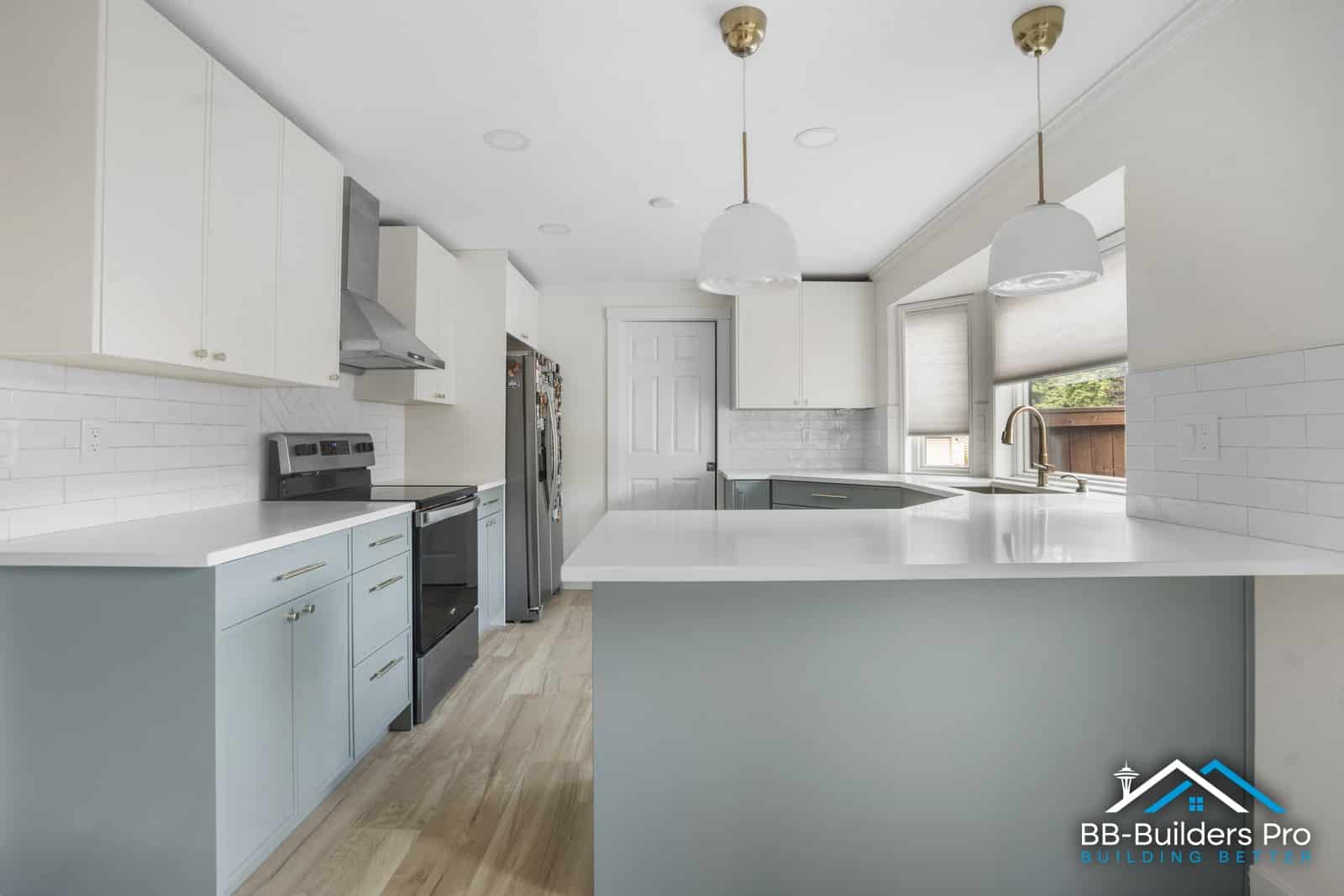
How much wall you’re covering. A single 4-inch strip above the counter is a fraction of the cost of running tile from counter to ceiling behind the range. Full-height is the current look, and it roughly doubles the square footage on the range wall.
Tile size and pattern. Big, simple tiles go fast. Small mosaics, herringbone, and anything set on a 45-degree angle mean more cuts, more layout time, and more labor. The same tile in a herringbone pattern can add 20 to 30 percent to the setting cost.
Tearing out the old one. Removal and disposal runs about $2 to $5 per square foot, and it’s higher on plaster walls where the old thinset takes chunks of wall with it. Budget for drywall patching and primer after any tear-out.
Outlets and switches. Every outlet in the backsplash field is a set of four precise cuts. A run with six outlets takes noticeably longer than one with two.
Edges and terminations. Where the tile stops matters. A metal edge trim, a bullnose tile, or a mitered corner all cost differently, and this is the detail that separates a clean job from an obvious one.
Timing. If you’re already replacing counters, do the backsplash at the same time. The wall is exposed, the old strip is coming off anyway, and you’re paying one mobilization instead of two. We go deeper on that in our guide to countertop replacement cost in Seattle.
Tile vs. slab backsplash
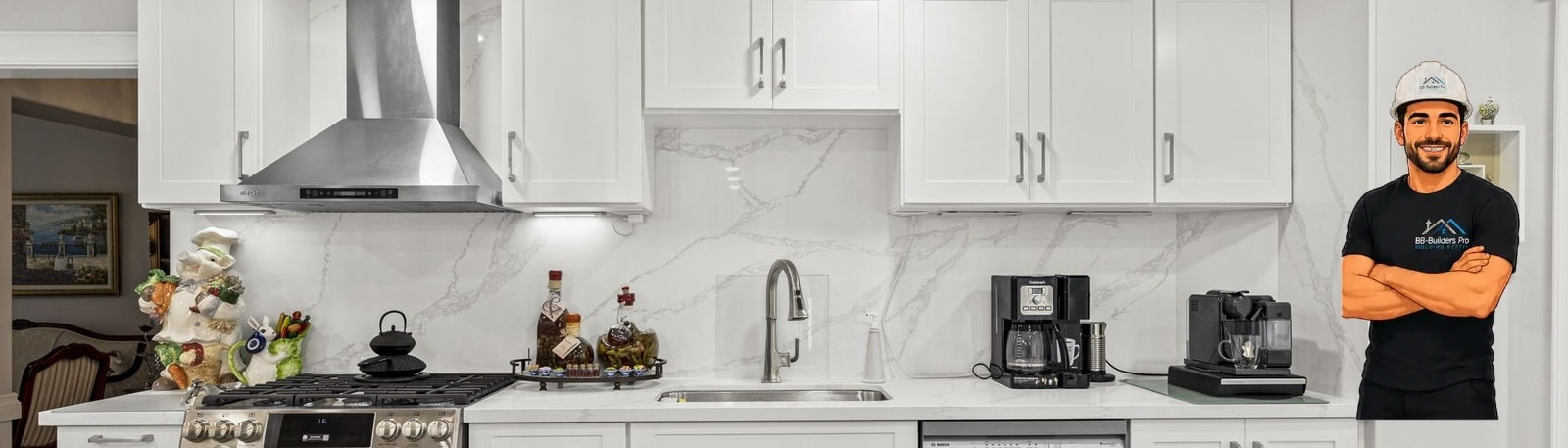
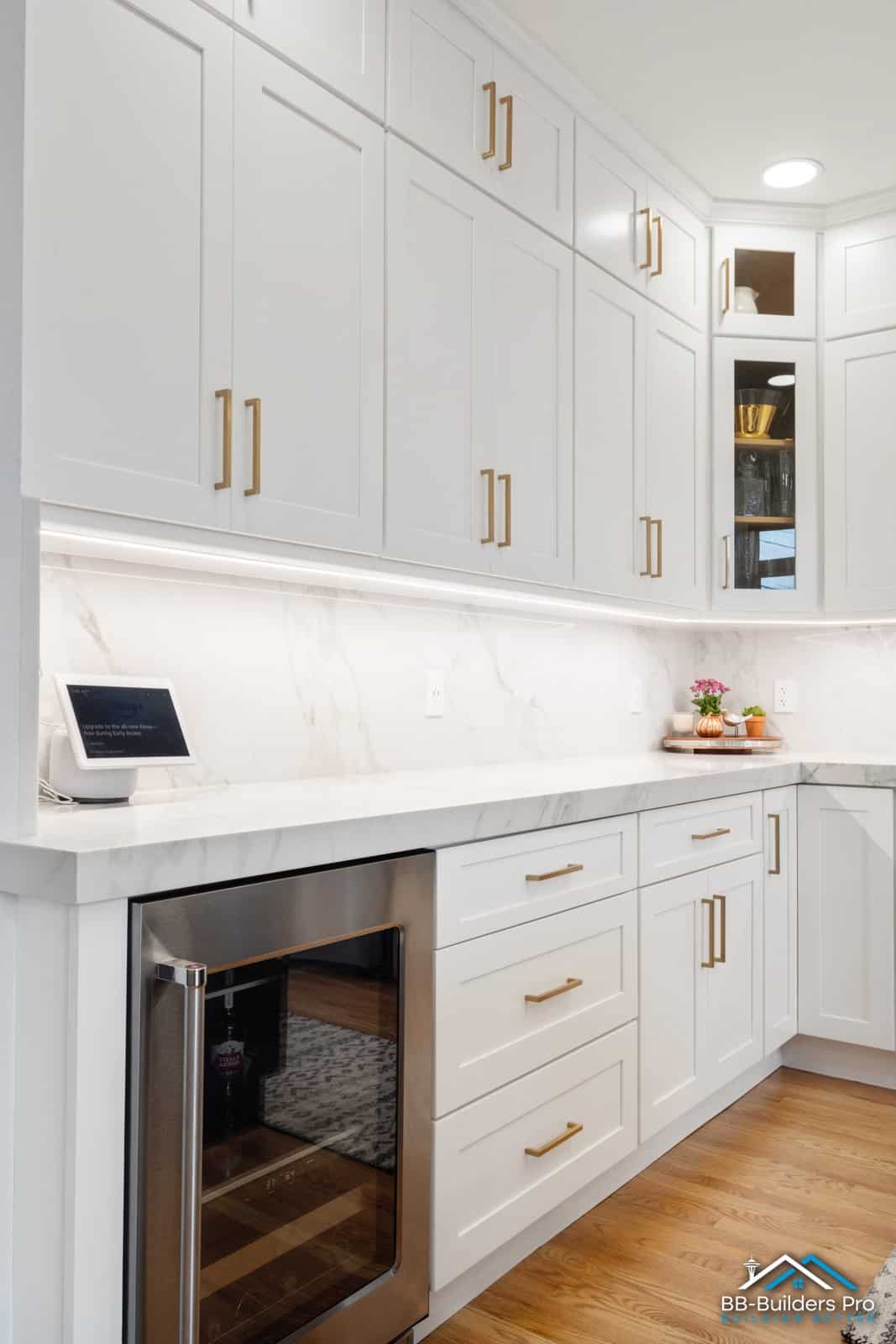
A slab backsplash — the same quartz or granite as your counters, run up the wall in one piece — is the biggest fork in the pricing road.
Slab costs $35 to $200 per square foot installed depending on the material. Quartz sits at the top of that range, granite and marble lower. It’s a real jump over tile, and you’re paying for the fabrication and for getting a heavy piece of stone up a wall without cracking it.
What you get: no grout lines. Nothing to seal, nothing to scrub, and a continuous surface from counter to cabinet. For a client who cooks a lot and hates cleaning grout, that’s worth the money. For most kitchens, well-installed tile does the job for a third of the price.
A middle option we install often: a full-height slab behind the range only, with tile on the rest of the run. You get the impact where people look and the budget stays sane.
Do you need a permit for a backsplash in Seattle?
For the tile itself, no. Installing or replacing a backsplash is cosmetic work and doesn’t require a building permit from SDCI.
The permit question shows up the moment you touch the electrical. Seattle requires an electrical permit any time wiring is installed, altered, extended, or connected — so adding an outlet, moving an outlet, or running a new circuit for under-cabinet lighting needs a permit and a Washington-licensed electrician. Simply re-setting an existing outlet forward so it sits flush with new tile is normal trim-out work and doesn’t trigger one.
Worth knowing: an electrician runs roughly $50 to $130 per hour, and outlet changes are best done before the tile, not after. If your project is bigger than a backsplash, our kitchen remodel permit guide for King County walks through what does and doesn’t need a permit.
One thing that makes a kitchen backsplash cheaper than bathroom tile
A kitchen backsplash is considered a dry area. It doesn’t need waterproof membrane or cement backer board — tile goes straight onto sound, flat drywall. That’s a genuine cost difference from a shower, where the waterproofing is half the job.
The exception is behind a sink that gets soaked daily, or on an exterior wall in an older home where we’ve found moisture. In those cases we’ll flag it and price the prep separately rather than tile over a problem.
How long does it take?
Plan on two to four days, though the tile setter isn’t there the whole time.
- Day 1 — tear-out, wall prep, layout
- Day 2 — setting tile (a standard backsplash is often 1 to 3 hours of actual setting)
- Wait — thinset cures 12 to 24 hours
- Day 3 — grout, then another 12 to 24 hours to cure
- Day 4 — seal if the material needs it, caulk the counter joint, final clean
You’ll have workers in and out for a couple of days. The kitchen stays usable.
How to keep the cost down without regretting it
- Splurge on the range wall, save on the rest. That’s the wall people photograph.
- Pick a standard-size tile in a straight or running-bond layout. The pattern is where labor money disappears.
- Order 15% extra tile. Cuts, breakage, and future repairs. Running short mid-job means a delay and possibly a different dye lot.
- Don’t tile over old tile to save on demo. It works on paper, but it pushes outlets out of the wall, kills your cabinet reveal, and adds weight to a plaster wall that may not want it. Take the old one off.
- Skip peel-and-stick if you’re staying in the house. It runs $4 to $30 per square foot in material and typically lasts 3 to 5 years next to a range. It’s a rental fix, not a remodel.
What we’d want to see before quoting you
A photo of the wall, a rough measurement, and a picture of the tile you’re considering. That’s usually enough to give you a real number instead of a range. If the counters are coming off too, tell us — the pricing changes in your favor.
We handle backsplashes as part of full kitchen remodeling in Seattle and as standalone jobs, and we’re happy to do either. If you’re weighing the backsplash against other kitchen updates, our breakdowns on kitchen remodel cost in Seattle and cabinet refacing vs. replacement are a good place to compare.
Ready for a real number? Call BB-Builders Pro at 206-851-4233 or request an estimate. We’re licensed and insured in Washington and we work throughout Seattle, Bellevue, Renton, and the surrounding King and Snohomish County areas.
Frequently asked questions
How much does a backsplash cost in Seattle?
Most Seattle kitchens land between $700 and $2,200 installed, with about $1,200 being typical for a standard tile backsplash of 30 to 40 square feet. Slab backsplashes run considerably higher — $2,500 and up. These are estimates; wall condition and tile choice move the number more than anything else.
Do I need a permit to install a backsplash?
Not for the tile. A backsplash is cosmetic work and doesn’t require a building permit in Seattle. You do need an electrical permit and a licensed Washington electrician if you’re adding, moving, or rewiring any outlets, or adding under-cabinet lighting.
Can you tile over an existing backsplash?
Technically yes, if the old tile is clean, flat, and firmly bonded. We usually advise against it. Tiling over pushes your outlets back into the wall, eats into the space under your cabinets, and adds weight — a real concern on the plaster-and-lath walls common in older Seattle homes. Removal costs $2 to $5 per square foot and is money well spent.
Is a quartz slab backsplash worth it over tile?
It depends on how much you hate cleaning grout. Slab costs roughly three times what tile does but gives you a sealed surface with no grout lines and nothing to maintain. A common compromise is a slab behind the range and tile everywhere else.
How long does a backsplash take to install?
Two to four days start to finish. The actual tile setting is often just a few hours — most of the timeline is thinset and grout curing, which take 12 to 24 hours each and can’t be rushed.