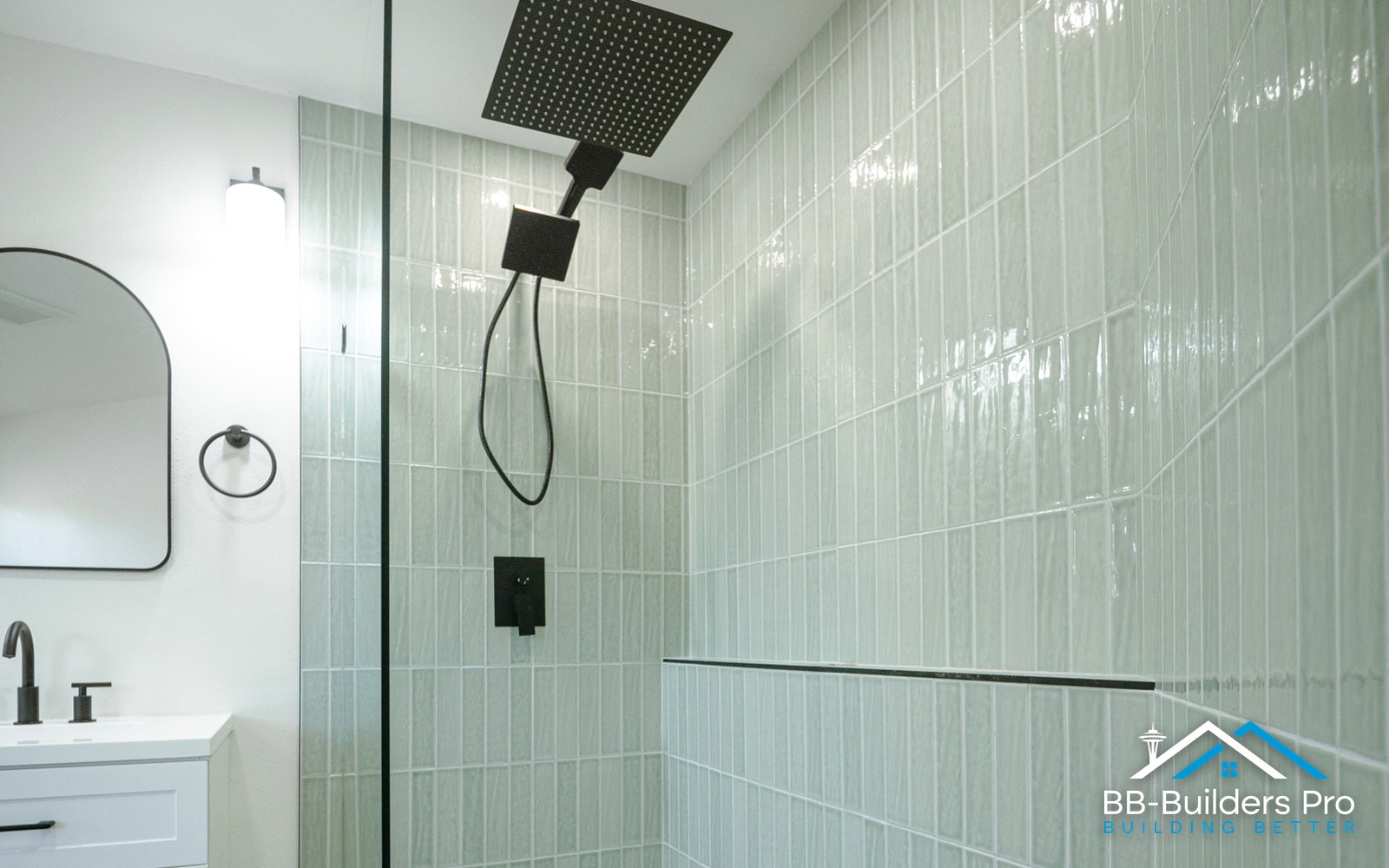
The best shower wall material depends on what you want to live with every day. Tile offers the most design flexibility, acrylic panels suit straightforward replacements, and solid surface is worth considering when you want fewer grout lines and a custom fit. The right choice also depends on your shower’s dimensions, the condition of the walls, and the amount of cleaning you want to do.
Before choosing a finish for your Seattle-area bathroom remodel, compare the complete installation. A panel price does not include every part of a finished shower, and a tile price does not tell you what preparation or waterproofing will cost.
This guide compares three common shower wall options so you can narrow your choices before requesting a quote.
Shower wall materials at a glance
| Decision | Tile | Acrylic panels | Solid surface |
|---|---|---|---|
| Best reason to choose it | Flexible colors, sizes, patterns, and layouts | A simpler wall finish for a compatible shower footprint | Broad, smooth surfaces with fewer joints to clean |
| Design flexibility | Extensive; useful for custom niches and unusual shapes | Depends on available panel sizes, patterns, and accessories | Custom fabrication is available with some systems |
| Routine cleaning | Clean tile, grout joints, and sealant joints | Use manufacturer-approved cleaners and non-abrasive cloths | Follow the specific material’s care instructions; inspect joints |
| Main installation cost drivers | Wall preparation, waterproofing, layout, cuts, and setting labor | Panel fit, backing, adhesive or fastening system, and trim | Material, fabrication, handling, cutouts, and installation |
| Repair considerations | Individual tiles may be replaceable; matching and waterproofing matter | Repair options depend on the finish and extent of damage | Some products can be refinished or repaired; confirm before buying |
| Main trade-off | More joints and installation detail | Less freedom outside the product’s size and accessory options | Higher material or fabrication costs can offset labor savings |
These are selection guidelines, not a universal price ranking. A complicated acrylic retrofit can cost more than expected, while a simple tile layout may be more economical than premium custom panels.
Tile shower walls: best for a highly personalized design
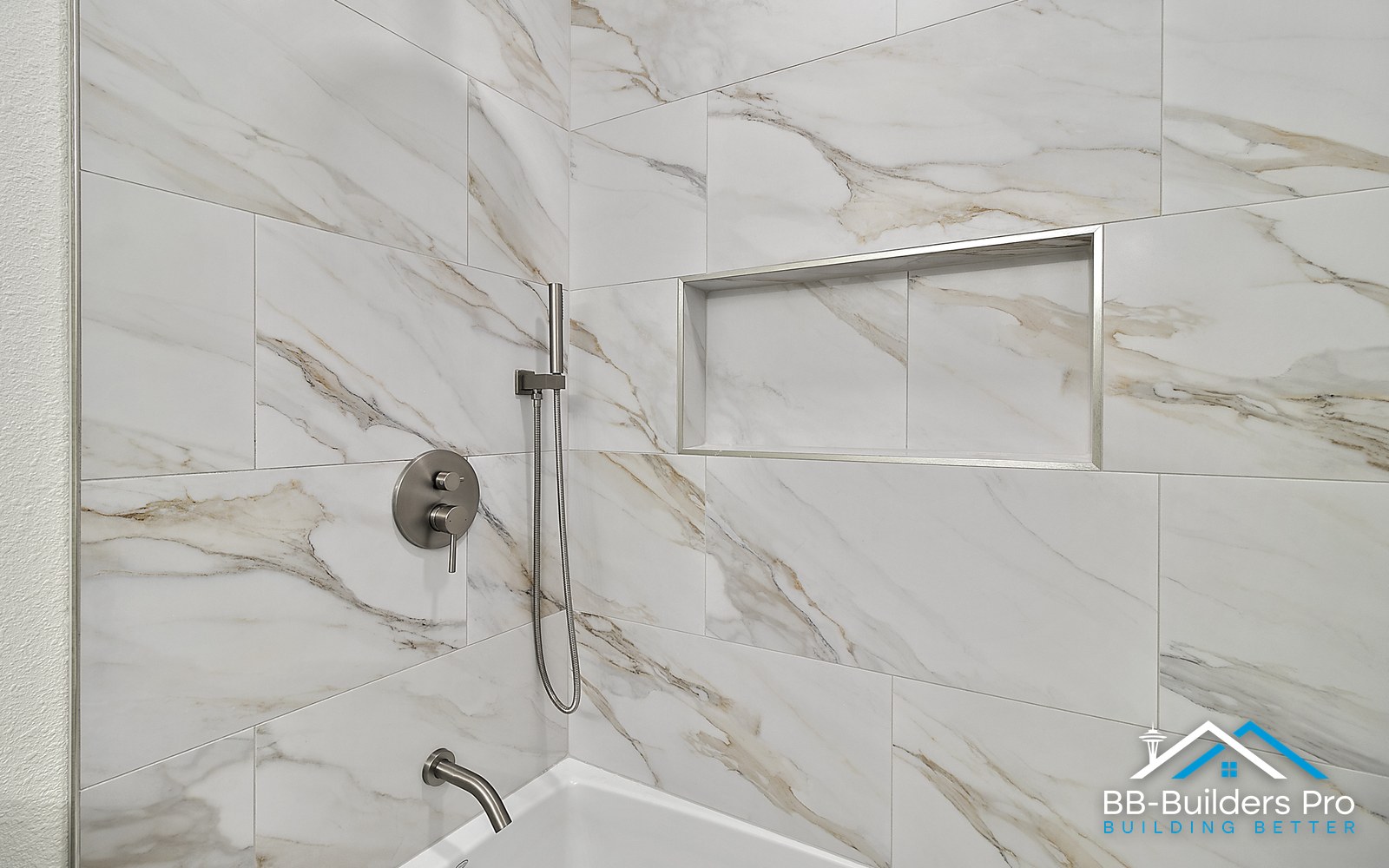
Tile gives you room to choose the proportions and character of the shower. You can use a quiet field tile with a contrasting niche, carry a pattern around a corner, or coordinate the shower with the rest of the bathroom. If your design depends on a particular texture, layout, or handmade appearance, tile is often the natural starting point.
Porcelain and ceramic are common choices, but they are not interchangeable with every natural stone or decorative tile. Confirm that the exact product is suitable for shower walls and check its cleaning and sealing requirements. Our guide to tile options for Seattle bathrooms explores the material choices in more detail.
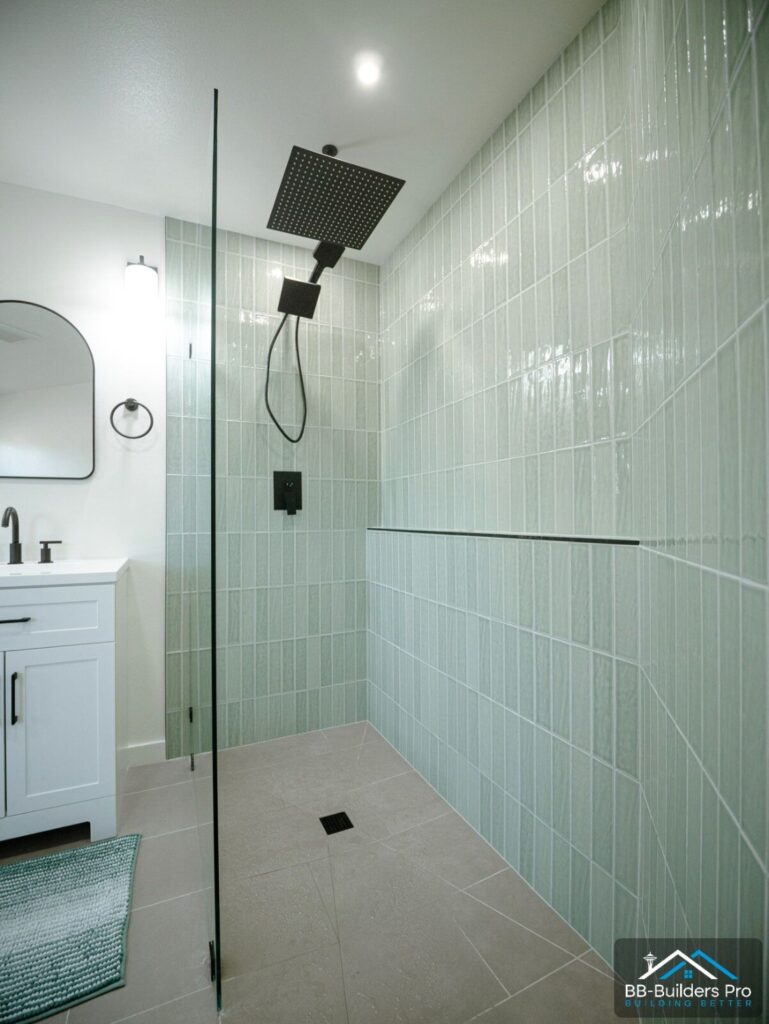
What to consider before choosing tile
Tile installation includes much more than attaching the visible finish. Walls need to be suitably prepared, and corners, niches, plumbing penetrations, and the shower-base connection need coordinated detailing. Smaller pieces, intricate patterns, and numerous niches can add setting and cutting work.
Tile and grout are not the shower’s waterproofing system. The Tile Council of North America explains that grout joints are not waterproof; the wet-area assembly must protect adjoining materials. Choosing a grout advertised as stain-resistant does not remove that requirement.
Large-format tile reduces the number of grout lines, but it does not eliminate installation complexity. Ask how wall flatness, handling, edge finishing, and cutouts affect the quote.
Choose tile if: a particular design matters to you and you are comfortable caring for the grout and sealant joints that come with it.
Acrylic shower walls: best for a straightforward panel replacement
Acrylic shower walls offer a smooth finish without a field of grout joints. Depending on the product, the panels may have molded shelves, a tile-like pattern, or a plain surface. A compatible panel system can make sense when you want to retain a practical existing footprint.
Product selection comes before demolition planning. Some systems install over an approved backing; others use a different attachment method. Panel dimensions, wall height, corner details, and the connection to the base need to work together. Do not assume that every surround fits every shower pan.
What to consider before choosing acrylic
The available sizes and accessories set the limits of the design. An unusual window, out-of-square walls, or a desired recessed niche may complicate what looked like a simple replacement. Ask whether the system supports the features you want without unapproved alterations.
Acrylic also needs appropriate cleaning. Delta’s acrylic care guidance recommends suitable cleaning supplies and non-abrasive cloths. A cleaner that works on another bathroom surface may scratch or dull the panel finish.
Ask about the repair procedure for the exact product. A small surface mark and a cracked panel are different problems, and replacement parts or matching finishes may not always be available later.
Choose acrylic if: you like the available finishes, your shower fits the system, and a practical, easy-to-wipe wall surface is the main goal.
Solid-surface shower walls: best for fewer joints and a tailored finish
Solid-surface panels are another way to create broad shower walls without tile grout. The term covers different proprietary materials, so ask for a product name and technical information rather than relying on the description “solid surface.” Composition, thickness, fabrication, installation, and repair options vary.
For example, Swan describes Swanstone as a blend of polymer resins, fillers, and reinforcement additives. Other brands use different formulations. A stone-look pattern does not necessarily mean the panel is natural stone.
What to consider before choosing solid surface
Solid surface can be appealing when you want a restrained finish with fewer joints to scrub. Some systems allow custom sizing and coordinated shelves or other components. Confirm how corners, seams, and the shower-base connection will be finished.
Do not interpret “grout-free” as “maintenance-free.” Soap residue and water marks can still need cleaning, and joints need attention. Follow the selected brand’s instructions; Swan’s care guidance, for instance, distinguishes between its product surfaces.
Some solid-surface products can be renewed or repaired, but that should be confirmed for your chosen color, finish, and type of damage. Ask who performs repairs and whether refinishing changes the appearance.
Choose solid surface if: you prefer a quieter panel appearance, want fewer joints, and are comfortable with the price of the specific material and fabrication.
Which shower wall material costs the least to install?
Acrylic is often worth pricing first for a standard-size replacement, but there is no reliable cheapest option without defining the scope. Tile labor can grow with the complexity of the layout. Solid-surface fabrication and material costs can outweigh savings from having fewer individual pieces to install.
For a useful comparison, ask each contractor to price the same shower dimensions and include:
- Demolition and disposal of the existing surround.
- Any allowances for damaged backing or framing discovered after removal.
- Wall preparation and the specified water-management assembly.
- Panels or tile, trim, shelves, niches, and required accessories.
- The connection to the shower base and treatment of plumbing penetrations.
- Plumbing changes, glass, permits where needed, and final finishing.
A quote for wall panels alone should not be compared with a complete custom shower. If you are also replacing a bathtub, our Seattle tub-to-shower conversion cost guide explains the broader project scope.
What matters in a Seattle-area bathroom?
Start with conditions inside the room: moisture from daily use, ventilation, wall condition, and how quickly surfaces dry. Outdoor weather alone does not determine the right shower wall material.
In an existing home, the wall assembly behind the old finish may need repair before any new material goes in. A window in the shower, an exterior wall, or an unusual footprint can also change the detailing. Have those conditions assessed before ordering a surround.
Whatever finish you select, pair it with appropriate ventilation and a realistic cleaning routine. Our low-maintenance bathroom finishes guide can help you coordinate the shower with the vanity, floor, and fixtures.
Questions to ask before ordering shower walls
- What exact product and installation system are included? Request the material, backing, joint treatment, and manufacturer instructions.
- How will the walls connect to the base? The transition needs to be compatible with the selected products.
- Are accessories included? Confirm shelves, niches, edge trim, and support for planned grab bars.
- What maintenance will I need to do? Ask about approved cleaners, grout care, and sealant inspection.
- What happens if a panel or tile is damaged? Discuss repairs, spare material, and warranty coverage.
Frequently asked questions
What shower walls are easiest to clean?
Smooth acrylic or solid-surface panels can reduce grout cleaning. The exact finish, number of joints, and cleaning products still matter. Tile remains an option if you prefer its appearance and accept the additional joint care.
Can shower panels go over existing tile?
Only when the panel manufacturer allows it and the existing surface meets its requirements. Loose tile, moisture damage, or an unsuitable backing should be addressed instead of covered. Ask the installer to explain why the existing assembly is suitable to retain.
Are solid-surface shower walls the same as acrylic?
Not necessarily. “Acrylic panels” and “solid surface” describe product categories that can use different constructions and ingredients. Compare the named products, their thickness, installation instructions, and repair options.
Do shower panels prevent mold?
No finish guarantees a mold-free shower. Reducing grout joints may simplify cleaning, but water-management details, ventilation, and maintenance still matter.
Plan a shower that fits your home and routine
Bring your preferred finishes, approximate shower dimensions, and biggest maintenance frustrations to your remodeling consultation. BB-Builders Pro can help you discuss the wall options and installation scope as part of your Seattle-area bathroom remodel. Request an estimate through our bathroom remodeling page to take the next step.