A steam shower is one of the few bathroom upgrades that people actually use every day once they have it. It’s also one of the most misquoted, because the generator is only about a third of the bill.
Steam shower installation cost in the Seattle area usually lands between $6,000 and $15,000 when you’re converting an existing tiled shower, and $12,000 to $25,000 or more when it’s part of a full bathroom remodel with new tile, glass and plumbing. A prefab acrylic unit is cheaper — $3,000 to $7,000 installed — but it’s a different product, and most of the people calling us don’t want one.
Here’s what’s actually in that number.
What a steam shower costs, line by line
These are 2026 estimates for King County work. Treat them as a planning budget, not a quote.
| Line item | Typical range (estimate) |
|---|---|
| Steam generator (6–12 kW, residential) | $1,200 – $4,500 |
| Digital control, steam head, optional aromatherapy/audio | $400 – $2,000 |
| Dedicated 240V circuit + GFCI breaker (electrician) | $600 – $1,800 |
| Water line to the generator + drain line (plumber) | $500 – $1,500 |
| Vapor-proof enclosure — waterproofing + tile, walls and ceiling | $2,500 – $8,000 |
| Sloped ceiling framing (if the shower doesn’t have one) | $400 – $1,200 |
| Steam-rated glass door with transom, full height | $1,500 – $4,000 |
| Bench, niche, sealed light fixture | $500 – $2,000 |
| Exhaust fan sized for the room | $250 – $600 |
| Permits (electrical + plumbing) | $200 – $600 |
| Convert an existing tiled shower | $6,000 – $15,000 |
| New steam shower inside a full bath remodel | $12,000 – $25,000+ |
| Prefab acrylic steam cabin, installed | $3,000 – $7,000 |
Same thing we say on every cost guide: in Washington, retail sales tax applies to the full remodeling contract, labor included. Inside Seattle city limits that’s 10.55% in 2026. Make sure the bid says whether it’s in or out.
Why a steam shower costs more than a regular shower
A normal shower gets water on the walls for ten minutes. A steam shower fills the whole enclosure with 110-degree vapor and holds it there. That vapor finds every gap.
So the enclosure has to be built differently:
- Waterproofing on every surface, ceiling included, with the vapor barrier on the warm side of the wall — between the tile and the framing.
- A ceiling that slopes at least ¾ inch per foot, so condensation runs to a wall instead of dripping on your head. Most existing showers have a flat ceiling. Adding the slope is a framing job.
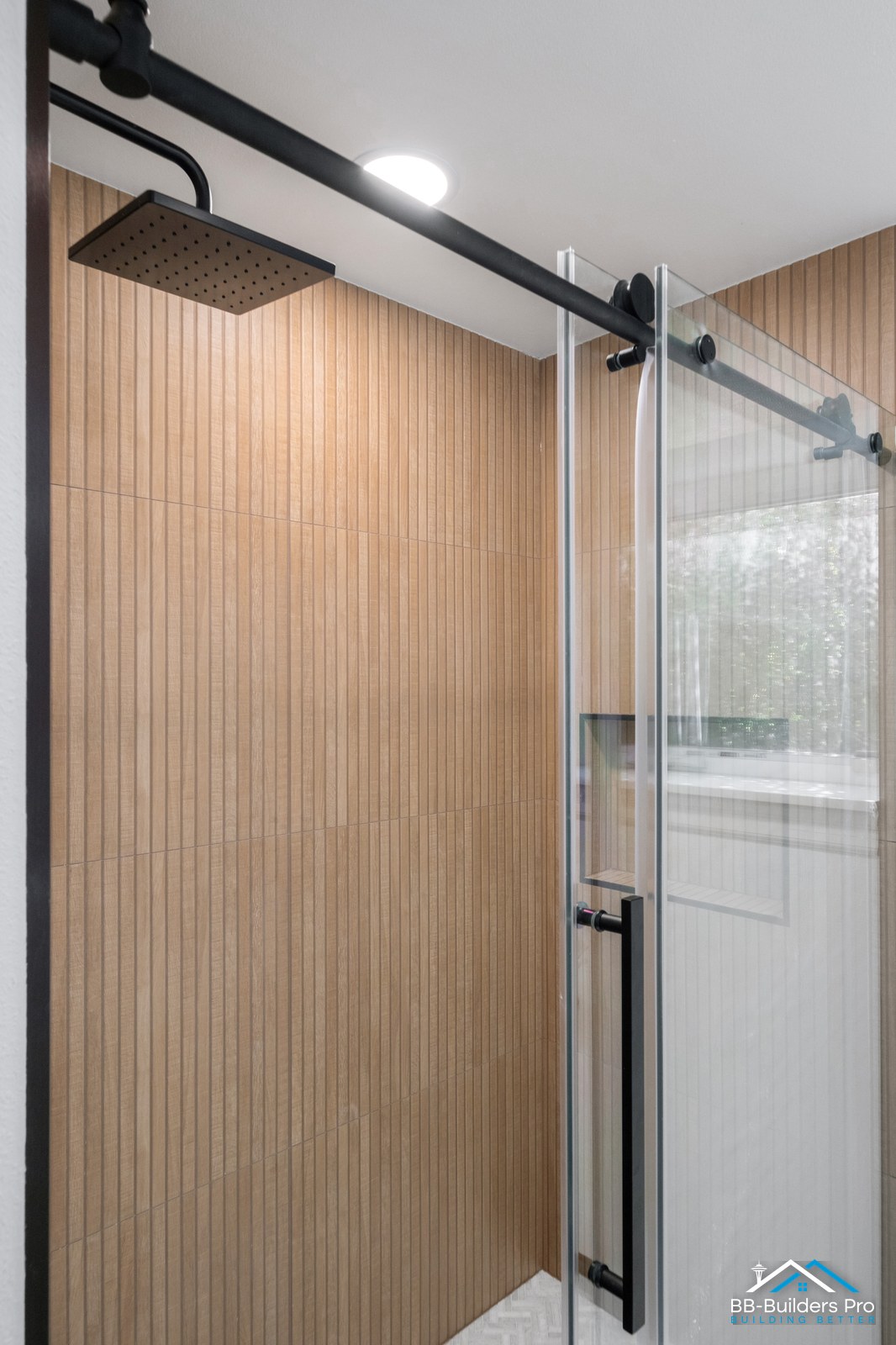
- A door that seals, with a transom above it, running full height. Standard frameless doors with a 4-inch gap at the top don’t hold steam.
- Tile or stone, not paint or drywall, all the way up. And every light fixture inside has to be a sealed, vapor-rated unit.
That’s where the money goes. The generator is a box in a closet. The enclosure is the job.
The generator: sizing it right
Generators are rated in kilowatts, and the size depends on the cubic footage of the enclosure — length × width × height — plus what it’s built out of. Tile and glass need about 35% more capacity than acrylic. Natural stone needs double, because it soaks up heat.
Ceiling height matters more than people expect. Seven to eight feet is the sweet spot. Past nine feet, steam pools at the top and your shoulders are in a cold spot. If you’ve got a 10-foot bathroom ceiling, we’ll usually drop the shower ceiling rather than buy a bigger generator.
A typical Seattle shower — say 4 × 5 feet with an 8-foot ceiling, tiled — works out to about 160 cubic feet, times 1.35 for tile, which points at a 7.5 or 9 kW unit. Undersize it and you wait fifteen minutes for steam. Oversize it and it short-cycles.
One local plus: Seattle’s water is very soft — around 1.3 to 1.8 grains per gallon from the Cedar and Tolt supplies, among the softest municipal water in the country. Steam generators hate hard water because scale builds up in the tank. Here, that’s a much smaller problem. If you’re on a well out toward Maple Valley or North Bend, plan on a unit with an auto-flush cycle or budget a small softener.
The electrical work
This is the part homeowners skip in the budget and electricians never do. A steam generator needs its own 240-volt circuit straight from the panel, on a GFCI breaker, with nothing else on it.
Rough sizing: a 6 kW unit pulls about 25 amps and needs a 30-amp breaker. A 9 kW unit needs 40 to 50 amps. Larger units go up from there. Because a generator counts as a continuous load, the breaker is sized above what it actually draws.
In a lot of older Seattle houses — Ballard, Wallingford, the 1950s ramblers in Renton — the panel is already full or only 100 amps. Adding a 50-amp circuit can push you into a panel upgrade, which is $2,500 to $5,000 on its own. We check the panel before we quote the shower.
Permits: Seattle, Bellevue and Renton each run their own electrical permit and inspection program (most of the rest of King County goes through Washington L&I). Inside Seattle, the plumbing permit goes through Public Health – Seattle & King County, not SDCI. We pull both.
Where the generator lives
The generator has to sit within about 18 to 25 feet of pipe run from the steam head, somewhere you can get to it for service. Under a vanity, in the linen closet, in the attic above the bathroom — all fine. A crawlspace works if it’s dry and accessible. Behind a finished wall with no access panel does not work, and we’ve opened up a few of those.
Convert or build new?
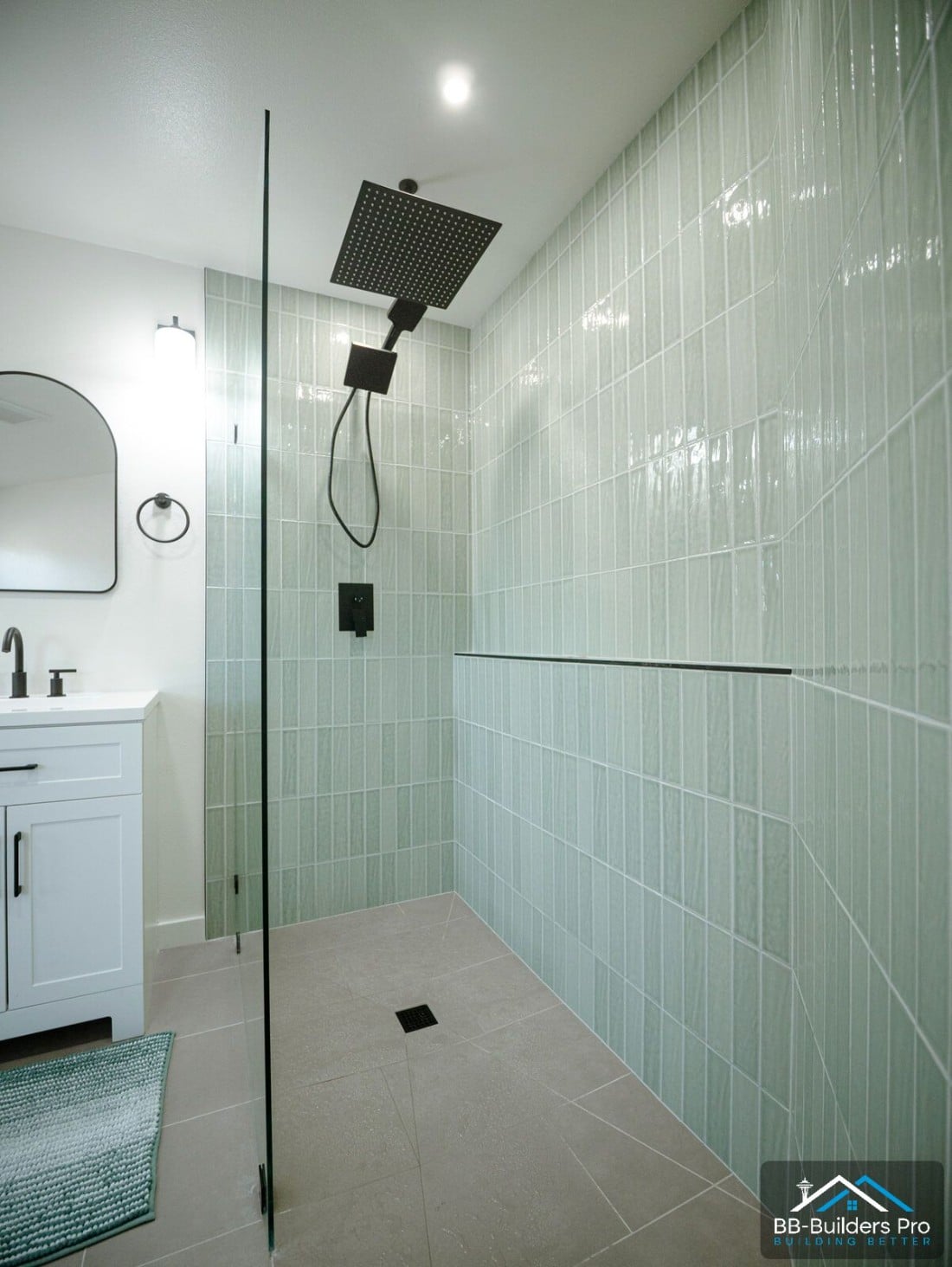
If your existing shower is already tiled, roughly 4 × 5 or larger, and has a wall you can run a circuit to, converting it is the cost-effective path. The tile usually comes off — you can’t reliably waterproof behind existing tile — but the plumbing and drain stay put.
If you’re already planning a bathroom remodel, adding steam during the remodel is much cheaper than coming back for it later. The walls are open, the electrician is already there, and the sloped ceiling gets framed with everything else. Our master bathroom remodel cost guide covers the rest of that project, and it pairs well with a heated floor since the electrician is making one trip.
Prefab acrylic cabins are the budget option. They work, they’re quick, and they’re the right answer for some people. But they’re a fixed size, they look like what they are, and they’re not what most people picture when they say “steam shower.”
What makes the price jump
- Natural stone. Doubles the generator size and costs more to waterproof properly.
- A flat ceiling that has to be re-framed. Common in older homes.
- Panel upgrade. The single biggest surprise on older houses.
- No good spot for the generator. Long steam lines mean a bigger unit and more pipe.
- A big enclosure. Steam showers work best small. A 6 × 6 walk-in with a 9-foot ceiling needs a 12 kW unit and takes longer to heat.
- Extras. Aromatherapy, chromatherapy lighting, Bluetooth audio, dual-zone controls. Nice to have; each one adds.
What our bids include
When we quote a steam shower we include the generator and controls, the electrical circuit and permit, plumbing and permit, full tear-out and re-waterproofing of the enclosure, the sloped ceiling if it needs one, tile, the steam-rated door, bench and niche, exhaust fan, and cleanup. If the panel needs work, that’s a separate line you can see.
We size the generator from your actual enclosure dimensions and materials. Anyone who quotes you a steam shower without measuring the ceiling height is guessing.
See our bathroom remodeling services, or the pages for Seattle, Bellevue and Renton. If the shower pan is on its way out too, our shower pan replacement guide covers that.
Frequently asked questions
How much does a steam shower cost?
Converting an existing tiled shower in the Seattle area typically runs $6,000 to $15,000. As part of a full bathroom remodel, $12,000 to $25,000 or more. A prefab acrylic cabin installed is $3,000 to $7,000. All figures are estimates.
Can you convert a regular shower to a steam shower?
Yes, if it’s tiled, reasonably enclosed, and there’s a route for a 240V circuit and a place for the generator. The existing tile usually comes off so the enclosure can be properly vapor-sealed.
Does a steam shower need a permit in Seattle?
Yes — an electrical permit for the dedicated circuit and a plumbing permit for the water and drain lines. Seattle, Bellevue and Renton each run their own electrical program; Seattle’s plumbing permits go through Public Health – Seattle & King County.
How much does it cost to run a steam shower?
A 9 kW generator running 20 minutes uses roughly 3 kWh — well under a dollar at Seattle City Light rates — plus a couple of gallons of water. It’s cheaper to run than most people expect.
How long does installation take?
Converting an existing shower is typically 1 to 2 weeks of construction once materials are in. Inside a full bathroom remodel, it adds a few days to the overall schedule.
Is a steam shower worth it for resale?
In the Seattle market, a well-built steam shower in a primary bath reads as a luxury feature. A prefab cabin generally doesn’t. We’d build it because you’ll use it, not for resale.
Do I need a bigger water heater?
No. The generator heats its own water from a cold supply line. Your water heater isn’t involved.
Thinking about adding steam?
We build steam showers as part of bathroom remodels across Seattle, Bellevue, Renton and the Eastside. If you want a real number, we’ll come measure the shower, check the panel, and tell you what it takes.
Call 206-851-4233 or get in touch here.