
Choosing a contractor for your Seattle bathroom remodel means sifting through pages upon pages of bids to find the best quote. It is a lot of work, but it’s best to keep everything in proper order. That said, here’s how to compare bathroom remodel quotes and land the best contractor for the job.
How to Compare Bathroom Remodel Quotes In Seattle?
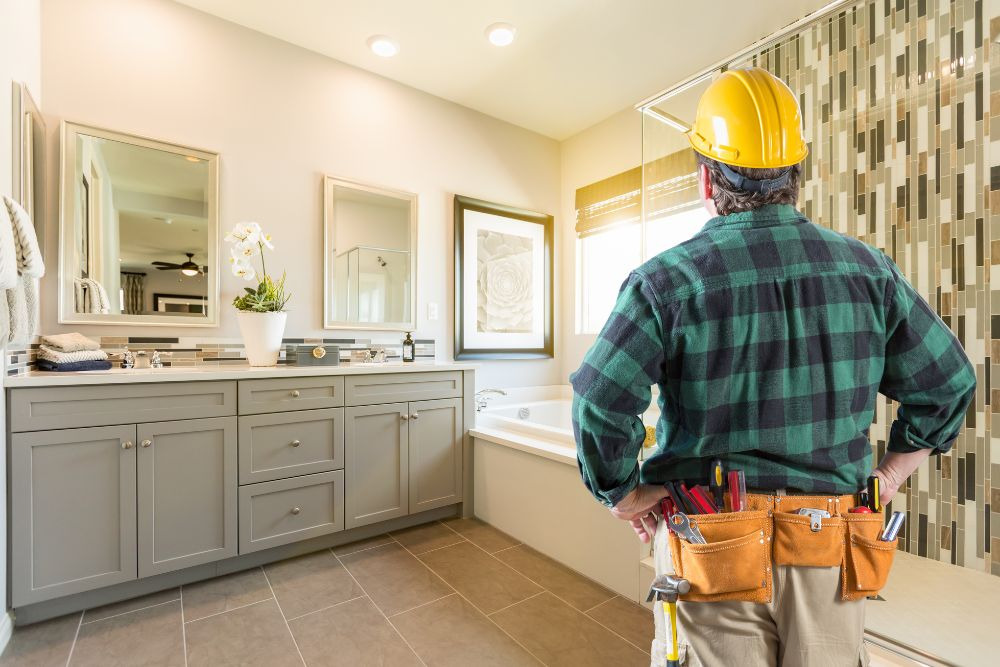
Seattle’s residential construction scene is notoriously competitive, and there’s a good chance you’ll find multiple contractors offering very similar services at very similar prices. The lowest quotes don’t always equate to the best contracts. Cheap contractors tend to cut corners in material choices, execution, and code compliance.
With that in mind, here’s a step-by-step guide to comparing bathroom remodel quotes from Seattle contractors. We will show you how to spot the hidden differences and find the right one for your project.
1. Ensure you’re quoting for the same scope of work.
Go through each bid and list the bathroom remodeling work covered by each proposal. Be sure to match the same items and note the similar ones. For similar tasks, ensure they cover the same amount of work, even if their implementations vary.
At this point, you should be able to find what’s missing in some contractors’ bids. Take a look at the gaps, which usually hide in the structural and technical details. Assess the importance of what should be in these blank spaces, ensuring they’re not omissions of code compliance or basic preparatory steps, among others. Make a note of these missing items so you can ask for revisions before you sign the contract.
2. Take a close look at material allowances
Contractors usually provide material estimates complete with a material spec sheet. This table should specify which materials or fixtures will be used in the project, including their brands, models, and dimensions. If it doesn’t display the specifics, be sure to ask the contractor for clarification before proceeding to the next step.
Compare the spec sheets and take note of the differences. Again, cheaper doesn’t mean best. For example, one contractor may offer the lowest quote because they chose entry-level materials that may not sufficiently protect your bathroom from the humid Pacific Northwest climate. Be sure to cross-reference the material allowances with local retail prices to ensure realistic prices for your desired material tier, without hidden, predatory markups.
3. Review the labor and installation methods
Ensure that the bids list the services of licensed professionals on top of standard construction labor. There should be licensed plumbers and electricians. Additionally, the bid should clearly state who will be handling the rough-ins.
The quotes should also detail how the contractor approaches the necessary tasks. Pay special attention to moisture management. This should focus on handling Seattle’s high regional humidity through a continuous waterproofing system. A good contractor takes pride in their work and should have a plan that ensures the finished space’s longevity.
4. Compare project timelines and payment schedules
A proper contractor bid should be specific with the bathroom remodel project’s timeline. It should define realistic durations for each task and account for possible delays. A full bathroom remodel usually takes up to 5 weeks after construction begins. Short timelines may mean the work will be rushed. On the other hand, an overly stretched timeframe is a red flag of an inexperienced contractor struggling with logistics and subcontractor schedules.
The project timeline should align with a transparent, milestone-based payment schedule. There’s usually an upfront deposit between 10% and 30% of the total remodel budget. The down payment may be higher if your contractor must pay for custom, non-refundable materials.
The remaining balance should be paid after a specific, verifiable milestone has been achieved. Beware of high upfront deposits; anything over 30% without bespoke materials involved increases the risk that your contractor will run with your money. Lastly, the contract should allow you to retain 10% as a retention payment to ensure the contractor carries the project through to completion.
5. Look for a contingency fund
In Seattle’s aging housing stock, removing the drywall could reveal structural surprises. In particular, molds, broken pipes, and outdated wires require immediate attention before you can proceed with your bathroom remodel. As such, your contractor’s quote should specify a contingency fund to cover any hidden issues. This should be 15% to 20% of your actual project cost, allowing you to safely cover unexpected repairs without derailing your project.
6. Check the warranties.
Each bid should come with a warranty, which is standard industry practice for licensed professionals and contractors operating in Washington. Be sure to clarify the coverage and warranty period with each competing contractor.
When comparing quotes, look beyond the warranty period. Understand the triggers and who handles the registration for each product. Keep in mind that you also have a legal fallback under Washington construction laws—you have 6 years to hold a contractor financially liable for faulty construction and code violations. Avoid any contractor whose bid has a clause that compels you to waive this right.
7. Verify the contractor’s reputation
Lastly, don’t judge a contractor solely on hard facts and numbers. Ensure they can actually deliver in practice what they’ve promised on paper. You will want to choose a reputable contractor over one who submits a detailed, polished bid but leaves a trail of poorly executed, unfinished projects.
Look beyond online reviews on Google or Houzz; be sure to check the buzz in local subreddits and social media groups. This should give you the big picture of how each contractor treats their clients and handles their projects.
Pro-Tip: Use a Spreadsheet to Compare Contractor Bids
Looking at contractor bids side by side is a painstaking task. Here’s how to compare bathroom remodel quotes much more easily: use a spreadsheet. This will save you time and effort, allowing you to keep track of the details without missing a beat. Below is an example that you can follow, for starters:
| Category | Line Item | Contractor A | Contractor B | Contractor C | Reference Standard |
| Scope of Work | Total Base Labor Cost ($) | Exclude fixture allowances to compare true labor | |||
| Demolition & Disposal Included? (Yes/No) | Include disposal fees and hauling | ||||
| Lath-and-Plaster Patching Included? (Yes/No) | Critical for older Seattle Craftsman homes | ||||
| Dedicated 20-Amp Circuit Included? (Yes/No) | Required for heated floors or electric bidets | ||||
| Site & Mud Protection (Yes/No) | Protects floors from damp PNW weather tracking | ||||
| SDCI Permit Acquisition & Fees Included? (Yes/No) | Contractor must pull permits; not the homeowner | ||||
| Material Allowances | Total Material Allowance Budget ($) | Compare total finish allowance tier | |||
| Vanity Cabinet Material Spec (Solid Wood/Plywood/MDF) | Avoid cheap MDF/particle board due to high humidity | ||||
| Toilet Fixture Spec (WaterSense Certified? Yes/No) | Must meet Seattle water-conservation standards (1.28 GPF) | ||||
| Shower/Bath Fixtures (Brand & Model specified? Yes/No) | Note specific models to prevent cheap swaps | ||||
| Tile Allowance Per Sq Ft ($) | Check if realistic for your chosen finish tier | ||||
| Labor & Installation | Licensed Specialty Trades Used? (Plumber/Electrician) | WA law requires certified journeymen for rough-ins | |||
| Waterproofing System Specified (Schluter/RedGard/None) | Must be a continuous waterproofing membrane system | ||||
| Exhaust Fan Venting Location (Exterior/Attic) | Seattle code requires direct exterior venting with timer | ||||
| Timeline & Payments | Estimated Project Duration (Weeks) | Seattle average full remodel is ~5 weeks | |||
| Upfront Deposit Percentage (%) | WA law caps initial deposits at 10% for large projects | ||||
| Milestone-Based Progress Payments? (Yes/No) | Payments should tie to verified phase completions | ||||
| Final Punch-List Retention Holdback (%) | Industry standard is retaining 10% until 100% complete | ||||
| Contingency Fund | Contingency Fund Percentage Included (%) | Should be 15% to 20% for aging Seattle housing stock | |||
| Change Order Policy Defined? (Yes/No) | Ensures transparent pricing for hidden issues found in walls | ||||
| Warranty Terms | Workmanship Warranty Duration (Years) | Standard industry practice is 1 to 2 years | |||
| WA 6-Year Statute of Repose Preserved? (Yes/No) | Red flag if contract waives your 6-year legal rights | ||||
| Manufacturer Registration Handled By (Contractor/Owner) | Clarifies who registers fixture warranties | ||||
| Reputation & L&I | WA State L&I License Status (Active/Inactive) | Verify via L&I portal before signing | |||
| Active Lawsuits/Claims Against Bond? (Yes/No) | Check official L&I history for consumer complaints | ||||
| Local Community Subreddit/Nextdoor Feedback (Positive/Mixed) | Checks real-world client treatment and punctuality | ||||
| Summary | TOTAL ESTIMATED PROJECT COST ($) | Combine base labor + material allowances + contingency |
In Summary

Comparing bathroom remodel quotes isn’t all about finding the lowest number. A good bid balances optimistic promises with the realities of Seattle’s housing market, with the contractor’s reputation holding everything together. Take time to review the fine print, check licensing records, and listen to real-life experiences of other homeowners. The best contract is always the one that builds a bathroom remodel that lasts.
Leave your bathroom remodel to professional hands. The expert bathroom remodeling team at BB-Builders Pro can help bring your vision to completion at the best possible price without compromise. Call us to get a detailed quote.
FAQs
Do Seattle bids typically include SDCI permit fees?
Yes, they do. Legitimate contractors take responsibility for securing the necessary permits for their client’s convenience.
How should quotes address Pacific Northwest mold and ventilation codes?
Bathroom remodel quotes take time to detail waterproofing plans and ventilation systems aimed at preventing mold growth. They explicitly mention key practices for code compliance, including venting air outside the house and ensuring the proper volume of air is exhausted, as per Chapter 15 of the Seattle Residential Code.
How do Seattle parking and site access logistics impact estimated remodel costs?
When working in dense neighborhoods with narrow access roads, contractors will need to secure parking permits and parking spaces. This can also delay the staging of materials and equipment, as well as the removal of debris from the demolition. This adds to the overhead cost, which is often expressed as logistical expenses in the bid.