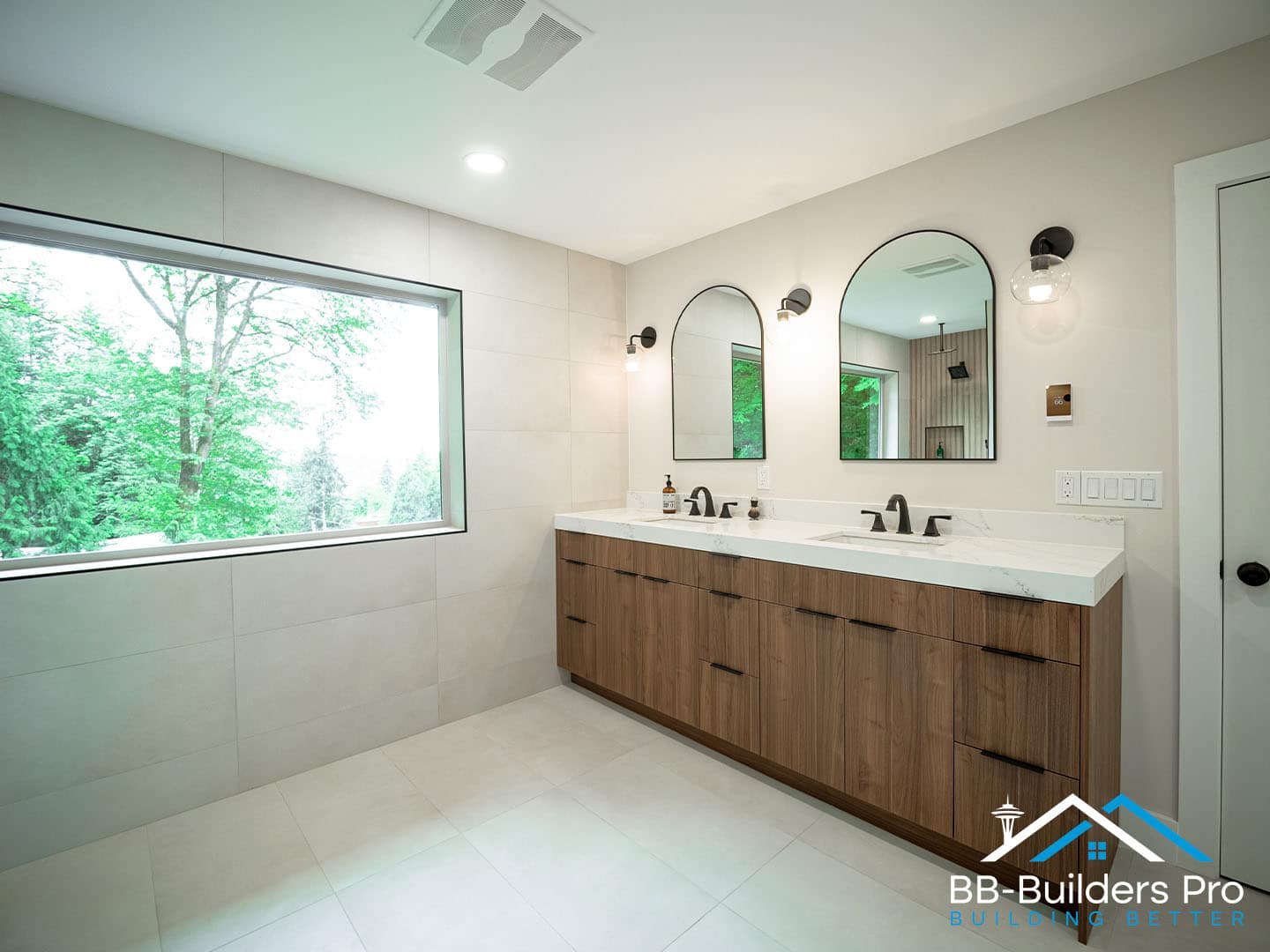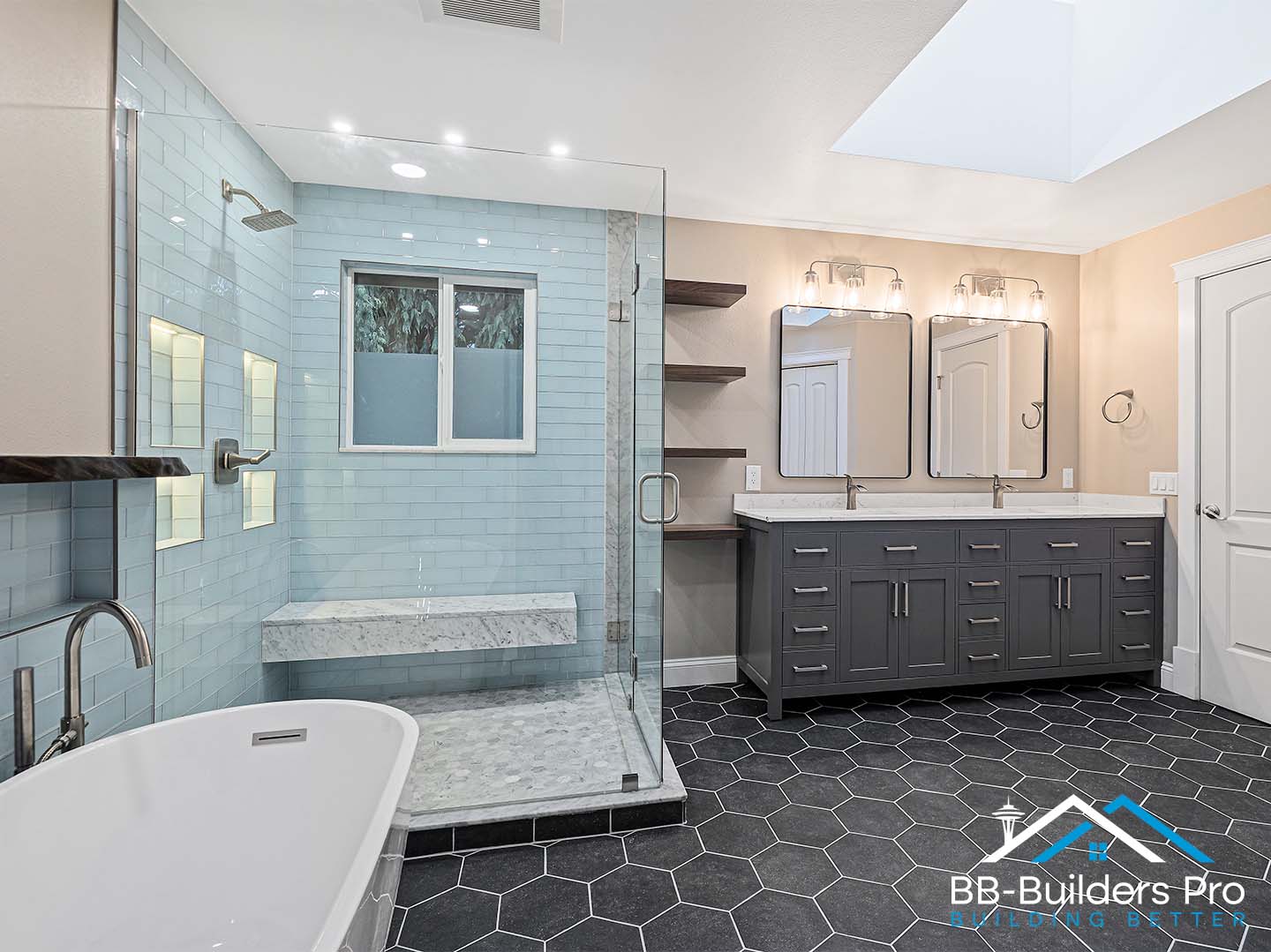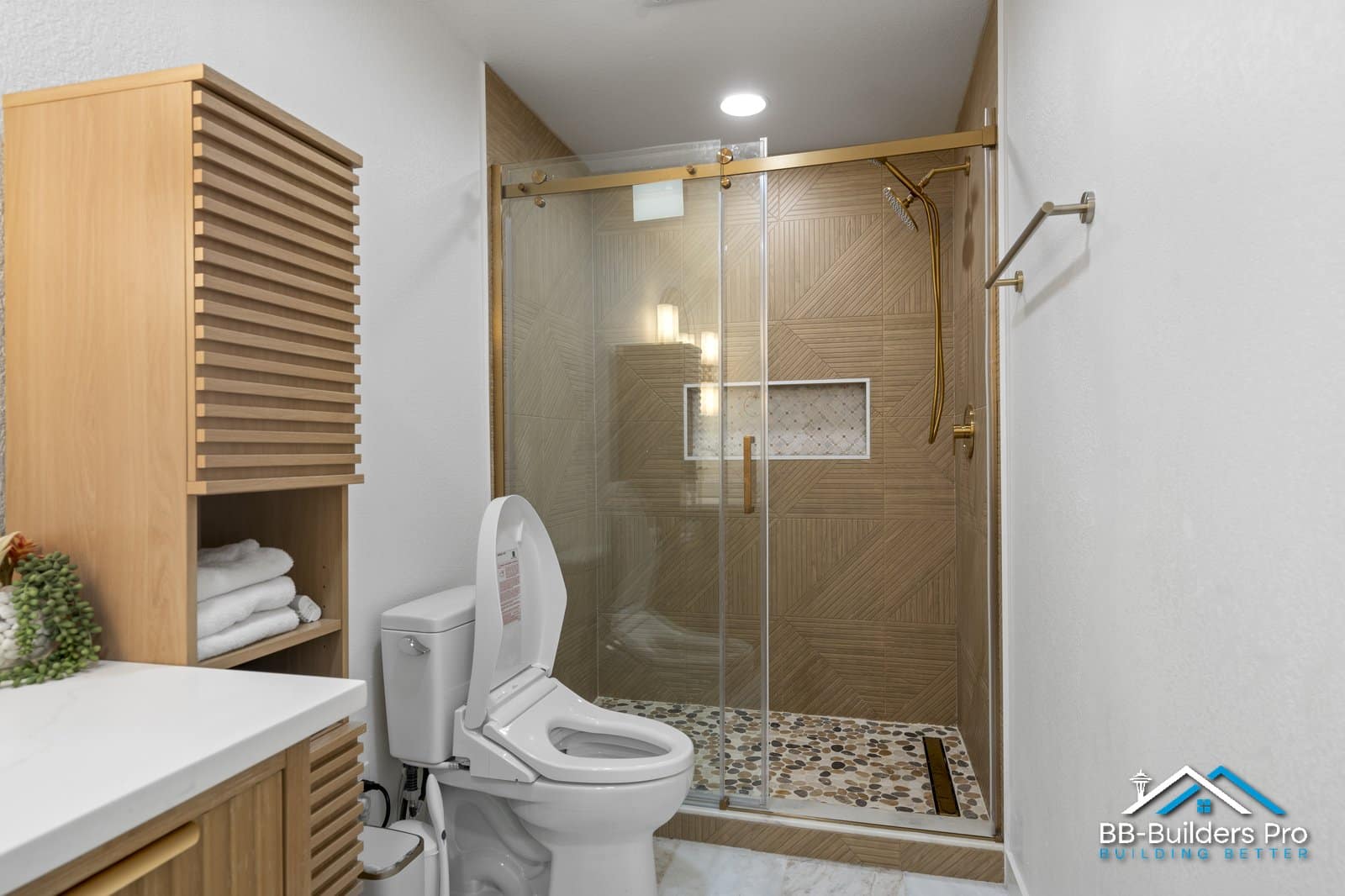
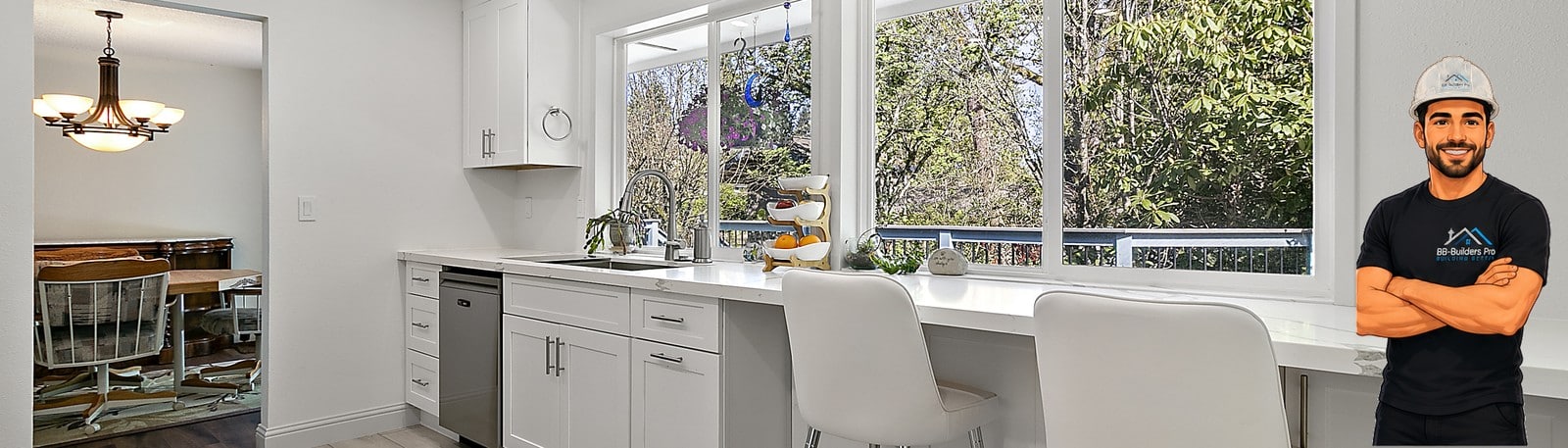
If you’re trying to pin down a whole house remodel cost in Seattle, the honest answer is: it depends on how deep the work goes. A fresh coat of paint and new floors is one number. Taking a 1950s Wedgwood house down to the studs is a very different one. Most full-home remodels in the Seattle area land between $250 and $450 per square foot in 2026 — noticeably above national averages, and there are good reasons for that. Here’s how the numbers actually break down, based on published 2026 cost data and what we see on real projects around King County.
Whole House Remodel Cost in Seattle: The Quick Numbers
| Scope of work | Typical 2026 range* |
|---|---|
| Cosmetic refresh — paint, flooring, fixtures, hardware | $50 – $150 per sq ft (national) |
| Partial remodel — kitchen, baths, finishes; layout mostly stays | $100 – $250 per sq ft (national) |
| Full whole-house remodel (Seattle area) | $250 – $450 per sq ft |
| Down-to-the-studs gut remodel, high-end finishes (Seattle area) | $350 – $550+ per sq ft |
*These are estimates from published 2026 national and Seattle-area cost data, not quotes. Every house is different — age, structure, and finish level move these numbers a lot.
Quick math on a 2,000 sq ft house: a full Seattle remodel at $250–$450 per square foot puts you roughly in the $500,000–$900,000 range. A lighter project that keeps the layout and focuses on kitchens, baths, and finishes can come in well under that. This is why the first conversation with a contractor should be about scope, not just price.
What Counts as a “Whole House Remodel”?
People mean different things by it, and the difference is worth six figures. A cosmetic refresh updates surfaces — paint, flooring, trim, lighting, hardware. A partial remodel redoes the rooms that matter most (usually the kitchen and bathrooms) while leaving walls and systems alone. A full remodel touches most of the house: new kitchen, new baths, new finishes throughout, often some wall changes. And a gut remodel strips the interior to the framing and rebuilds — new electrical, plumbing, insulation, drywall, everything. Just the demolition on a gut job runs about $2,500–$7,000 nationally as an estimate, before any rebuilding starts. If you want to see what a full-scope project looks like in practice, our complete house renovations page walks through how we run them.
Why Seattle Costs More Than the National Average
Three things push Seattle pricing above the published national ranges. First, labor: skilled trades cost more here than in most of the country, and labor typically eats 40–60% of a remodel budget, so that gap compounds. Second, permits and process — more on that below. Third, our housing stock. A big share of Seattle homes were built before 1960, and older houses hide expensive surprises behind the walls. None of this means you’re overpaying — it means budgets built on national averages tend to come up short here.
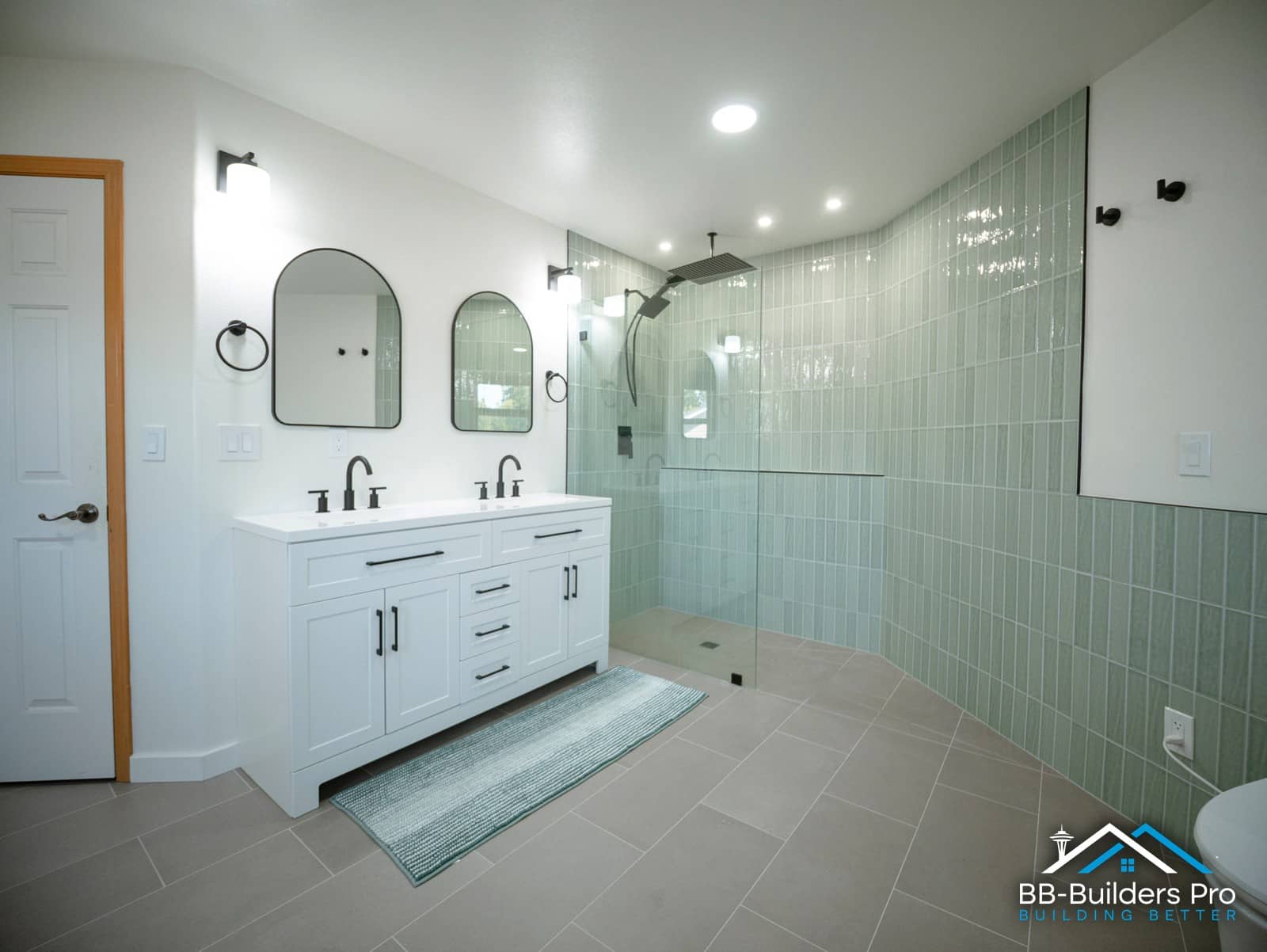
The Old-House Factor: What Seattle Homes Hide
This is where whole-house budgets get blown, so plan for it up front. If your house still has knob-and-tube wiring, a full rewire runs an estimated $12,000–$35,000 depending on size and access. Original galvanized supply pipes are usually at the end of their life; repiping with PEX is estimated at $2,000–$4,000 for a typical 2,000 sq ft house, or $8,000–$16,000 in copper. Homes built before the 1980s can also have asbestos in flooring, insulation, or popcorn ceilings — safe removal during demo adds an estimated $1,200–$2,800 or more. On a gut remodel, replacing these systems is usually already in the plan. On a lighter remodel, discovering them mid-project is what turns a comfortable budget into a stressful one. An honest pre-construction inspection is cheap insurance.
Permits: What Seattle Requires
A whole house remodel in Seattle almost always needs permits from SDCI (Seattle Department of Construction and Inspections), and fees are based on project valuation — the bigger the job, the bigger the fee. Published 2026 estimates for remodel permits run from roughly $400 for small scopes to $6,000 or more for large ones, and Seattle raised construction permit fees about 18% for 2026, plus a 5% technology fee. Electrical, plumbing, and mechanical work each need their own trade permits. Structural changes, additions, or changing how a space is used trigger full plan review, which adds both cost and calendar time. King County and Snohomish County have their own permit offices and fee tables if you’re outside city limits. A good contractor builds permits into the schedule from day one — if someone suggests skipping them on a project this size, that’s a red flag.
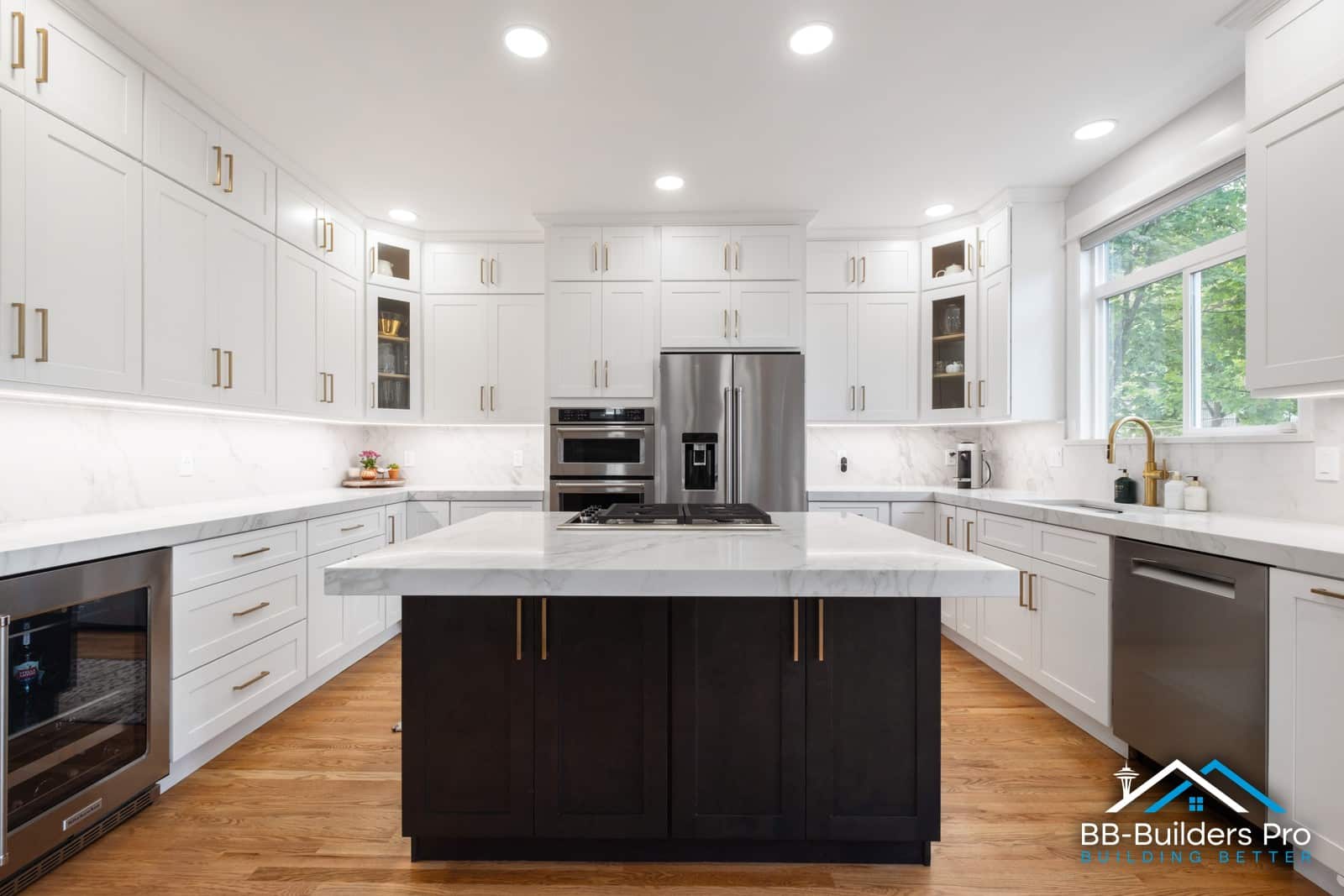
Where the Money Actually Goes
Kitchens and bathrooms are the most expensive rooms per square foot because they carry the plumbing, electrical, cabinetry, and tile. We’ve broken those down separately — see our kitchen remodel cost guide and our bathroom remodel cost breakdown for Seattle-specific numbers. Living rooms and bedrooms are the cheap ones. Systems — electrical, plumbing, heating — are the invisible spend: nobody shows off a new panel at a dinner party, but on older homes they can be 15–25% of the budget. Then there’s design, engineering, and permits, which most homeowners forget to budget at all.
How to Keep a Whole-House Budget Under Control
A few things we tell every client. Carry a contingency — published guidance for 2026 says 20–30% on top of the contract price, and on pre-1960 homes we agree with the high end. Make finish decisions early; mid-project changes are the most expensive way to make choices. Do the whole design before pricing, so bids compare apples to apples. And decide honestly whether you’ll live in the house during construction — moving out costs money, but living in a gut remodel costs sanity and often slows the crew down. Milestone billing helps too: you should always know what you’ve paid for and what’s next.
Remodel or Move Instead?
Fair question in this market. A whole-house remodel makes sense when you like your lot, your street, and your school district — you’re keeping the location and fixing the house. It’s also often the only way to get an older Seattle home to modern function without giving up the character. Selling and buying has its own costs: agent fees, excise tax, moving, and a mortgage rate you may not want. We won’t pretend the remodel is always the answer — sometimes the numbers say move. But if the bones are good, remodeling usually wins on the total picture.
FAQ
How much does it cost to remodel a 2,000 sq ft house in Seattle?
As a 2026 estimate: roughly $500,000–$900,000 for a full remodel at published Seattle rates of $250–$450 per square foot. A cosmetic-plus-kitchen-and-baths project can land well below that; a high-end gut remodel can go above it.
Is a gut remodel worth the extra cost?
If the house has original wiring, plumbing, or insulation, often yes — you’re paying once to open the walls, so fixing everything while they’re open is far cheaper than doing it twice. If systems were already updated, a lighter remodel protects your budget.
Do I need permits for a whole house remodel in Seattle?
Yes. Structural, electrical, plumbing, and mechanical work all require permits, and fees scale with project value. Unpermitted work surfaces at resale and can cost far more to fix than the permit ever would.
How long does a whole house remodel take?
Plan in months, not weeks. Design and permitting come before construction even starts, and full remodels typically run several months of build time depending on scope. Anyone quoting a fast, exact timeline before seeing plans is guessing.
Can I live in my house during the remodel?
During a partial remodel, usually yes, room by room. During a full gut, we don’t recommend it — no kitchen, no functioning baths, and daily dust. Many clients budget short-term housing as part of the project.
Ready for Real Numbers on Your House?
Published ranges only get you so far — the useful number comes from walking your actual house. BB-Builders Pro handles whole-house remodels across Seattle, King County, and Snohomish County, and we’ll give you a straight answer about what your project should cost. Call us at 206-851-4233 or request a consultation and we’ll take a look together.