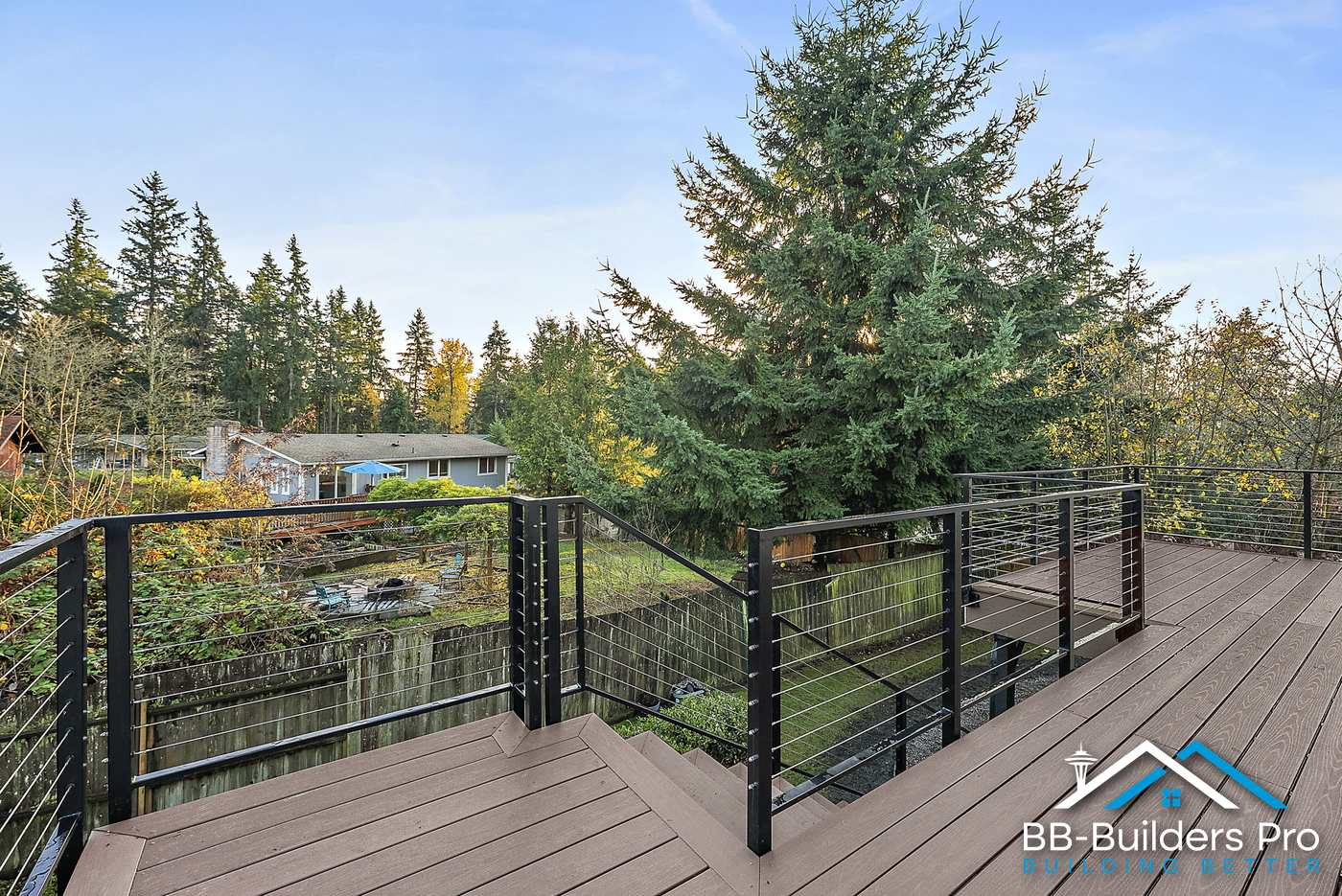

TimberTech is an excellent choice for decking material. But how much does a TimberTech deck cost? An average 20’x20’ installation in Seattle could cost you at least $16,000, factoring in the expenses incurred by the project’s logistics and the city’s bureaucratic requirements.
Let’s explore these cost drivers and how you can get the most out of your deck project.
Is TimberTech Expensive?
When compared to traditional wood decking, TimberTech is definitely the more expensive choice. On average, a TimberTech composite board costs between $4 and $18 per square foot, depending on the product line. However, this is well within the competitive price range in Seattle’s composite decking market, especially when compared with other popular options such as Trex.
Understanding TimberTech Product Lines

TimberTech offers durable, low-maintenance PVC boards made from a combination of synthetic materials and recycled wood fibers. They come in a wide range of aesthetic styles and varying costs. Your choice of decking, then, primarily determines the cost of your deck build.
With that in mind, let’s look at the brand’s current product collections and the average prices at which suppliers in and around Seattle sell them. For these cost approximations, let’s assume the standard board dimensions of 5.5” x 7.25”.
Vintage Collection
Vintage Collection decking is designed to mimic the look of aged hardwoods such as English walnut, mahogany, and teak. This top-of-the-line collection intends to provide a luxurious appearance to your deck. Standard Vintage Collection boards cost approximately $5.38 to $11.45 per linear foot, or $11.72 to $18.93 per square foot.
Landmark Collection
Landmark Collection boards are distinguished by their aesthetically pleasing crosscut cathedral-grain style—think organic, arcing peaks rather than swirls and rings. This style intends to mimic reclaimed wood, giving your deck a rustic feel. Each standard board costs $5.99 to $7.57 per foot, which translates to $13.06 to $16.49 per square foot of the decking surface.
Legacy Collection
TimberTech Legacy Collection boards are designed to imitate hand-scraped hardwood. The collection prominently features cascading color variations and a low-gloss, wire-brushed finish, giving your deck the impression of an aged hardwood surface. Local suppliers sell standard boards of this line for about $6.44 to $8.48 per foot, or $14.42 to $18.99 per square foot.
Harvest Collection
Like Landmark Collection decking, Harvest Collection boards feature cathedral grain cuts. The difference here is that the surface mimics stained or painted wood—a perfect choice if you’re going after modern aesthetics or beachside vibes. The cost of Harvest Collection boards ranges from $4.79 to $9.67 per foot, or $10.50 to $21.35 per square foot.
Beyond the Boards: Other Cost Drivers
Knowing how much TimberTech boards cost is just the start. Many other factors determine the final cost of your installation, including the following:

Deck Size
The area your deck covers determines the project’s fundamental costs, primarily materials and labor. The bigger the deck, the more boards and other components are needed, and the longer and more complex the work will take. Indeed, a 20’x20’ deck will definitely cost more than its 15’x16’ counterpart.
Design
Your deck’s design determines the complexity of the work, which translates into the required hours and professional services. For example, decks with plumbing—perhaps those with outdoor kitchens or baths—may require the services of a licensed plumber and more labor hours than are necessary for a plain terrace. Furthermore, your aesthetic choices affect expenses for materials and, to a lesser extent, labor.
Labor and Professional Services
While you can build your deck by yourself, it’s always best to have some helping hands. You can hire skilled workers in Seattle for $37.29 per hour. Additionally, you will need to employ the services of an architect and a structural engineer to ensure safety and regulatory compliance for your project. Their rates vary according to the scope and complexity of the project.
Permits
According to Seattle building codes, a deck that stands more than 18 inches above the ground and includes long beams requires a construction permit. This could cost a few hundred dollars, but you only need to pay 75% upfront; the rest can be paid when the permit is issued.
Additional permits are also needed if the work involves plumbing and electrical installation. Simpler deck projects may not need to apply for a construction permit. However, all construction will require a Subject-to-Field-Inspection (STFI) Permit.
Site Preparation
Preparing the site for construction means clearing and leveling the ground, digging the foundations, and possibly demolishing an existing deck. As you can imagine, this is best done by a team of skilled workers, incurring labor costs that depend on the difficulty of the work.
Budgeting Tips For Your TimberTech Deck Project
It’s easy to see how a TimberTech deck installation can be an expensive endeavor that can easily skyrocket cost-wise. Your deck-building expenses don’t have to go beyond what you can and are willing to spend.
Here are a few tips to ensure it gets an adequate and manageable budget:
- Understand your requirements. Have a clear idea of what your deck is for and how it should look. Your design choices should help you develop an accurate estimate that accounts for material and labor costs, among other factors.
- Source locally. Getting a TimberTech product supplier in Seattle or the surrounding Puget Sound area is a smart move. Local suppliers can deliver quickly and may provide more personalized service.
- Get a contractor. Working with a contractor is often the best choice for a project as complex as a TimberTech outdoor deck. These companies have the experience and workforce needed to get the job done within a set budget and timeframe.
- Get multiple quotes. It pays to ask for quotes from different suppliers or contractors. This lets you compare pricing and service quality, ensuring you get the best value for your project.
- Ask about warranties. Before you settle with a contractor or a supplier, be sure to inquire for warranties on material and labor. You need to ensure you’re not the one footing the bill in case something goes wrong.
Conclusion
The cost of a TimberTech deck installation goes beyond the price of individual boards. The size and complexity of your deck’s design directly affect the material and labor expenses. Meanwhile, permit fees are non-negotiable, and site inspection and preparation will add to the initial outlay.
Understanding these expenses, in addition to meticulous planning, ensures you’ll get a beautiful yet low-maintenance TimberTech deck that meets your expectations.