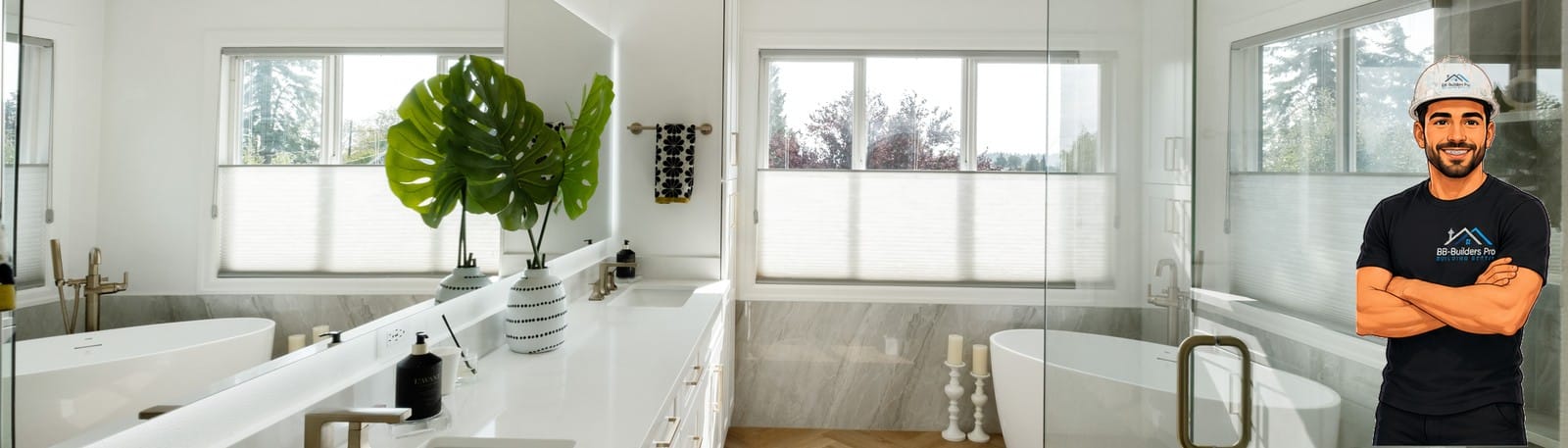
If you have ever stepped out of the shower onto cold tile on a January morning in Seattle, you already understand the appeal. The question is what it costs. A heated bathroom floor cost in Seattle usually lands between $1,100 and $2,600 installed for a typical 40–60 square foot bathroom, and closer to $2,400–$4,500 for a large primary bath. That’s for an electric radiant system, put in properly, with a permit and a licensed electrician.
We install these on most of our bathroom remodels now. Here’s what goes into the number, what it costs to run, and where people get surprised.
All prices below are estimates for the Seattle area in 2026. Your actual number depends on the room, your electrical panel, and what floor goes on top.
Heated bathroom floor cost in Seattle — 2026 estimates
| Bathroom | Heated area | System + materials | Electrician + permit | Installed total (est.) |
|---|---|---|---|---|
| Powder room / small bath | 20–30 sq ft | $350–$700 | $450–$900 | $800–$1,600 |
| Standard full bath | 40–60 sq ft | $600–$1,200 | $500–$1,100 | $1,100–$2,600 |
| Large primary bath | 80–120 sq ft | $1,100–$2,200 | $700–$1,400 | $2,400–$4,500 |
| Bath + adjoining closet | 120–160 sq ft | $1,600–$3,000 | $900–$1,700 | $3,200–$5,800 |
What that includes: the heating mat or cable, the programmable GFCI thermostat, the floor sensor, the electrical circuit and hookup, the permit, and the extra labor to set tile over a heated assembly.
What it does not include: the tile or flooring itself, the subfloor prep, or the demo. If you are tearing out an old floor anyway, the heat is a small add-on. If you are adding heat to a floor you like and want to keep, you are paying to remove and replace that floor too — which is why retrofits into a finished bathroom run 50%–80% more than doing it during a remodel.
Per square foot, electric radiant heat runs about $8–$15 per square foot installed here, before the flooring goes on. National cost guides put it at $6–$15; our range sits at the upper half of that because Seattle-area electricians run $90–$150 an hour, and Washington charges sales tax on remodeling labor, not just materials (10.55% inside Seattle as of January 2026).
Electric or hydronic? For one bathroom, it’s electric
There are two ways to heat a floor.
Electric radiant is a thin heating cable, either loose or pre-attached to a mat, that goes under the tile and runs off its own circuit. It’s about an eighth of an inch thick, so it barely changes your floor height.
Hydronic circulates warm water through tubing in the floor. It costs less to run and it’s the right call when you are heating a whole house or a big new addition — but it needs a boiler or a heat source, a manifold, and real mechanical work. Installed, hydronic runs roughly $7–$17 per square foot and climbs past $20 on complicated jobs.
For a single bathroom, electric wins on every practical measure: lower install cost, no mechanical room, no boiler to maintain, and it’s the only one that makes sense to retrofit into an existing house. Nobody needs a boiler to warm 50 square feet.
What actually moves the price
- Heated square footage, not room square footage. You don’t heat under the vanity, the tub, or the toilet. A 60 sq ft bathroom usually has 35–45 sq ft of actual heated floor. That’s a real saving and a common quoting mistake — if someone quotes you the full room, ask what they’re heating.
- Whether you have a spare breaker. A 50 sq ft mat at 12 watts per square foot pulls about 600 watts — small. But it needs its own dedicated GFCI-protected circuit. If your panel is full, you’re adding a subpanel or a panel upgrade, and that’s a much bigger number. This is the single most common cost surprise in older Seattle homes.
- Mat versus loose cable. Mats are faster and cheaper on a simple rectangle. Loose cable costs a bit more in labor but lets us work around a tricky layout, a curbless shower, or an odd-shaped floor without dead cold spots.
- The uncoupling membrane question. Schluter DITRA-HEAT combines the heat cable, crack isolation and waterproofing in one quarter-inch layer, and for tile it doesn’t need a self-leveling pour on top. It costs more in material and saves a day of schedule. On most of our bathrooms it’s worth it.
- Self-leveling underlayment. If we’re using a standard mat under stone, or heating under vinyl plank, we pour self-leveler over the cable. Figure another $2–$4 per square foot in material and a day of drying time.
Permits: Seattle, Bellevue and Renton each run their own program
This trips people up, so here is the plain version.
New electrical work in a bathroom needs an electrical permit. A heated floor is a new dedicated circuit, so yes, it needs one.
Where you pull that permit depends on the address. Washington’s Department of Labor & Industries is the default electrical authority statewide — but Seattle, Bellevue, Renton and several other cities run their own electrical inspection programs, so the permit goes through the city, not L&I. In unincorporated Snohomish County it typically goes back to L&I. Seattle issues its electrical permits through SDCI, and a small residential electrical permit is usually a couple hundred dollars, not thousands. Check the current fee schedule — it moves each January.
The other rule worth knowing: floor heating in a bathroom has to be GFCI protected. That’s what the special thermostats are for — the GFCI is built into the thermostat. It’s not optional and it’s not something to save money on.
If your project also involves moving plumbing or changing the room’s footprint, you’re into a broader remodel permit anyway. We cover that in our bathroom remodel cost guide.
What it costs to run in Seattle
This is the part people get wrong in both directions.
Electric floor heat draws roughly 12 to 12.7 watts per square foot. A 45 sq ft heated area is about 540 watts — less than a hair dryer on low.
Seattle City Light residential power runs roughly 13–15 cents per kWh in 2026 (the January 2026 rate increase averaged 5.4%). Run that 540-watt floor four hours a day:
0.54 kW × 4 hrs = 2.2 kWh/day × 30 days = 65 kWh/month → about $9–$10 a month
Even a big primary bath on a timer lands around $15–$20 a month in our climate, and only for the months you actually want it. That’s the honest number. It is not free, and it is not a heating system for your house — it’s a comfort feature for one room, and the thermostat schedule is what keeps it cheap. Set it to come on before you wake up and shut off mid-morning.
What flooring can go over it
- Porcelain and ceramic tile — the best match. Tile conducts heat well and doesn’t care about the temperature.
- Natural stone — works, and holds heat beautifully. Needs a thicker setting bed, so budget more.
- Luxury vinyl plank and tile — works, with one condition: most LVP manufacturers cap the floor surface at 85°F, and many installers keep it under 80°F to be safe. Check the warranty language for your specific product before you buy it. We do, every time.
- Engineered wood — possible, but fussy about moisture and temperature swings, and not something we recommend in a bathroom.
- Carpet — no.
If you’re picking flooring for the whole house at the same time, our flooring replacement page walks through the options.
Is it worth it?
Straight answer: yes if you’re already tearing out the floor, and usually not if you aren’t.
When the tile is coming out anyway, heat adds a modest amount to a project you’re already spending real money on, and it’s the upgrade our clients mention most often a year later. Adding it to a floor that’s staying means demo, disposal, new tile and new grout on top of the heat cost — the same $1,500 job turns into a $6,000 one.
It also does something a towel warmer doesn’t: it dries the floor. In a Seattle bathroom with one small window and a fan that runs for ten minutes, a slightly warm floor keeps grout lines and corners from staying damp all winter. That matters here more than it does in Phoenix.
How we handle it on a BB-Builders Pro bathroom
We plan the heat before the tile layout, not after. That means:
- Panel check first. We confirm you have room for a dedicated circuit before we quote the heat, so the number we give you is the real number.
- We map the heated area around the vanity, tub and toilet, and show you the drawing. You see exactly what’s heated.
- Licensed electrician, permitted, inspected. Every time. Under the tile is the worst possible place for uninspected work.
- Sensor placement and a resistance test at three stages — before install, after install, after tile. If a cable gets nicked, we find it the same day, not in December.
- Thermostat programmed before we leave, so it’s actually running on a schedule that keeps the bill low.
Most heated floor installs add one to two days to a bathroom remodel — a day for the heat and membrane, then normal tile work. It rarely moves the schedule much.
Ready to price it out?
If you’re planning a bathroom in Seattle, Bellevue, Renton, or anywhere across King and Snohomish County, we’ll give you a real number for the heated floor as part of the estimate — heated square footage, panel situation, permit, all of it. Call 206-851-4233 or request a free estimate and we’ll come take a look.
See also: bathroom remodeling in Seattle · master bathroom remodel cost · bathroom remodeling in Renton
Frequently asked questions
How much does a heated bathroom floor cost to install?
For a standard Seattle bathroom with 40–60 square feet of heated area, expect $1,100–$2,600 installed — heating mat, GFCI thermostat, dedicated circuit, permit and the extra tile labor. Small powder rooms start around $800; large primary baths run $2,400–$4,500. These are 2026 estimates and don’t include the flooring itself.
Do heated floors need a permit in Seattle?
Yes. A heated floor is new electrical work on a dedicated circuit, so it needs an electrical permit. In Seattle that goes through SDCI, and Bellevue and Renton run their own electrical permit programs too. Much of the rest of Washington permits through L&I.
How much does a heated bathroom floor cost to run?
About $9–$10 a month for a typical 45 sq ft heated area running four hours a day, at Seattle City Light rates of roughly 13–15 cents per kWh. A large primary bath runs closer to $15–$20 a month. A programmable thermostat is what keeps it in that range.
Can I put a heated floor under vinyl plank instead of tile?
Usually yes, but check the flooring warranty first. Most LVP manufacturers cap the floor surface temperature at 85°F, and many require the heat to be embedded in self-leveling underlayment rather than sitting directly under the plank. Tile is still the better performer.
Can you add a heated floor without replacing the tile?
Not really. The heat goes under the tile, so the tile has to come up. That’s why we tell people to do it during a remodel — adding it later means paying for demo and a whole new floor on top of the heat.
Will a heated floor heat the whole bathroom?
It takes the chill off and it makes the room feel warmer than the thermostat says, but it’s designed as a comfort floor, not a replacement for your heat source. In a small, well-insulated bathroom it can carry most of the load on a mild day. Don’t remove your existing heat because of it.