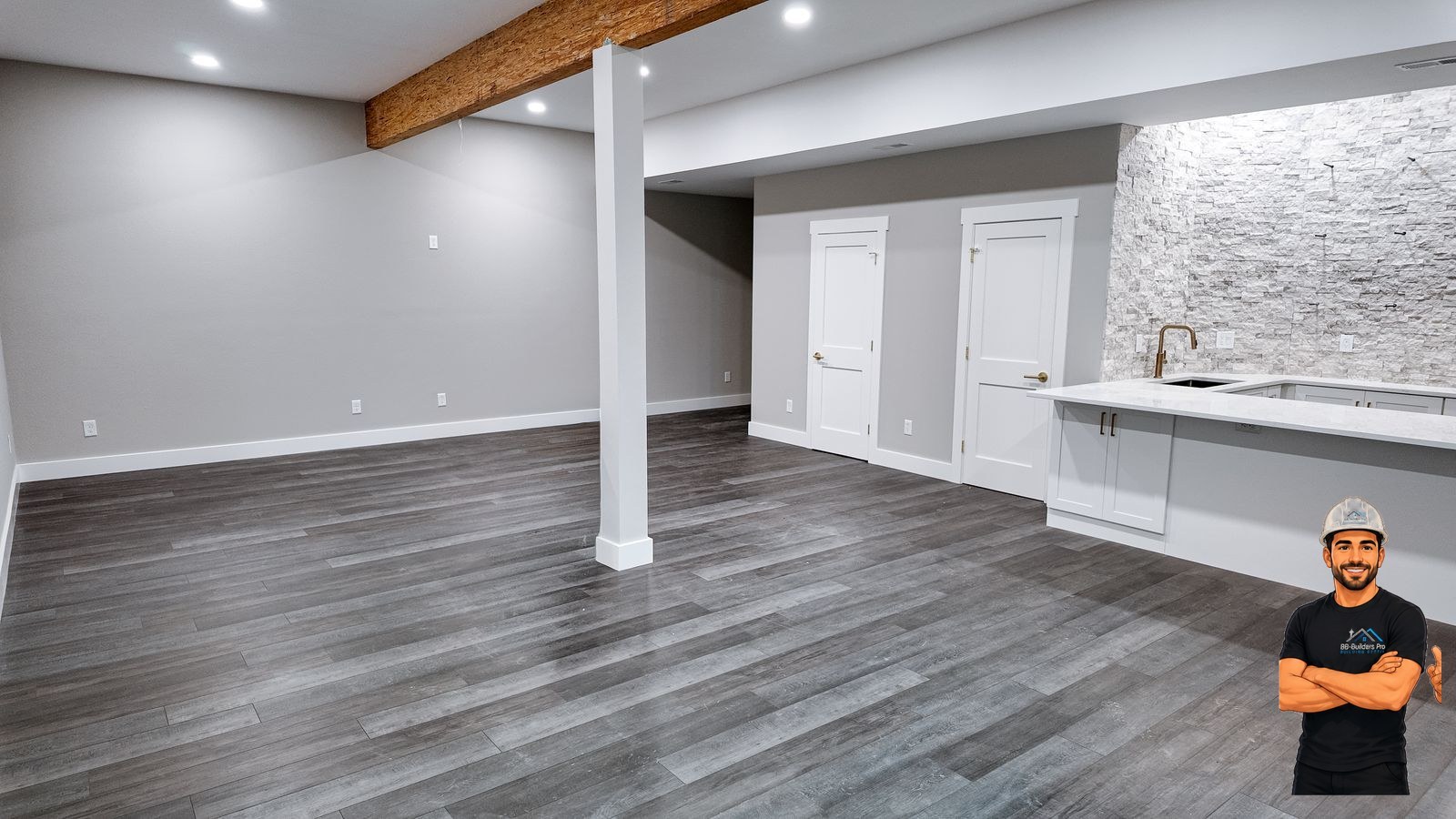
If you’re planning a basement finishing project in King County, the honest answer is: it depends on how far you’re taking it. Most homeowners we talk to end up spending somewhere between $32,000 and $75,000 for a full basement finish, though smaller, simpler projects can come in lower. Basement finishing cost is driven by three things — square footage, finish quality, and what’s already going on down there (moisture, low ceilings, an outdated electrical panel).
Below is a real-world breakdown based on current material and labor pricing, plus what King County adds to the equation that a national cost guide won’t mention: permits, egress windows, and our wet clay soil.
Basement Finishing Cost by Finish Level (Estimates)
| Finish Level | Cost per sq ft | What’s Included |
|---|---|---|
| Basic | $25 – $40 | Drywall, paint, basic flooring, standard lighting |
| Standard | $40 – $60 | Better flooring, trim, closet, more lighting circuits |
| Mid-range | $50 – $80 | Adds a bathroom, wet bar, laminate or LVP flooring |
| High-end | $80 – $120+ | Home theater, full bath, custom cabinetry, structural changes |
For a typical 800–1,000 sq ft King County basement, that puts most projects in the $32,000–$75,000 range for a mid-range to high-end finish. These are estimates — every basement is different, and the only way to get a real number is a walkthrough.
What Else Adds to the Basement Finishing Cost
A few line items that catch people off guard, because they’re specific to older Seattle-area homes and our building code:
- Egress windows: if you want a bedroom or any legal sleeping space down there, King County code requires an egress window with at least 5.0 sq ft of clear opening, and the sill can’t sit more than 36 inches off the floor. Cutting one into a foundation wall and installing a window well typically adds a few thousand dollars per window.
- Permits: finishing a basement in Seattle and King County almost always requires a permit once you’re adding living space, new electrical circuits, plumbing, or an egress window. Skipping the permit is the fastest way to run into problems at resale.
- Waterproofing: this is the one we push back on the most when homeowners want to skip it. Seattle sits on glacial till and heavy clay soil that holds water against your foundation. A standard interior drainage system runs $5,000–$13,500, and a full system with a battery-backup sump pump can run $10,000–$15,000. Skipping this step to save money is how you end up finishing the same basement twice.
Basic vs. Mid-Range vs. High-End — What Changes
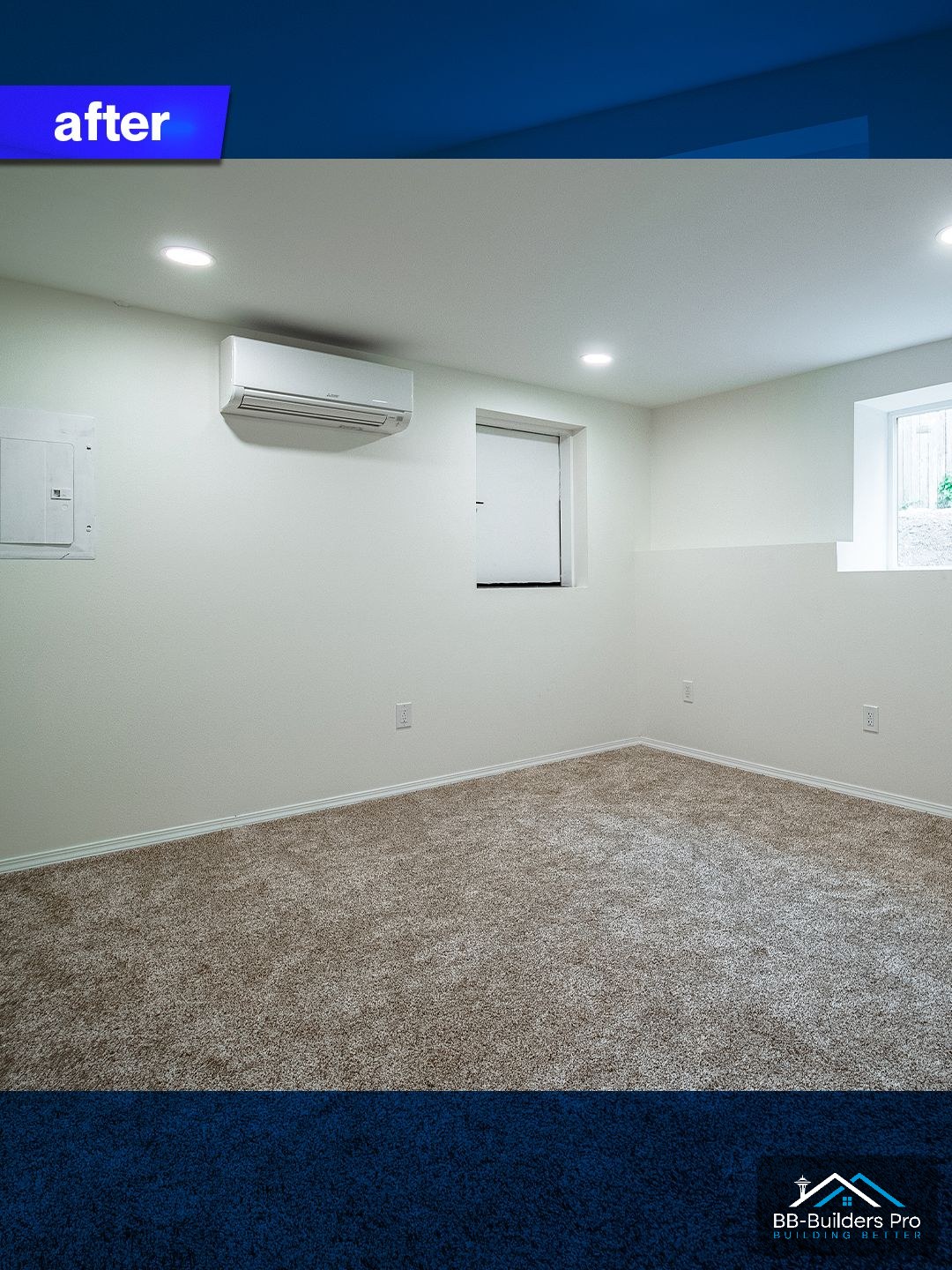
A basic finish gets you usable square footage: drywall, paint, flooring, and enough outlets to be functional. Most people outgrow this fast if the space is meant for anything beyond storage or a home gym.
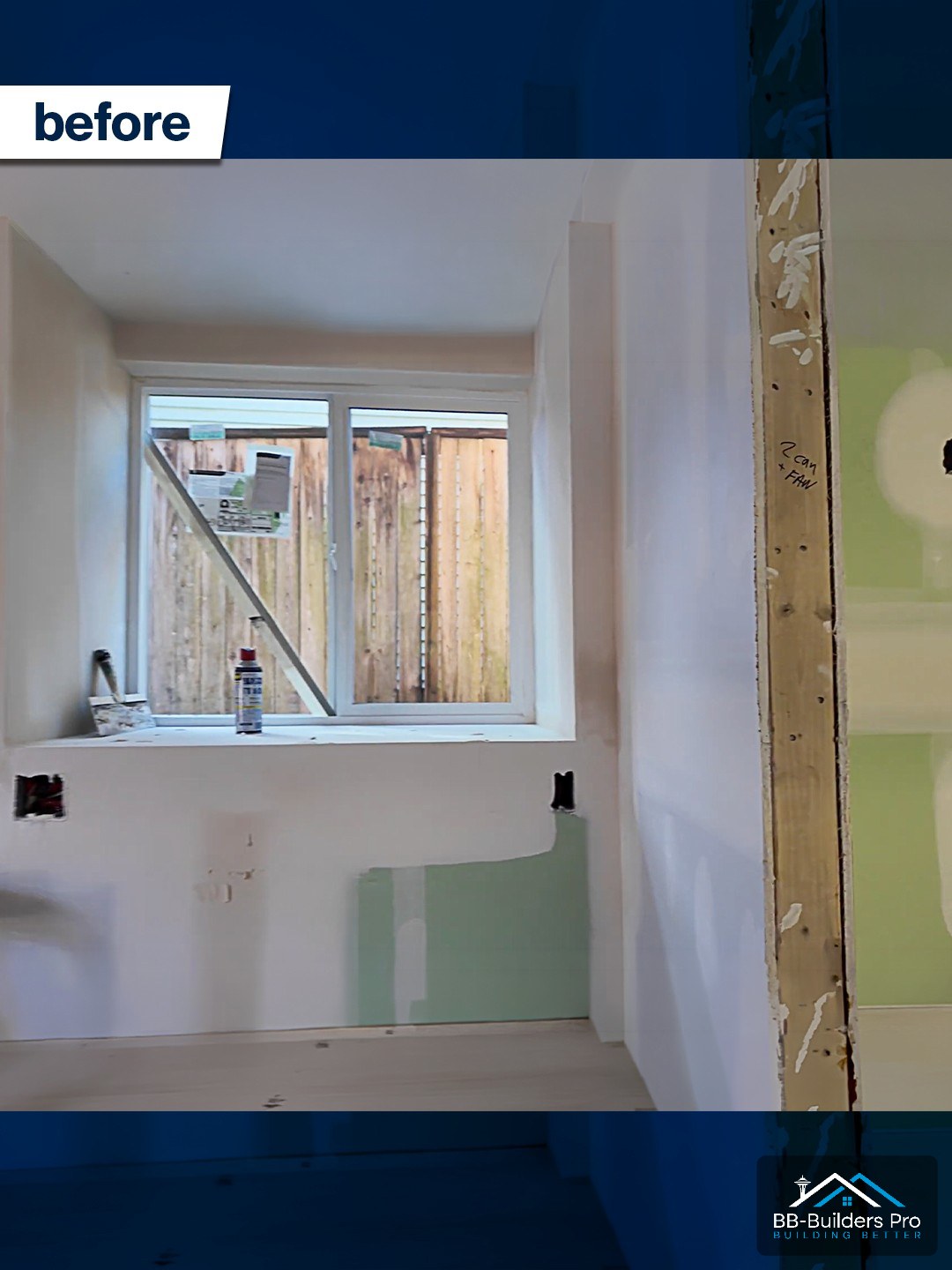
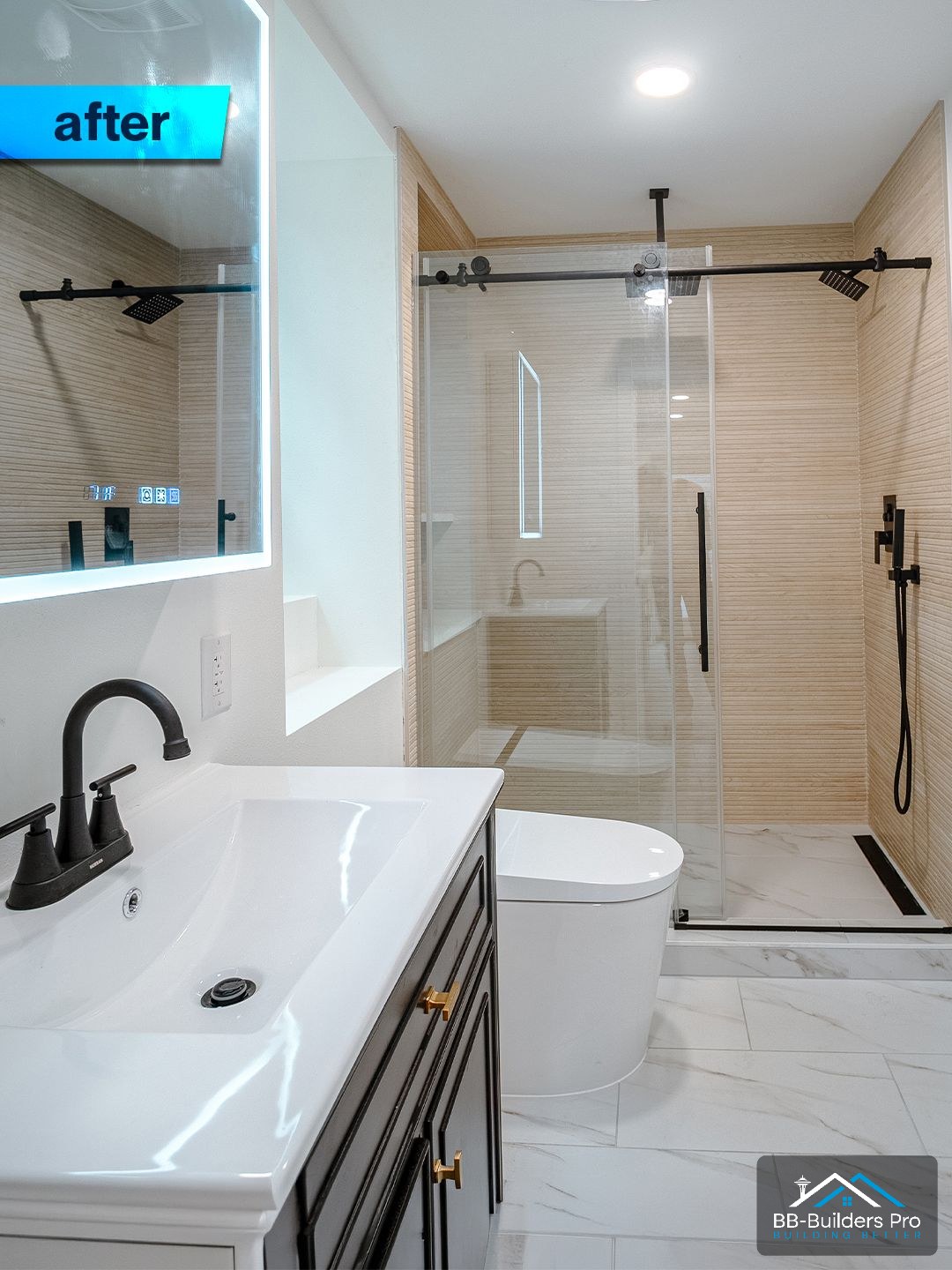
Mid-range is where most of our King County clients land — it usually includes a 3/4 bathroom, a wet bar or kitchenette, and better flooring (LVP holds up well against basement moisture better than carpet). This is also where an egress window often gets added, since a mid-range basement is frequently built out as a bedroom or guest suite.
High-end finishes start looking like a second living level — home theater wiring, a full bathroom, custom built-ins, and sometimes structural work like lowering the floor or reworking support beams for ceiling height. This is where the $80–$120+ per square foot range comes in.
Basement Finishing Timeline
Most straightforward basement finishes (no egress window, no major structural work) run 4–8 weeks once permits are approved. Add an egress window or a full bathroom and you’re looking at 8–12 weeks. King County and Seattle permit review times vary, so we build that into the schedule up front rather than promising a start date before permits are in hand.
Finishing a Basement vs. Remodeling One That’s Already Finished
Worth separating these two, because they get quoted very differently. “Finishing” means starting from an unfinished, open space — concrete floor, exposed joists, no walls. That’s the $32,000–$75,000 range above. If your basement is already finished but dated (think 1990s wood paneling and popcorn ceilings), you’re looking at a remodel instead, which usually costs less per square foot since the framing, electrical rough-in, and sometimes the drywall are already there. We still check behind the walls on older finished basements, though — a lot of King County homes from that era were finished without a vapor barrier, which we’d want to correct before closing anything back up.
Why This Isn’t a DIY-and-Save Situation
We get asked a lot whether a homeowner can frame and drywall the space themselves and just hire out the electrical and plumbing. You can, and some people do save real money that way. Where it gets risky is the permit and inspection side — King County inspectors are checking for correct vapor barriers, proper egress dimensions, and code-compliant electrical, and a failed inspection on DIY work usually costs more to fix than it would have to do right the first time. If you go this route, at minimum get a licensed contractor to walk the space before you close up any walls.
Basement remodeling is one of our core services in Renton and across King County — if you want to see more finished projects, check out our basement remodeling page.
FAQ
Does finishing a basement in King County always require a permit?
In almost every case, yes. Adding living space, electrical circuits, plumbing fixtures, or an egress window all trigger permit requirements. A contractor pulling permits on your behalf also means the work gets inspected and signed off — which matters at resale.
Do I need an egress window to finish my basement?
Only if the space will be used as a bedroom or other sleeping space. Family rooms, home offices, and rec rooms don’t legally require one, but a lot of homeowners add one anyway for natural light and a second way out.
How much does basement waterproofing cost in Seattle?
A standard interior drainage system runs $5,000–$13,500. Given our clay soil and rainfall, we recommend addressing moisture before any drywall goes up, not after.
Can I finish my basement without a bathroom to save money?
Yes, and it’s one of the easiest ways to bring the total down. A bathroom adds plumbing rough-in, fixtures, and ventilation — often $15,000–$25,000 on its own depending on finishes.
What’s the biggest cost surprise homeowners run into?
Moisture and structural issues that only show up once demo starts — an unexpected crack, a musty smell behind old paneling, or ceiling height that’s lower than it looked. A pre-construction walkthrough catches most of this before it becomes a change order.
Every basement is different, and the only way to get a number you can actually build a budget around is a walkthrough. Call us at 206-851-4233 or contact us here and we’ll give you a straight answer on what your basement will cost to finish.