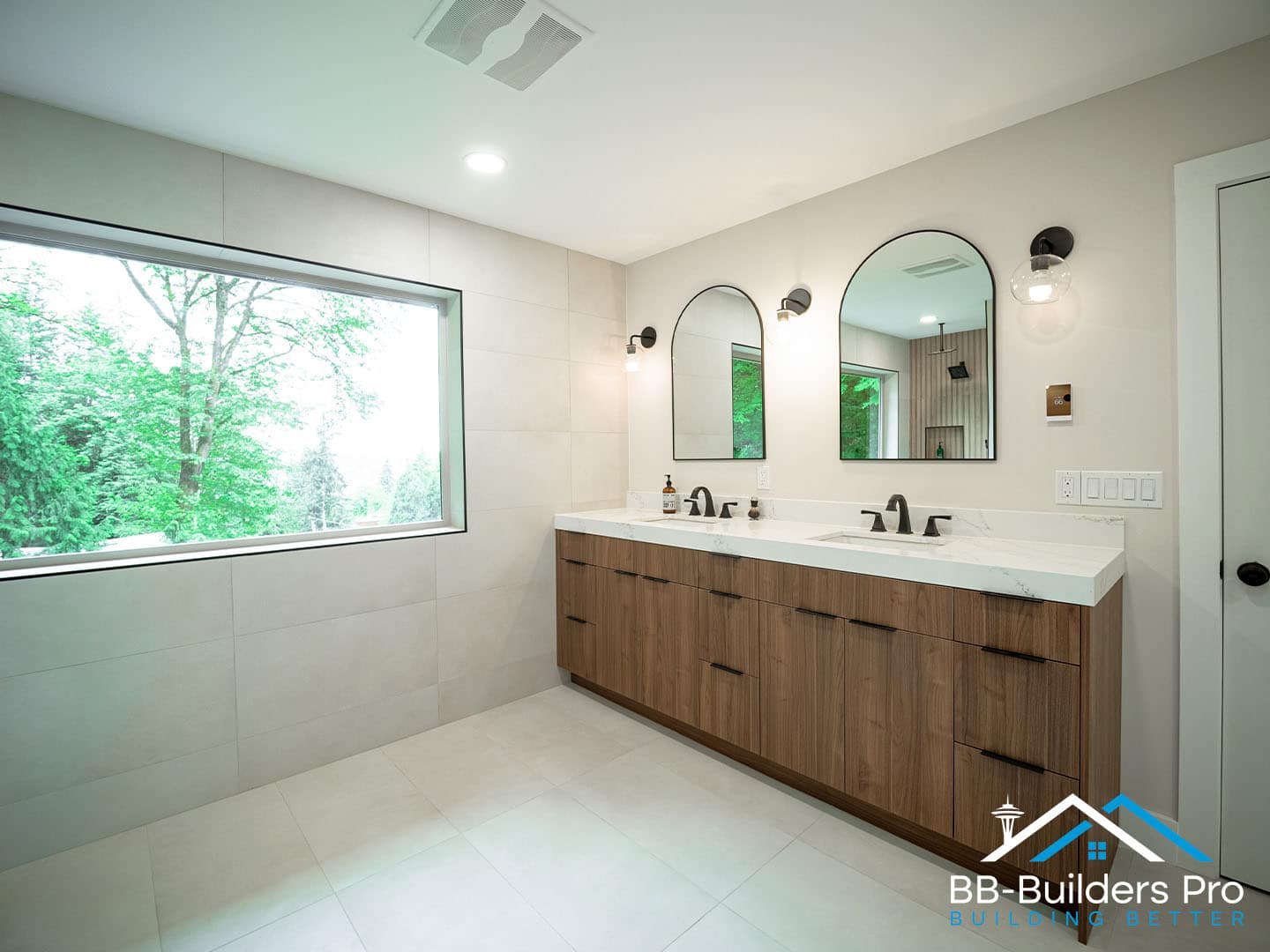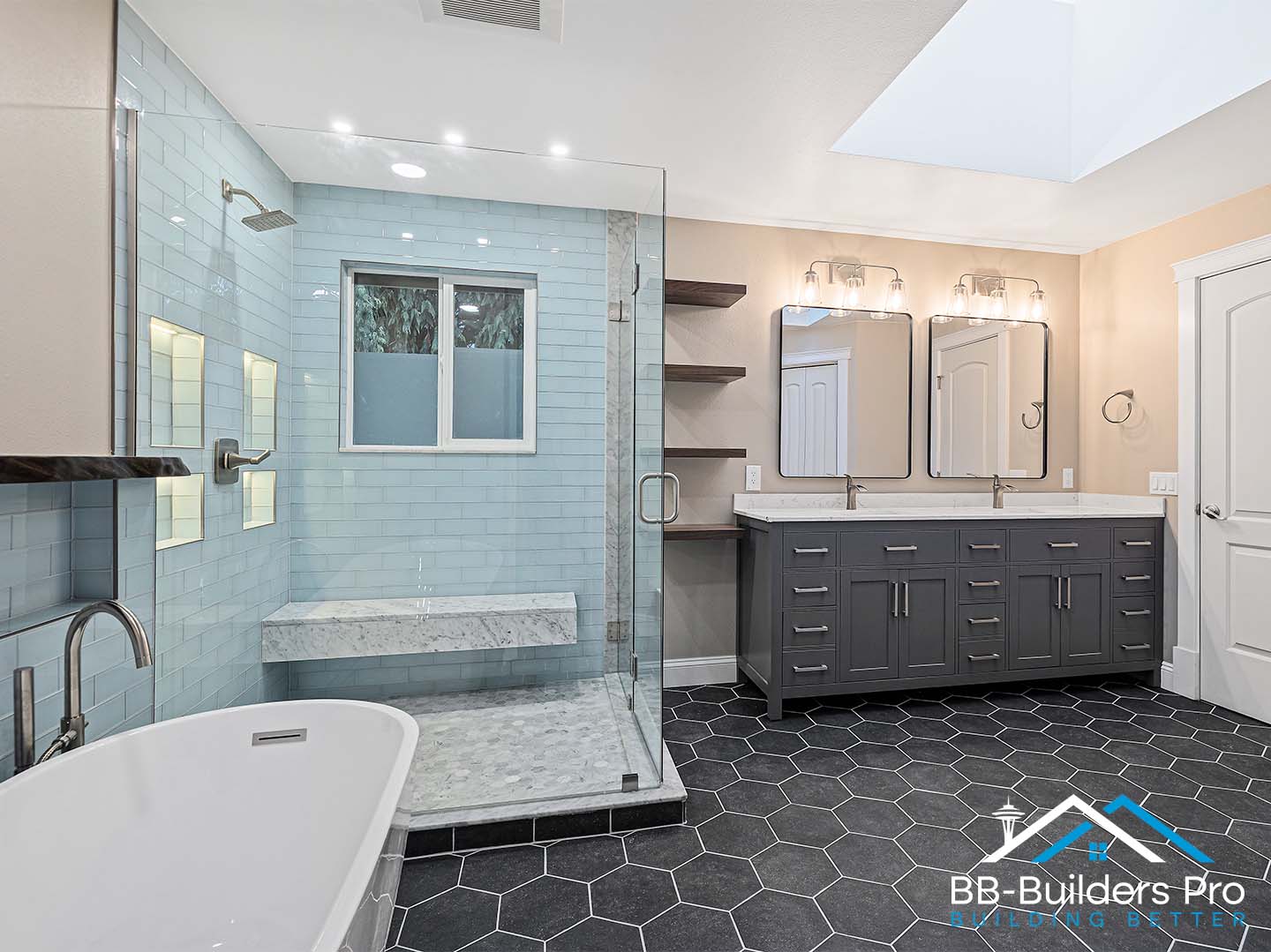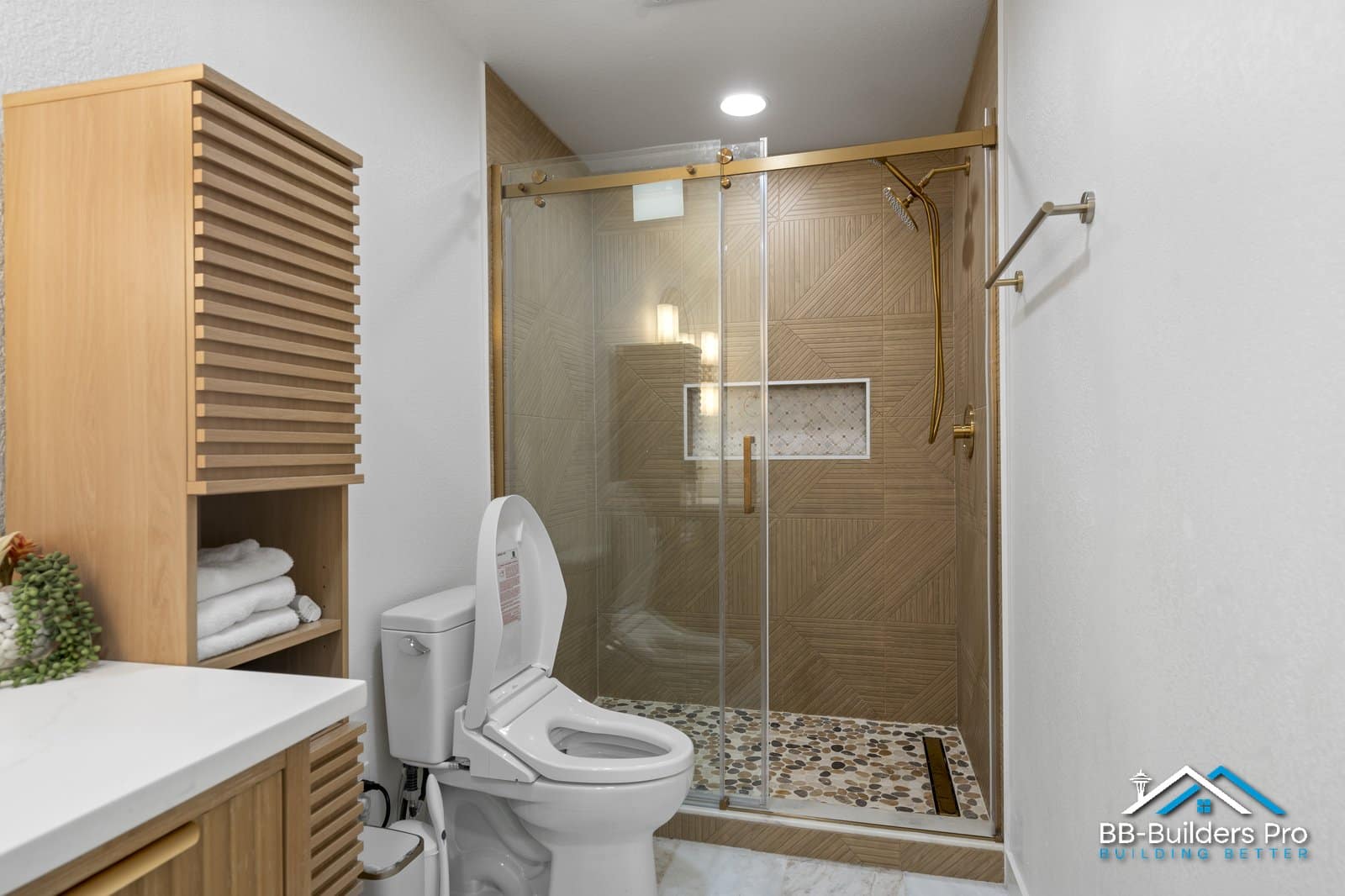
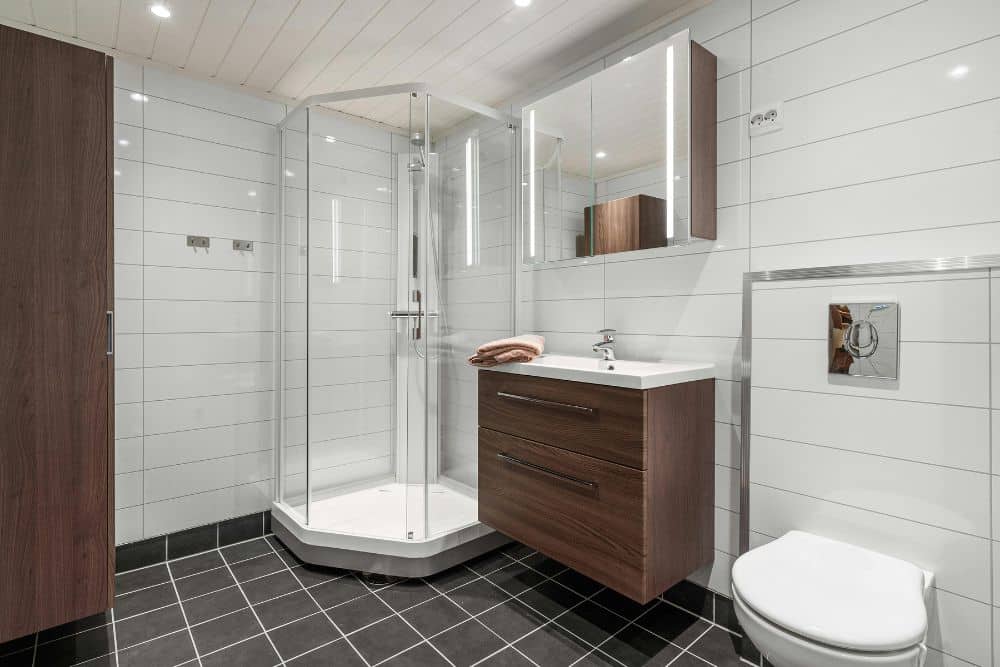
When remodeling a bathroom in Seattle, your choice of tile matters. The top priority here is protection against moisture damage and mold growth—two unfortunate consequences of the Humid Pacific Northwest climate. With that in mind, let’s discuss your choices of tile for Seattle bathrooms, from the top performers to the options to avoid. Tile is one decision inside a much longer list — our Seattle bathroom remodeling page walks through the rest.
Top Choice: Porcelain Tile for Seattle Bathrooms
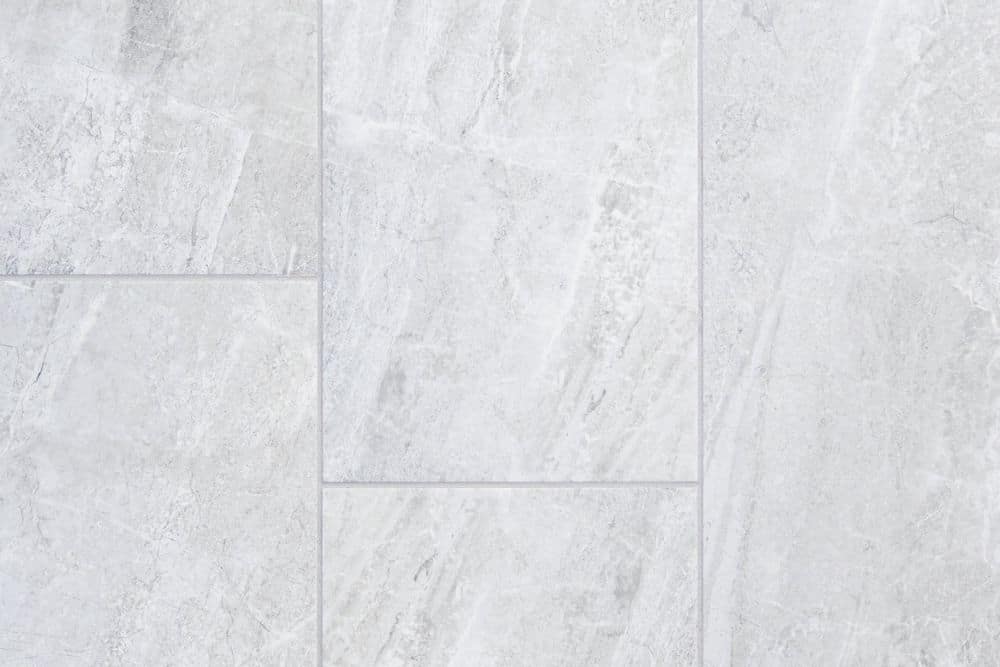
Porcelain tiles are widely considered the best choice of bathroom tiles in terms of mold and moisture protection. They are made by firing kaolin clay, usually mixed with feldspar and quartz, to 2,650°F (1,450°C) or higher. The result is a strong, extremely dense ceramic with a water absorption rate of less than 0.5%.
The low water absorption rate makes porcelain highly moisture-proof and nearly dry enough to resist mold growth. It also provides the material with great dimensional stability, meaning it does not change significantly in size or shape with temperature changes. As part of the tilework, it does not apply noticeable stress to the grout, leaving no cracks or seams for water to infiltrate the sublayer.
To top this all off, porcelain tiles are generally low-maintenance. Both glazed and unglazed porcelain tiles do not require sealing, although the latter may need optional stain protection. Regular cleaning is the only routine maintenance required to prevent unwanted growth on the surface and on the grout. Plus, porcelain does not break easily, so you don’t have to replace tiles often.
Runner-Up: Glazed Ceramic Tiles
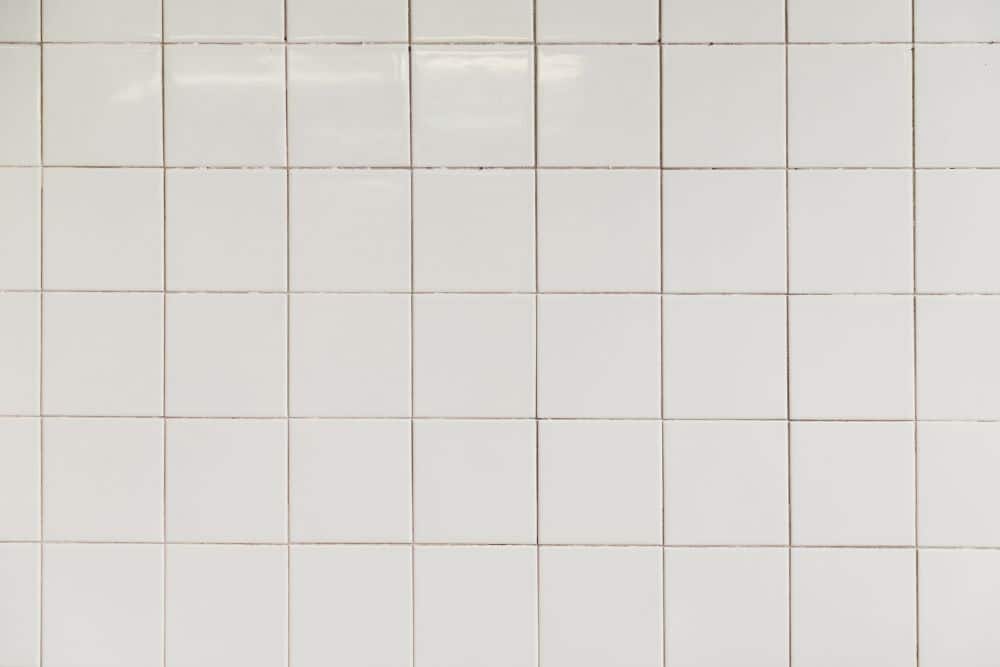
Regular glazed ceramic tiles are a more affordable alternative to porcelain, but they provide nearly the same level of moisture and mold protection. The main difference lies in the process and material. While porcelain tiles are made from refined clay with mineral additives and fired at temperatures above 2,650°F, regular ceramics are made from red or white clay and fired at an average temperature of 1,850°F (1,010°C).
The material composition makes ceramic tiles more porous than their porcelain counterpart. The glaze makes up for this by providing a waterproof seal. However, ceramic tiles will require high-quality, sealed grout, as any water that bypasses the glazing is absorbed into the tiles. The choice of grout should also account for the lower dimensional stability, which may cause visible seams as the tile expands and contracts during temperature shifts.
Like porcelain tiles, glazed ceramic tiles are also a low-maintenance bathroom tiling option. They only need to be cleaned regularly, and the grout must be resealed annually or every 3 years to keep it water-resistant. Since it’s not as hard as porcelain, it may break more easily from heavy impacts, so expect to replace tiles more frequently.
Close Contender: Glass Tiles
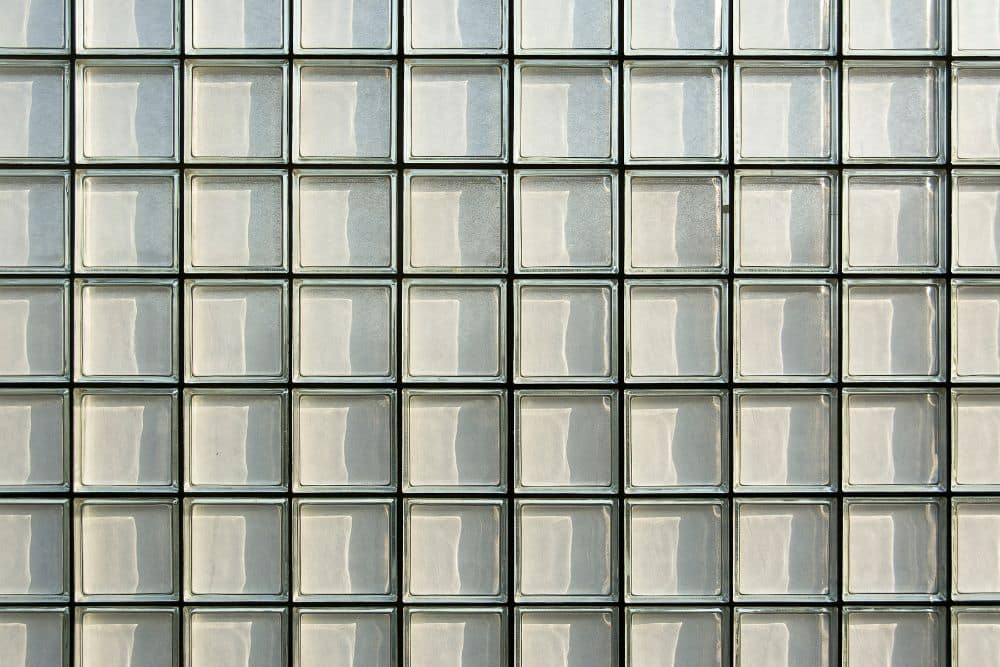
Glass tiles are a high-end alternative to porcelain and ceramic tiles, offering a luxurious aesthetic and premium moisture and mold protection. Unlike clay-based ceramics, glass tiles are made from solid glass pieces or cut from recycled glass. The material is completely non-porous and does not absorb water, making it more moisture-resistant than the highest-grade porcelain. Naturally, this makes glass tiles 100% resistant to molds and mildew.
Glass tiles are as easy to maintain as their ceramic counterparts. They don’t require sealing, but the highly reflective surface more readily shows spots and scum from everyday use. Cleaning needs to be more thorough, but careful enough not to leave noticeable scratches.
On the flip side, glass tiles are more susceptible to thermal shocks. They exhibit significant contraction and expansion with rapid temperature swings, making it the least dimensionally stable option. This calls for the exclusive use of epoxy grout. Any other types may not keep up with the thermally induced size changes, potentially exposing large seams along the grout lines.
That said, installing full glass tilework can be expensive. For this reason, glass tiles are often used to accentuate ceramic tiles. Because they are more brittle and can break into sharp debris, they are often used on walls rather than on the floor.
Best for Walls: Interlocking Vinyl Wall Tiles
For walls, your best bet is interlocking vinyl wall tiles. Obviously, vinyl tiles are neither glass nor any type of ceramic; some may not even consider them tiles at all! They are stone plastic composite (SPC), which characteristically has a 0% water absorption rate.
Another feature is the tight, interlocking tongue-and-groove mechanism that eliminates the need for grout and the risk of water or mold infiltrating into the next layer. Because vinyl wall tiles are meant to be nearly seamlessly joined, the material boasts superior dimensional stability. This keeps the tile from expanding too much and buckling at the joints.
Interlocking vinyl wall tiles are easy to install—you only need to follow the manufacturer’s instructions. Keeping it clean is as easy as wiping it down with a damp rag. They are also durable and can resist strong impacts, but may deform under constant pressure, which is not always an issue for bathroom walls.
Tile Types to Avoid
Some tile options may look good on floors, but some would not make a great choice of tile for Seattle bathrooms. The following are especially worth mentioning:
Natural Stone
While natural stone looks pretty in any space, it is very porous and won’t work with the wood-frame construction of Seattle bathrooms. They require sealing to become waterproof, and this has to be redone every one to three years. Like glass, they are also prone to thermal shocks and can noticeably change in size with the temperature.
Metal Tiles
Metal tiles may be a bold choice, but they won’t work in any bathroom. For one, they have inferior dimensional stability to stone. The second reason is that exposure to the damp bathroom environment, combined with Seattle’s humid climate, makes them vulnerable to rapid corrosion.
Wood Tiles
Wood does not work with the bathroom’s humid environment. It readily absorbs water, and its organic body can prove ideal for mold to thrive. Even wood treated for damp spaces won’t fare well, as wood can warp and rot over time with constant exposure to moisture.
Other Bathroom Tiling Considerations for Moisture and Mold Mitigation
Besdes the material, there are other factors that you need to consider when choosing the best tile for Seattle bathrooms. These are the following:
- Tile size. Large-format tiles require less grout and are less vulnerable to water seepage than smaller tiles.
- Grout. Epoxy grout may be expensive, but it adapts to tile size changes caused by temperature changes rather than cracking at the seams and exposing the sublayer.
- Waterproofing membrane. It’s essential to have a waterproofing membrane right under the tiles, as it protects the next layer from moisture that seeps through the finish.
- Expansion joints. Seams where the planes of the bathroom meet need to be lined with silicone caulk, as they tend to move independently with thermal expansion or the settling of the house.
- Slip-proofing. For floors, Seattle building codes require tiles with a wet dynamic coefficient of friction (DCOF) of at least 0.42 or an R-rating of R-10 or R-11.
- Ventilation. Vents are essential to keeping bathrooms dry and mold-free. In Seattle, bathroom ventilation should be able to exhaust 50 cubic feet per minute (CFM) of air, or 20 CFM when used continuously.
Get Professional Advice From Bathroom Tiling Experts
Picking the best type of tile for Seattle bathrooms doesn’t have to be tricky. It’s all about understanding the material’s properties, how they work, and their best possible applications. If in doubt, though, BB-Builders Pro can help you find the right one that works for your space within your set budget. Our bathroom remodeling experts will help you realize your aesthetic vision without compromising on structural protection. Get a quote today.
FAQs
What tiles are mold-resistant in bathrooms?
When it comes to mold resistance, glass is the best tile for Seattle bathrooms. It does not absorb water, and the smooth surface provides little anchor for molds to grow.
What is the most durable tile for a bathroom?
Porcelain tiles top the list for durability. Porcelain is one of the hardest types of ceramic, but it’s not as brittle as natural stone or glass. It also has a negligible water absorption rate, making it a poor environment for mold growth.
What tiles should not be used in a shower?
Avoid using natural stone tiles for shower surfaces. They are very porous and require frequent professional-grade sealing to make them resistant to molds, moisture, and staining. They are also vulnerable to damage from high-acidity cleaners, prone to mineral buildup, and difficult to clean. Some types of stone can also be slippery when wet, making them a rather unsafe option.