
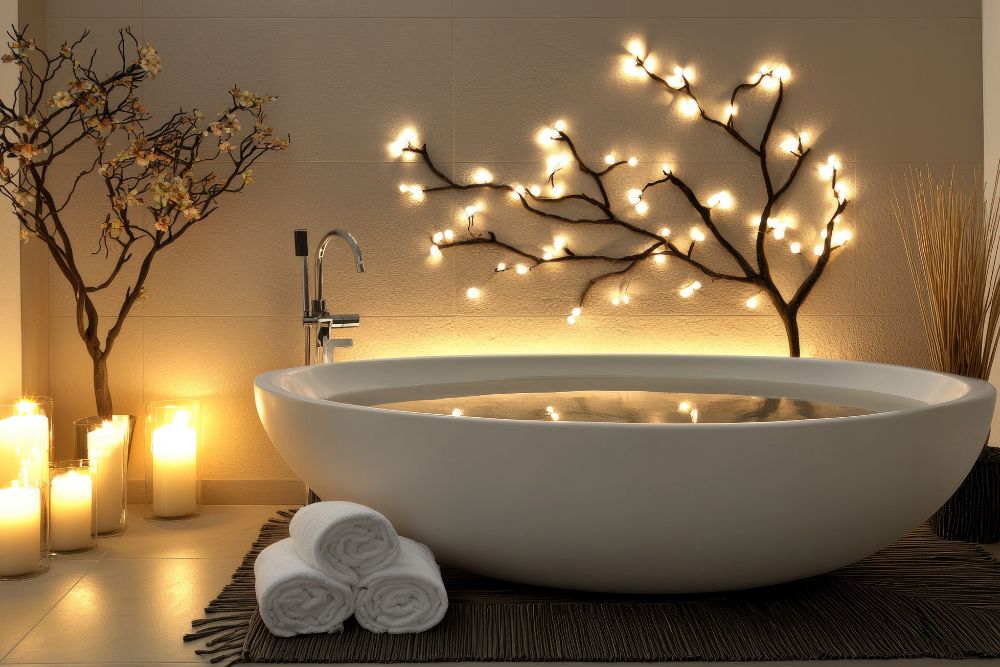
Energy efficiency is the ultimate bathroom upgrade. It minimizes power consumption and helps the environment without compromising on creature comforts. The quickest and most impactful area to kickstart this transformation is with energy-efficient bathroom lighting. From smart LEDs to low-tech solutions, let’s talk about your options and how you can strike a solid investment.
Top 3 Energy-Efficient Bathroom Lighting Options
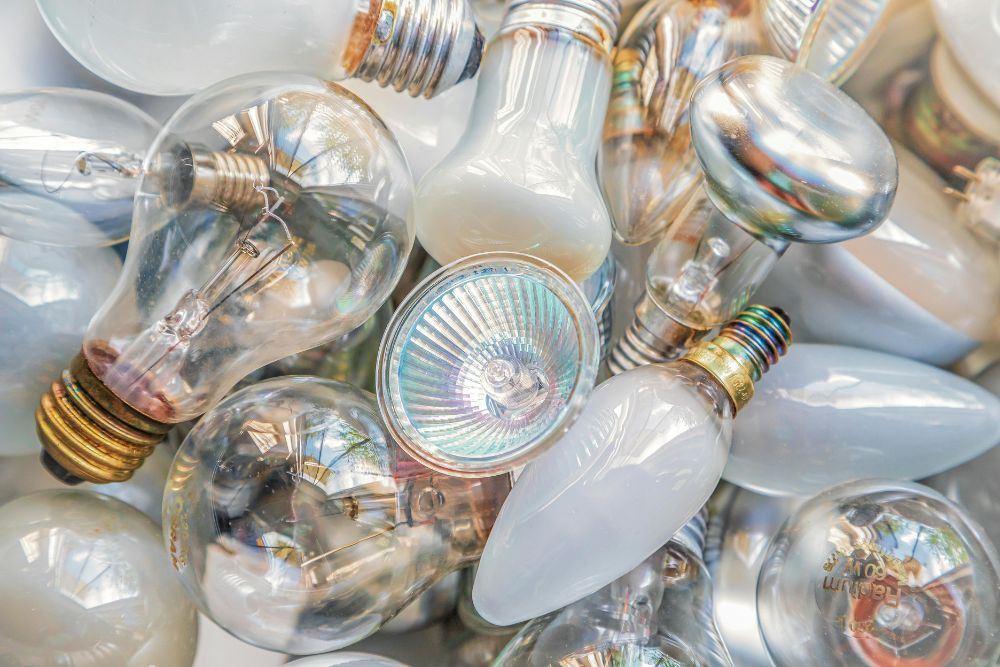
Many years ago, the most efficient bathroom lighting was the fluorescent lamp. While it saves more energy than its incandescent counterparts, it has its downsides. For one, it contains mercury, takes time to warm up, and brings a sterile, hospital-like tint to the room.
Nowadays, you don’t need to sacrifice safety and quality for energy efficiency. Here are some brilliant, energy-efficient solutions for modern bathrooms:
1. Light-Emitting Diode (LED)
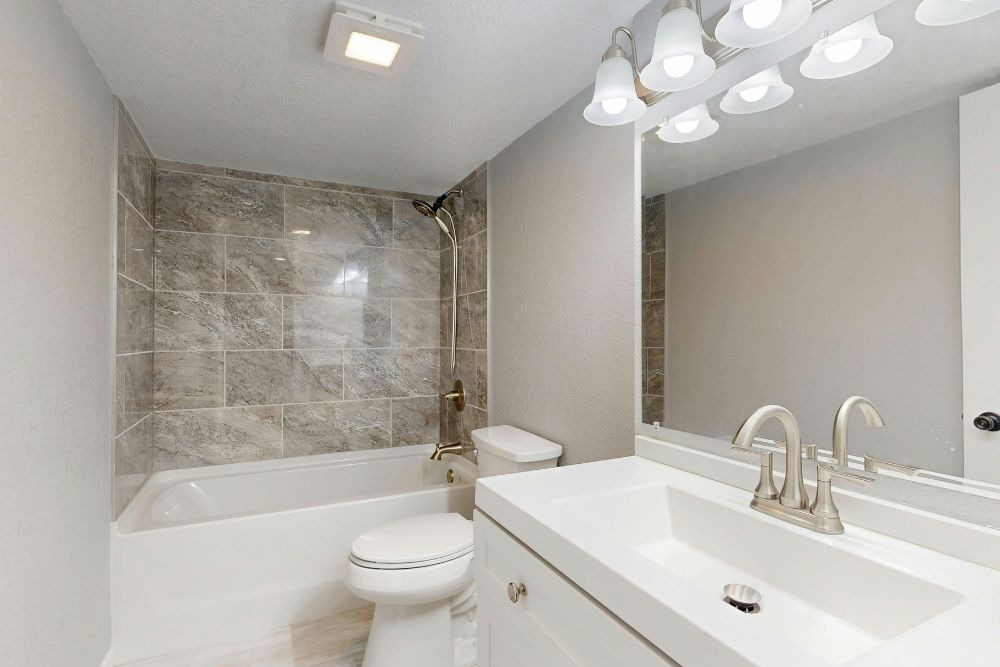
For energy-efficient bathroom lighting, LEDs are the gold standard. Unlike older bulbs, LEDs directly convert most of their power into light, wasting little energy as heat. This reduces their energy use by 75% to 90% compared with incandescent bulbs. As a plus, they are cool to the touch, even after several hours of operation. LEDs can last for many years; some models can even last for decades without notable loss in quality.
One thing professional bathroom remodelers love about LEDs is the wide range of options. This variety allows for limitless combinations and layered lighting solutions. Some of the most popular options for bathrooms include the following:
- LED vanity lights. These lights are located by the mirror. Their strategic location eliminates shadows cast by overhead lamps, allowing you to clearly see your face.
- Recessed LED lighting. LEDs work best with recessed lighting, as they can be easily sealed and rated for the bathroom’s wet environment. They do not overheat in their housing, making them the safest choice for bathroom illumination.
- LED task lighting. LEDs are directional light sources, making them the perfect choice for overhead task lighting. When combined with reflective mirrors or lenses, they can concentrate light where you need it most, such as the vanity counter or grooming station.
- LED sconces. This is a stylish way to incorporate LED lighting into your bathroom. They can provide cross lighting that cancels out overhead shadows while adding an air of luxury to your bathroom.
- Smart LED lights. Bluetooth and IoT integration take LED-based energy-efficient bathroom lighting up a notch. This enables the smart application of technologies such as dimmable lights, automated lighting schedules, and adaptive motion sensing.
2. Organic LED (OLED)
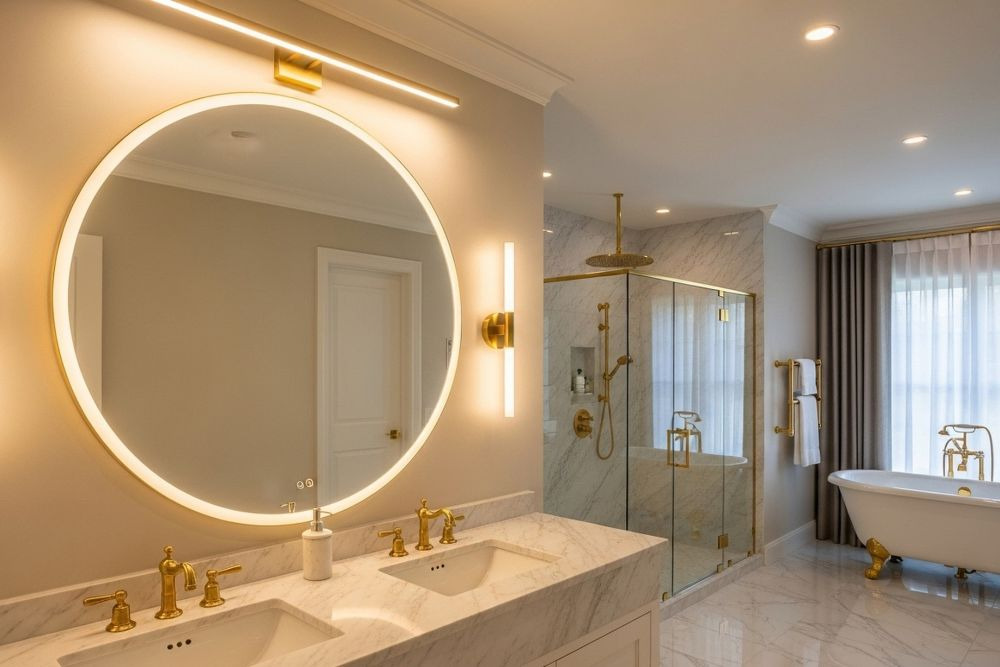
OLEDs are basically light-emitting strips. However, unlike simple LEDs, they emit light across a flat, flexible surface instead of from a single point. This creates a soft, uniform glow across the strip without noticeable glare. While OLEDs are typically used in high-end monitor screens, their thinness and flexibility make them a versatile energy-efficient bathroom lighting solution.
Common bathroom applications of OLEDs include the following:
- OLED vanity lighting. The OLED’s soft, diffuse lighting makes it the perfect alternative to vanity LED lamps. The uniform lighting lets it mimic natural lighting, which is ideal for grooming sessions.
- Interior cabinet lighting. Ultrathin OLEDs are at home in the bathroom cabinet. They make for excellent light sources that don’t take up precious storage space.
- Architectural accents. OLED strips can be wrapped around curves and corners and cut into bespoke shapes. This makes them useful as aesthetic lighting for your bathroom.
3. Solar Tube Lighting
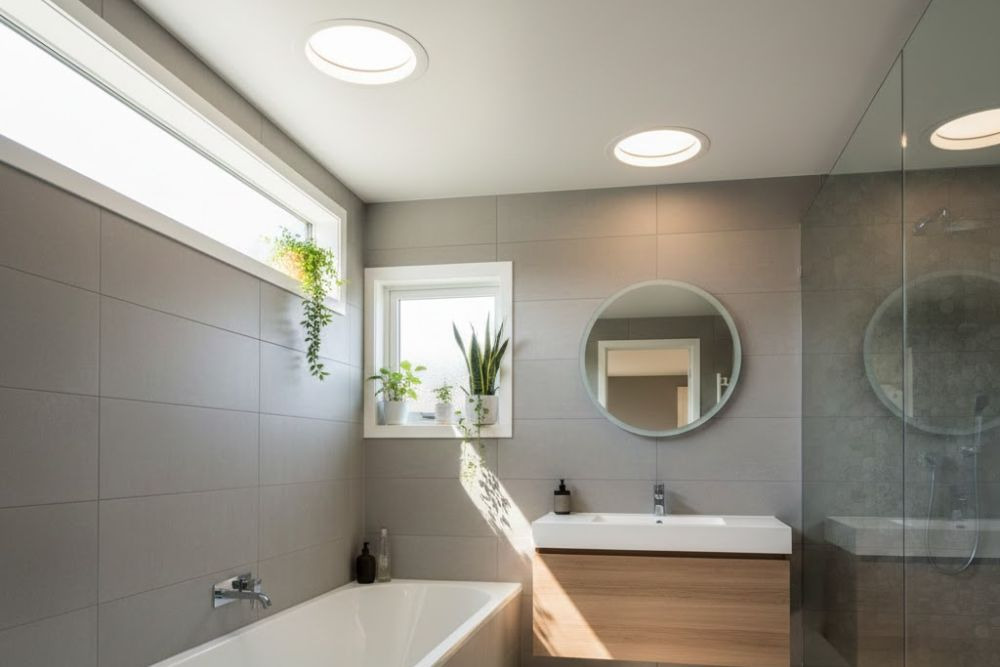
A solar tube, by all accounts, is a tubular skylight. It captures sunlight from the roof and channels it through a reflective tube, effectively delivering natural light into the bathroom. Unlike LEDs and OLEDs, solar tubes don’t consume power, making them the most eco-friendly and energy-efficient bathroom lighting option in this list.
On the flip side, solar tubes are only useful during the day, so you will need a secondary light source for the evening. They are also strictly limited to overhead lighting and bathrooms with direct roof access.
How to Choose the Right Energy-Efficient Lighting?
If you’re looking to switch to energy-efficient bathroom lighting, here’s a quick step-by-step shopping guide to help you get started:
- Consider your application. Identify the bathroom area you want to illuminate and the specific use for the light. LEDs and solar tubes are best suited to overhead lighting, while OLEDs are better suited to compact and decorative applications.
- Look for wet-rated lights. The bathroom can be a damp place. You will want lamps that can survive water contact and humid environments.
- Look at the lumens instead of watts. LEDs and OLEDs are already energy-efficient, so you should just look at the lumens or the light they produce. Your choice depends on the size of your bathroom:
- 2,000 to 3,000 lumens for main bathrooms.
- 1,000 to 1,500 lumens for small powder rooms.
- Select the right color temperature. The color temperature, measured in Kelvins (K), dictates the general feel of the bathroom. Consider the following temperatures and their corresponding applications:
- Warm whites (2,700 to 3,000 K). This creates a soft, cozy atmosphere conducive to evening baths.
- Cool whites (3,500 to 4,500 K). This is the most common application of ambient lighting.
- Daylight (over 5,000 K). As this can be too harsh for the ambience, it is better suited to focused lighting.
- Evaluate the color quality. The light’s color quality is determined by the Color Rendering Index (CRI). Lighting solutions with 90 CRI have similar color quality to natural light, making them ideal for bathrooms.
- Check for Energy Stars. Electrical products, including lights, get their Energy Star rating after rigorous government-mandated testing. The higher the rating, the better the output and lower the energy consumption.
Final Thoughts
Upgrading to energy-efficient bathroom lighting solutions is the path to a bright, sustainable future. It’s not just a move from old, power-guzzling bulbs. It is an investment in safety, style, and less expensive electric bills.
FAQs
What type of lighting is best for bathrooms?
Lights rated for wet and damp conditions perform best in bathrooms. Recessed lighting, in particular, is well-suited for this space. The bathroom is a humid environment, so well-protected water-resistant lighting is a must.
What type of light fixture is best for a bathroom ceiling?
Recessed lights work best for bathroom ceilings. Their housing keeps them safe from moisture and errant water splashes. Plus, they give your ceiling a clean, minimalistic look.
What is the current trend in bathroom lighting?
In 2026, bathroom lighting trends are headed to integrated minimalism. This means a shift toward compact, concealed light sources. Vertical space takes priority as bulky lighting solutions go out of fashion.
Should a bathroom have warm or cool lighting?
Ideally, bathrooms should have both warm and cool lighting. Cool lights are useful for high-precision tasks and ambient illumination. Meanwhile warm lighting creates a serene, spa-like atmosphere.
What is the best lighting for a small bathroom without windows?
High-CRI layered lighting is the most effective way to illuminate small bathrooms without windows. For bathrooms with roof access, integrating a solar tube is also a worthwhile solution.