If your deck feels a little spongy underfoot, the railing wiggles when you lean on it, or you’ve spotted dark, soft wood near the house, you’re not alone. In our climate, decks take a beating. Months of rain, shade that never dries out, and old flashing that lets water sneak behind the boards — it all adds up. The good news: most deck problems are fixable, and catching them early keeps a small repair from turning into a big one. If more than about a third of the boards are going, replacing the surface in composite often costs less over ten years — see what TimberTech decking costs.
Here’s a straight breakdown of what deck repair in Seattle actually costs in 2026, what the common problems are, and how to tell when it’s smarter to repair than replace.
What deck repair costs in Seattle (2026)
Prices depend on what’s wrong and how deep it goes. A few loose boards is a quick job. Rot that’s reached the framing is a different story. These are 2026 estimates for the Seattle area — your real number depends on your deck’s size, height, materials, and how much damage is hiding under the surface.
| Repair | Typical cost (estimate) |
|---|---|
| Replace a few rotted or cracked boards | $300 – $1,500 |
| Resurface the deck (new boards on a sound frame) | $15 – $40 per sq. ft. |
| Full board replacement | $10 – $35 per sq. ft. |
| Railing repair or replacement | $500 – $4,000 ($25 – $100 per linear ft.) |
| Structural repair (joists, beams, ledger) | $1,500 – $6,000 |
| Major structural rebuild | $10,000+ |
| Average full deck repair, Seattle | ~$1,300 – $5,200 |
The reason the range is so wide: what looks like a $500 board swap has a way of turning into a $5,000 structural fix once someone gets underneath and sees what the water has been doing. That’s normal here. It’s also why a proper look before the work starts saves you money — no surprises halfway through.
The most common deck problems we see around Puget Sound
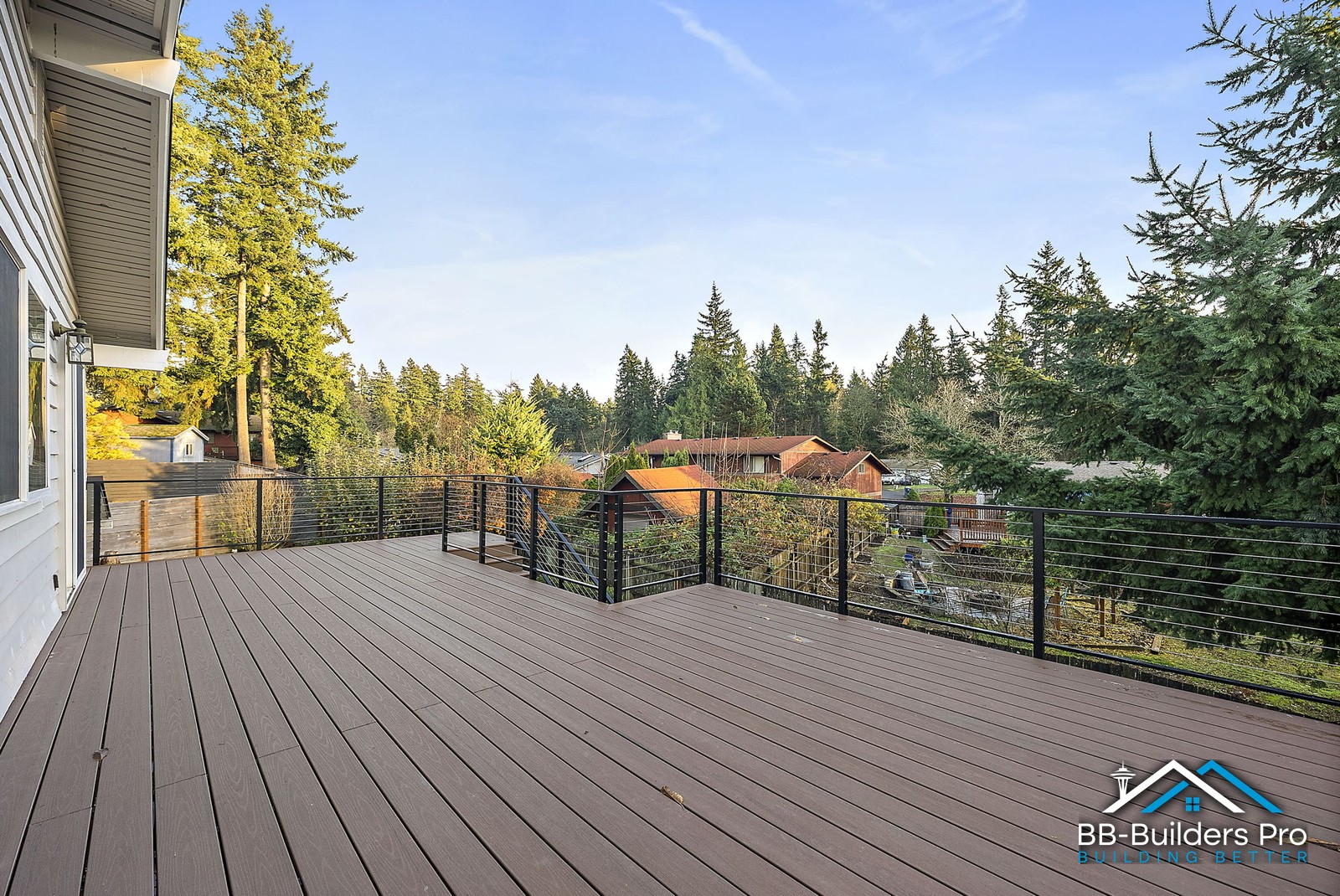
Dry rot (the quiet one)
Rot is the number-one reason Seattle decks fail early. Wood doesn’t rot because it gets wet — it rots because it can’t dry out. North-facing sections that never see sun, spots where two boards meet and trap water, and anywhere leaves pile up: those stay damp for months and slowly go soft.
By the time you can see rot on the surface, it’s often already in the joists underneath. Poke suspect wood with a screwdriver — if it sinks in or the wood is dark and crumbly, that’s rot, not just weathering. Repairing rot early runs a few hundred dollars. Let it spread into the framing and you’re looking at $1,500 to $6,000, sometimes more.
Loose or wobbly railings
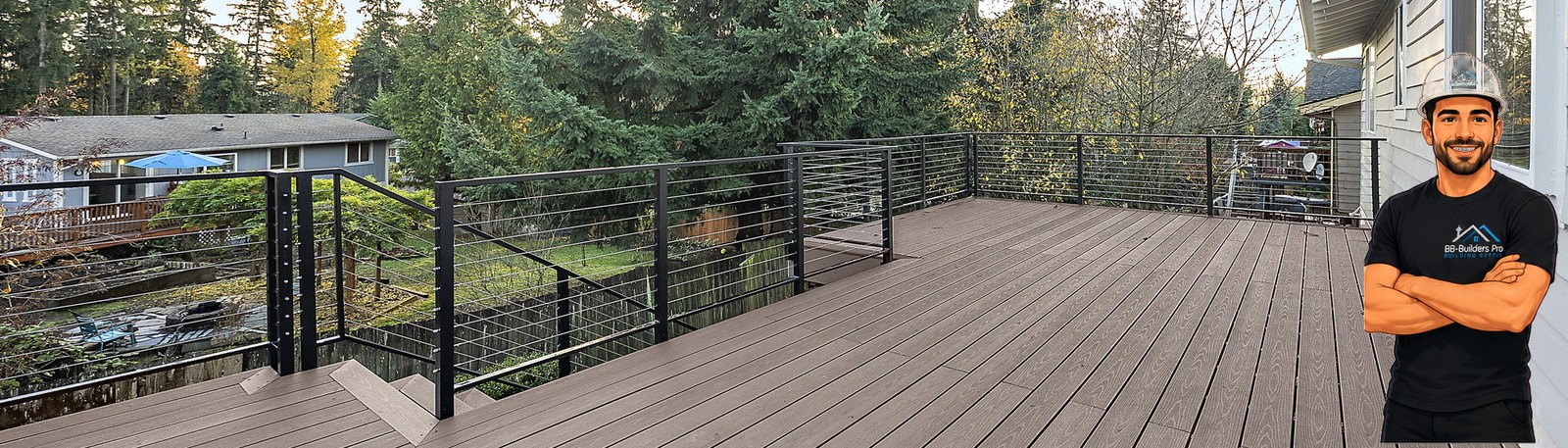
Railings are a safety issue, not a cosmetic one. A railing that moves when you lean on it usually means the posts or their connections have loosened or rotted at the base. Railing repairs run roughly $25 to $100 per linear foot depending on the material and how hard the posts are to reach. If your deck is up off the ground, this is the fix I’d never put off.
Leaks and failing flashing at the house
This is the one that scares contractors, and it should. Where your deck attaches to the house, there’s a board called the ledger, and it needs proper flashing to shed water away from the wall. When that flashing is missing, rusted, or lifting, water runs behind it every time it rains — and it can’t dry out. Over three to five years, the rim joist inside the wall quietly rots. The lag screws holding the deck lose their grip in soft wood, and that’s how you hear about decks tearing away from houses.
If your deck is attached to the house and you’ve never had the ledger and flashing checked, that’s the first thing to look at — the damage can spread into your home’s framing, which costs far more than the deck itself.
Surface wear and gray, splitting boards
Sometimes the frame is fine and only the boards are tired — faded, splintering, cupping. That’s a candidate for resurfacing: new decking installed on top of a sound existing structure. It’s a good middle path, usually $15 to $40 per square foot, and it buys you a like-new deck without paying to rebuild the whole thing.
Repair or replace? How to decide
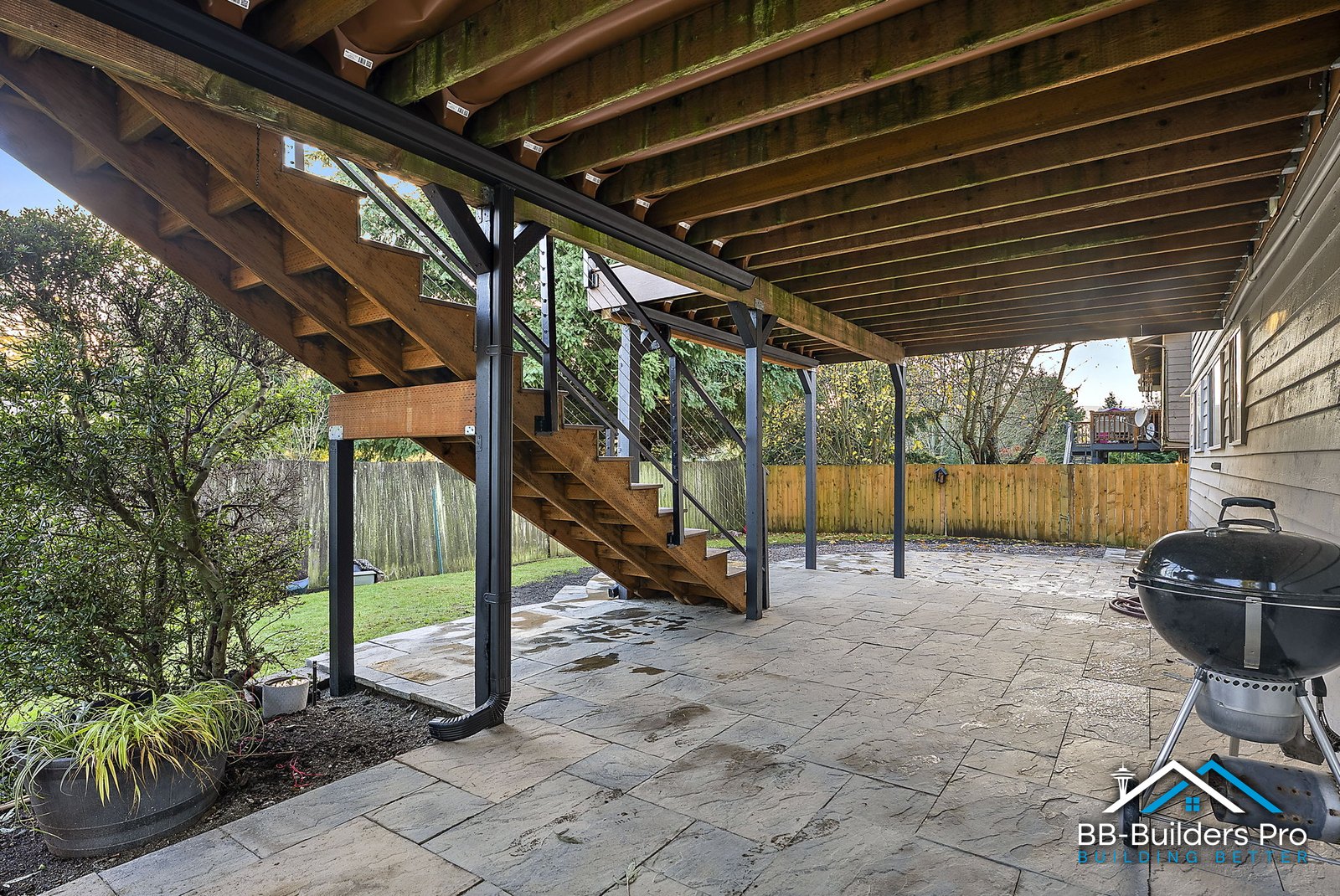
A simple rule: if the frame is sound, repair. If the frame is rotting, seriously consider replacing.
Lean toward repair when the posts, beams, and joists are solid and the damage is limited to surface boards, a section of railing, or one rotted area you caught early. You’ll spend a fraction of a rebuild.
Lean toward replacement when rot has spread through multiple framing members, the deck is old and was never built to current code, or you’re repairing something every year. At that point you’re pouring money into a structure that’s near the end of its life. If you’re weighing a full rebuild, our guide to deck cost in Seattle — composite vs. wood breaks down what a new deck runs.
An honest inspection makes this call for you. A good contractor will tell you when a repair is the smart money and when it’s throwing good money after bad.
Do you need a permit to repair a deck?
Swapping like-for-like boards or a section of railing generally doesn’t need a permit. Structural work — replacing joists, beams, the ledger, or rebuilding a raised deck — often does. Around King County, cities like Bellevue and Kirkland require a permit for decks over 30 inches high or any deck attached to the house, and structural repairs can fall under that. Rules vary by city, so it’s worth a quick check before major work. We cover the details in our post on deck permits in the area.
One thing that isn’t optional: anyone working on your deck should be registered as a contractor with Washington L&I, bonded, and insured. Structural deck work holds people up in the air — this is not the place to hire the cheapest handyman with a truck.
How to keep your deck out of the repair cycle
A few habits go a long way in our climate:
- Keep it clear. Sweep off leaves and debris, especially in corners and where boards meet — those are the wet spots that start rot.
- Give it a wash once a year and re-seal or re-stain wood decks on schedule. Sealed wood sheds water; bare wood soaks it up.
- Check the flashing where the deck meets the house every year. Look for gaps, rust, or lifting edges.
- Fix loose railings and popped fasteners as soon as you notice them — small, cheap fixes now beat structural repairs later.
Get a straight answer on your deck
If you’re not sure whether you’re looking at a quick fix or a bigger problem, the smartest first step is an inspection from someone who repairs decks for a living. We’ll tell you honestly what your deck needs — repair, resurface, or replace — and what it’ll cost, with no pressure.
BB-Builders Pro handles deck repair and outdoor living across Seattle, Bellevue, Renton, and the greater Puget Sound area. Call 206-851-4233 or reach out through our contact page to set up a look.
Frequently asked questions
How much does deck repair cost in Seattle?
Most deck repairs in the Seattle area run about $1,300 to $5,200 in 2026, with an average around $3,200. Small jobs like replacing a few rotted boards can be $300 to $1,500, while structural repairs to joists, beams, or the ledger climb to $1,500 to $6,000 or more. These are estimates — the real number depends on your deck’s size, height, and how far the damage has spread.
How do I know if my deck has dry rot?
Press suspect wood with a screwdriver. If it sinks in easily or the wood is dark, soft, and crumbly, that’s rot. Check the shady, north-facing sections and anywhere water sits — those go first. Remember that surface rot usually means there’s more underneath in the joists.
Should I repair or replace my deck?
If the frame (posts, beams, joists) is solid and the damage is limited to surface boards or railings, repair is usually the smart money. If rot has reached multiple framing members, or the deck is old and you’re fixing something every year, replacement often makes more sense.
Can you just replace the deck boards and keep the frame?
Yes — that’s called resurfacing, and it’s a good option when the structure is sound but the boards are worn. It typically runs $15 to $40 per square foot and gives you a like-new deck without paying to rebuild the whole thing.
Why do Seattle decks rot so fast?
Our wet climate is the main reason. Wood rots when it can’t dry out, and shaded, rainy Puget Sound conditions keep decks damp for months. Poor flashing where the deck meets the house makes it worse by trapping water against the wood.