
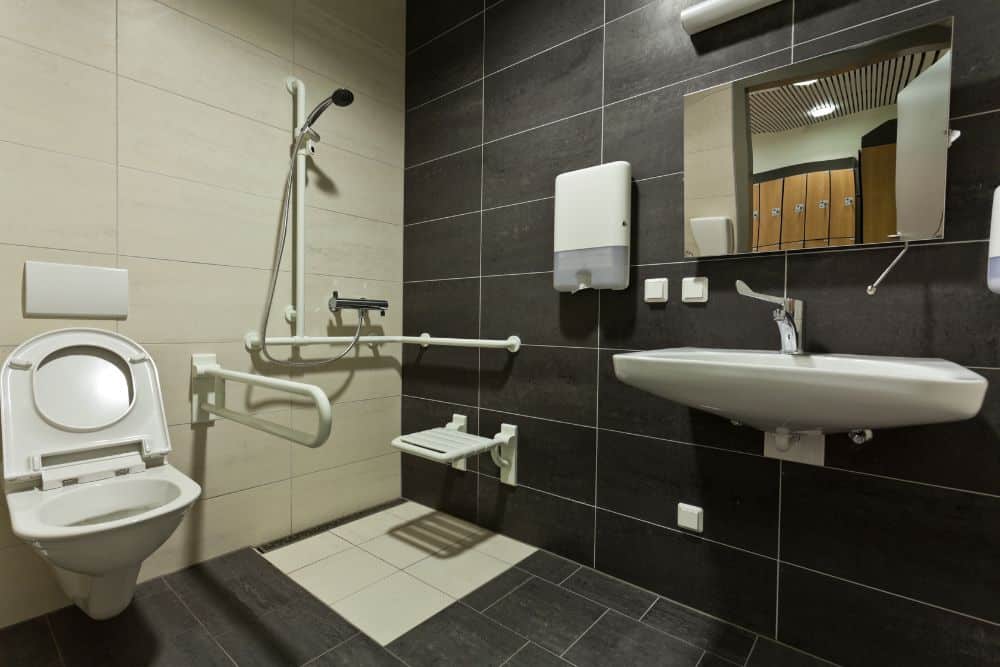
You don’t need to choose between beauty and safety when it comes to bathroom remodeling. In Seattle, where aging in place is the norm, it’s possible to have both. By adhering to the Americans with Disabilities Act (ADA) standards, you can turn your bathroom into an inclusive, accessible space. From grab bars to optimal clearances, here’s what you need to know about ADA-compliant bathroom remodeling, where federal standards meet style.
What Is an ADA-Compliant Bathroom?
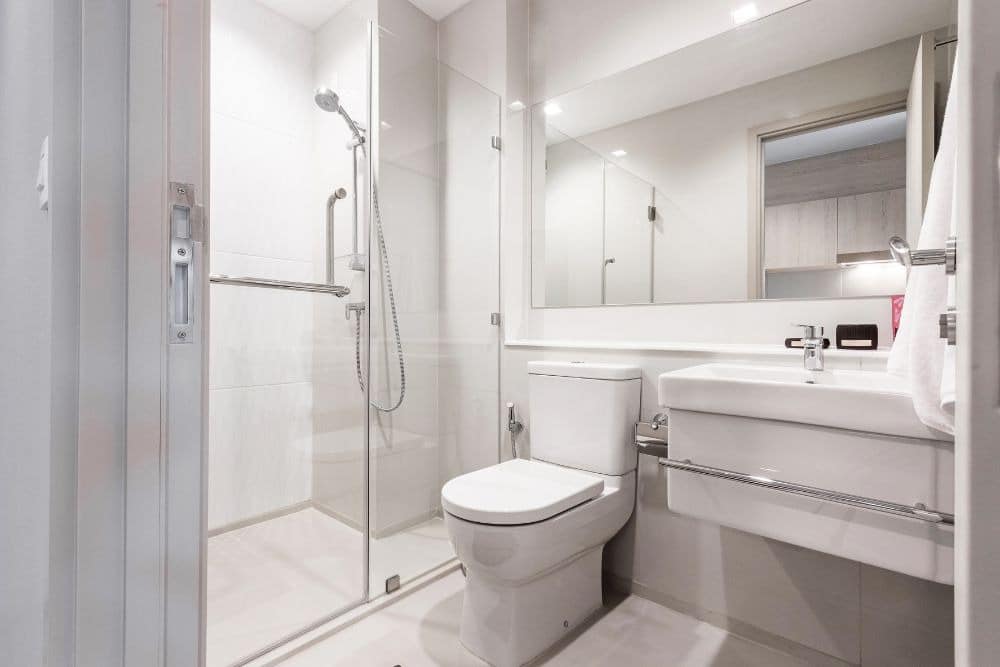
An ADA-compliant bathroom includes features that ensure all users can fully use the space. It especially considers the needs of household members with disabilities. Built around ADA standards, such a bathroom should be navigable by someone in a wheelchair. It should provide full independence and comfort for all users through features such as grab bars and shower seats.
Bathroom Requirements for ADA Compliance
ADA’s hard bathroom requirements focus on preventing discrimination against people with disabilities. In other words, it aims to make the space safe and usable for all. It uses wheelchair users and the visually impaired as physical design benchmarks, with consideration for the hard-of-hearing. The following standards reflect this fact:
Optimal Floor Space Clearance
ADA requires the following to allow sufficient clearance for wheelchair users to move or make 180-degree turns without hitting the bathroom’s walls or fixtures:
- Circular turning space: 60 inches in diameter.
- T-shaped turning space: 60 inches by 60 inches with 36-inch wide arms.
- Door maneuvering clearance: 18 inches on the pull side of the door.
Vertical Accessibility
These standards allow users to access your bathroom’s vertical features from a seated position:
- Forward and side reach: 15 to 48 inches of unobstructed reach above the floor finish.
- Maximum protrusion: 4 inches into the walking path for objects mounted between 27 inches and 80 inches above the floor finish.
Toilets
The following standards ensure safe transfer from the wheelchair to the toilet seat:
- Toilet centerline: 16 to 18 inches from the adjacent wall or partition
- Seat height: 17 to 19 inches from the floor finish to the top of the seat.
- Maximum flush control height: 44 inches above the floor.
- Minimum clearance around the toilet: 60 inches in width by 56 inches in depth.
Shower Seating
Similar to ADA’s toilet standards, the following requirements also enable seamless transfer from the wheelchair to the seating:
- Seat height: 17 to 19 inches above the floor finish.
- Seat depth: 15 to 16 inches.
- L-shaped shower seat: 14 to 15 inches of extension from the wall, and 22 to 23 inches in width.
- Seat-to-wall gaps: maximum of 2.5 inches from the back wall and 1.5 inches from the nearest adjacent wall.
- Proximity to entry: within 3 inches of the shower compartment entry.
- Weight capacity: minimum of 250 pounds, given a solid wood or structural wall backing.
Sinks
These ADA requirements provide optimal knee clearance with regard to the height of the rim:
- Maximum rim or counter height: 34 inches above the floor finish.
- Minimum knee clearance: 27 inches in height and 8 inches in depth.
- Minimum toe clearance: 9 inches above the floor finish.
- Faucet reach: 20 to 25 inches in maximum depth.
Grab Bars
Bathroom grab bar placements should follow these standards for solid placements and allow users to leverage their body weight during use:
- Mounting height: 33 to 36 inches from the floor finish to the gripping surface.
- Side wall grab bar: 42 inches minimum length and 12 inches at most from the rear wall.
- Rear wall grab bar: 36 inches minimum length.
- Bar-to-wall gap: 1.5 inches.
Signage
The following requirements allow easy accessibility of information by visually-impaired users:
- Mounting height: a maximum of 60 inches from the floor to the baseline of the highest tactile character, or a minimum of 48 inches from the floor to the baseline of the lowermost text.
- Tactile characters: ⅝ to 2 inches in raised height, and should be in uppercase, sans serif font.
- Braille characters: Grade 2 Braille positioned at least 0.5 inches below the corresponding text.
- Color scheme: high-contrast and non-glare with a matte finish.
- Sign placement: well beyond the door swing, adjacent to the door latch or with an 18-by-18-inch floor clearance around the tactile text.
- Pictograms: at least 6 inches from the floor finish, with accompanying descriptive tactile text and Braille symbols below the symbol.
10 ADA-Compliant Bathroom Remodeling Ideas
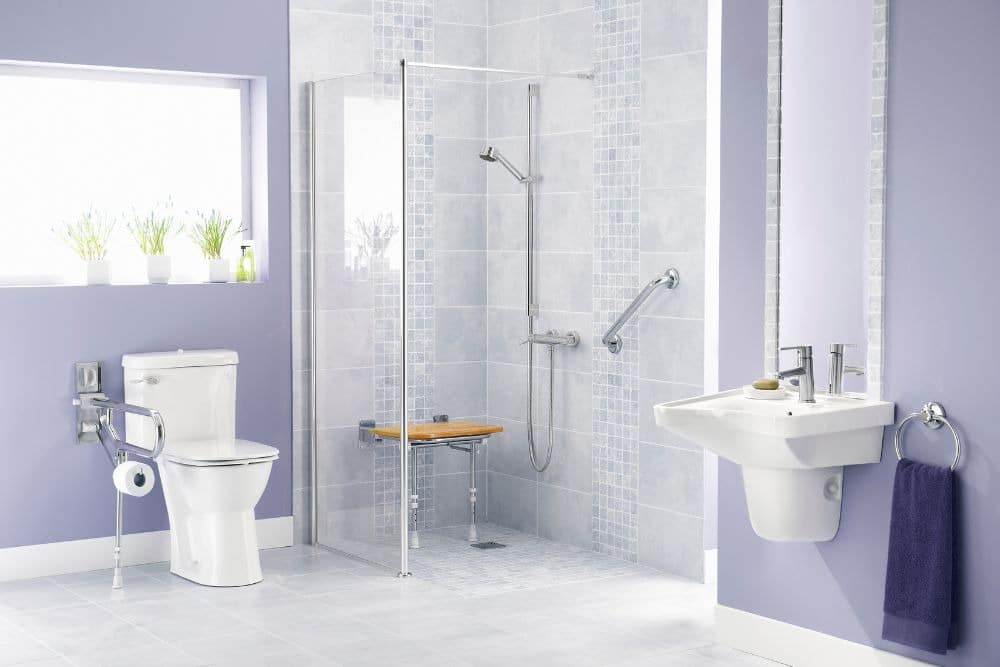
As you can tell, bringing your bathroom up to ADA standards may require a complete remodel. That said, here are some ADA-compliant bathroom remodeling ideas that should work in Seattle and even nearby cities like Federal Way:
- Curbless shower. Curbless showers are accessible to wheelchair users and do not pose a tripping hazard at the entry.
- Floating Vanity. Basically a shelf with a sink, a floating vanity can provide ADA-compliant knee space for wheelchair users.
- Touch-free fixtures. Fixtures like hands-off showers and faucets are not only sanitary, but could also be useful for users with limited manual dexterity and wrist strength.
- Slip-proof tiles. Slip-proof tiles minimize the risk of falling from accidental slips. These tiles should have a wet dynamic coefficient of friction (DCOF) of at least 0.42 or an R10 or R11 classification.
- Sliding or pocket doors. These doors don’t have a swing arc, maximizing bathroom space and making it easier for wheelchair users to maneuver by the entrance.
- Stylish grab bars. Appropriately set grab bars are already ADA-compliant. Spice it up by integrating shelving or adding high-end finishes that work with the existing decor.
- Folding shower seating. When folded, this provides users without disabilities with more unobstructed space and a more comfortable bathing experience.
- Lowered Light Switches. Switches lowered to ADA’s vertical accessibility standards ensure illumination controls are within reach for users with limited upward mobility.
- Smart toilets. Toilet automation provides maximum independence and hygiene for users who have difficulties with manual dexterity, twisting, or reaching fixtures.
- Rounded countertop corners and edges. Softening the corners and edges makes countertops safer for everyone and provides a safe surface for users who use the feature for stability during bathroom navigation.
Remodeling For Safety Is Remodeling For the Future
Whether you’re looking to sell your Seattle home or are hoping to age in place, investing in ADA-compliant bathroom remodeling is an investment for your future. Make the most of your investment by hiring a professional bathroom remodeler for the job. Get a quote today and transform your bathroom into a safe, inclusive space.
FAQs
What is the minimum size for an ADA-compliant bathroom?
While the ADA does not set a minimum size for bathrooms, it does establish standards for basic bathroom stalls. The space should be at least 60 inches wide. It should have a minimum depth of 56 inches for a wall-hung toilet and 59 inches for a floor-mounted toilet. For everything else, you may refer to the previously cited measurements.
What is the most common ADA violation?
The most common ADA violations typically involve physical barriers that make it difficult for people with disabilities to navigate a space. In bathrooms, this typically involves substandard floor clearance and obstacles that limit maneuverability.
What are common ADA compliance mistakes?
Most ADA compliance errors involve incorrect positioning of required features and inadequate clearances. These deviations can prove inconvenient for users with disabilities or physical limitations.