If you’re pricing out a new deck this year, the first question is usually the same: composite or wood, and what’s it actually going to cost? In Seattle, a wood deck typically runs $40–$80+ per square foot installed, while composite runs $50–$100+ per square foot installed — but the real number depends on your lot, your framing, and how the deck attaches to your house. Below is what we’re seeing on real Seattle-area jobs in 2026, plus where the two materials actually differ once you look past the sticker price. For the composite side of that comparison, our TimberTech deck cost breakdown goes line by line.
Deck Cost in Seattle: Composite vs. Wood (2026 Estimates)
| Deck type | Installed cost per sq ft | 300–500 sq ft project (estimate) |
|---|---|---|
| Pressure-treated wood | $40–$60 | $18,000–$30,000 |
| Cedar or premium wood | $55–$80+ | $25,000–$40,000+ |
| Composite (Trex, TimberTech) | $50–$100+ | $28,000–$45,000+ |
| Hillside / elevated builds (any material) | +$10–$20/sq ft | Add for steep lots, tall footings, engineering |
These are estimates based on current material pricing and Seattle-area labor rates as of July 2026. Your actual quote depends on lot access, framing condition, railing style, and permit scope — every deck we bid gets a walk-through first.
What Actually Drives the Price
Material is only part of it. On most of the decks we build in Seattle, King County, and Snohomish County, these are the line items that move the number the most:
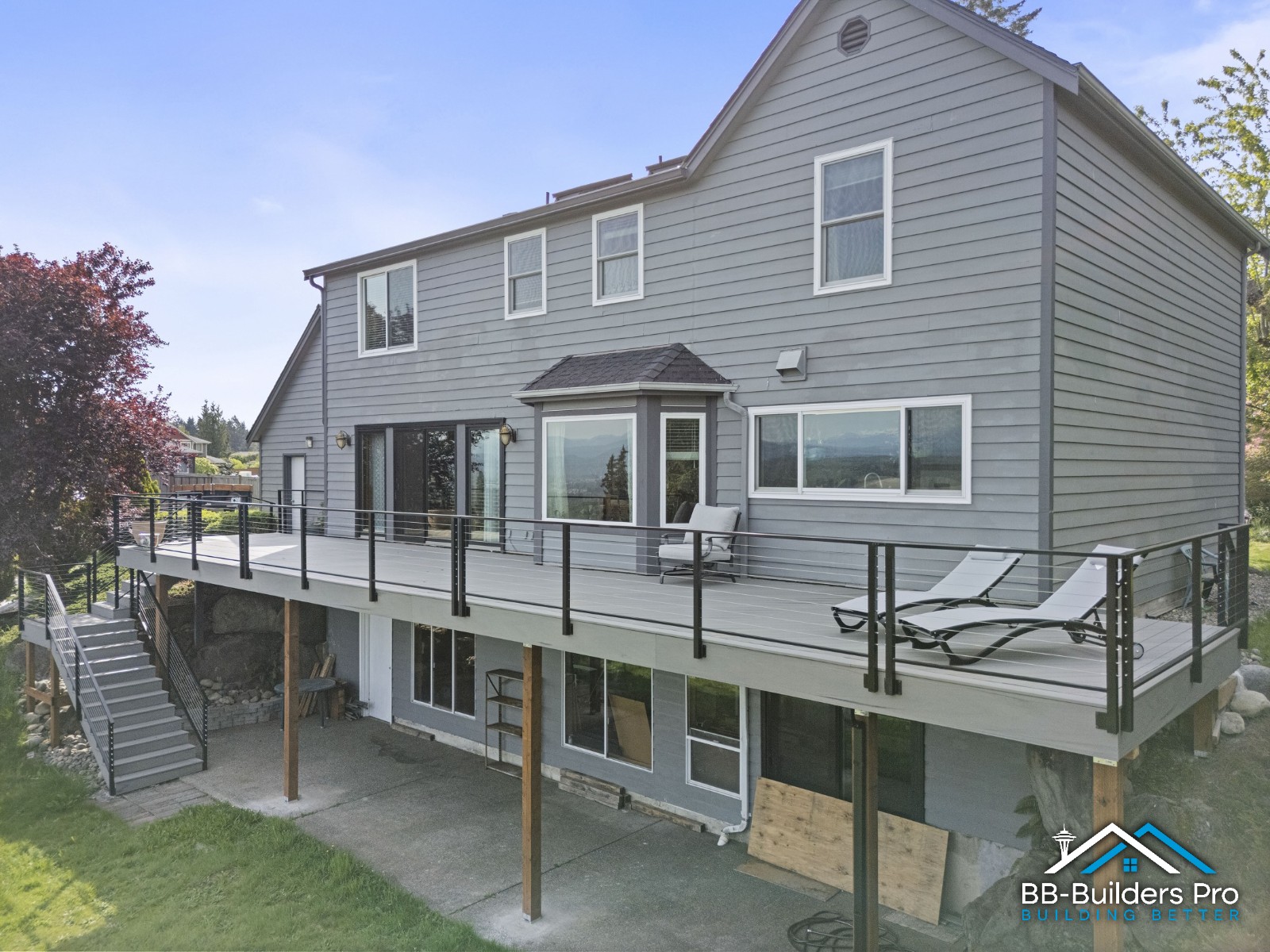
- Elevation and lot slope. A ground-level deck on a flat backyard is the cheapest build. A second-story deck off a daylight basement, or anything on a hillside lot in Magnolia, Sammamish, or the Eastside, needs deeper footings and more structural framing — that adds real cost before a single deck board goes down.
- Ledger attachment and flashing. If the deck ties into the house, it needs proper ledger flashing to keep water out of the rim joist. Skipping this is the single biggest cause of deck rot we see in our climate, and it’s not a place to cut corners.
- Footings and frost depth. Local code sets minimum footing depth, and wet Pacific Northwest soil means we’re often digging deeper or using helical piers on soft ground — especially in areas with heavy clay or fill soil.
- Railing style. Cable rail and metal railing (what you’ll see on most of our recent builds) cost more than basic wood balusters but hold up better against our rain and don’t need repainting.
- Permits. Covered separately below, but it’s a real line item, not an afterthought.
Composite vs. Wood: Which Actually Costs Less Over Time
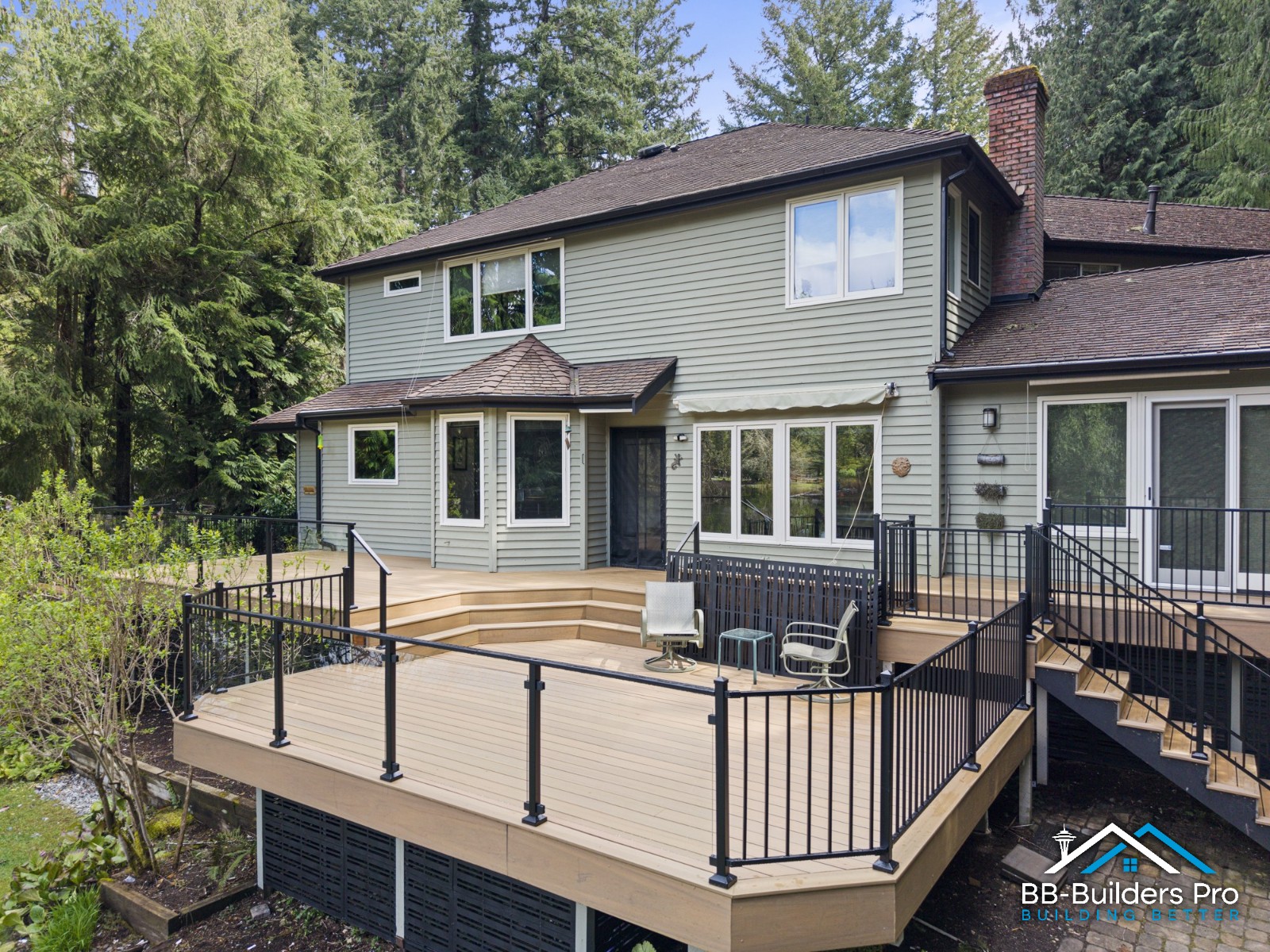
Wood wins on upfront price. Composite wins on what you spend over the life of the deck. Here’s the honest breakdown:
- Wood needs staining or sealing every 2–3 years (roughly $1–$3 per sq ft each time) to keep moisture out. In our climate — rain nine months a year — skipping this leads to graying, splintering, and eventually rot. Most pressure-treated decks need board replacement within 15–20 years.
- Composite costs more to install but needs essentially no staining or sealing, and most Trex and TimberTech products carry 25–50 year warranties. Over a 10-year window, the maintenance savings typically close most of the price gap with wood.
If you’re planning to sell within a few years, wood’s lower upfront cost can make sense. If you’re building for the long haul — especially somewhere shaded and damp like most Puget Sound backyards — composite is usually the better math.
Do You Need a Permit, and What Does It Add to the Cost?
Permit rules vary by city. In Seattle, SDCI requires a permit once your deck’s walking surface is more than 18 inches above grade — stricter than most surrounding cities. In unincorporated King County, permit fees generally run in the $250–$650 range depending on project valuation, and Seattle permits typically add $800–$2,500 depending on scope. We’ve written a full breakdown of permit rules, including Renton’s 30-inch threshold and what happens if you skip one, in our deck permit guide — worth a read before you budget, since the threshold changes depending on which city you’re in.
Why Seattle’s Climate Changes the Math
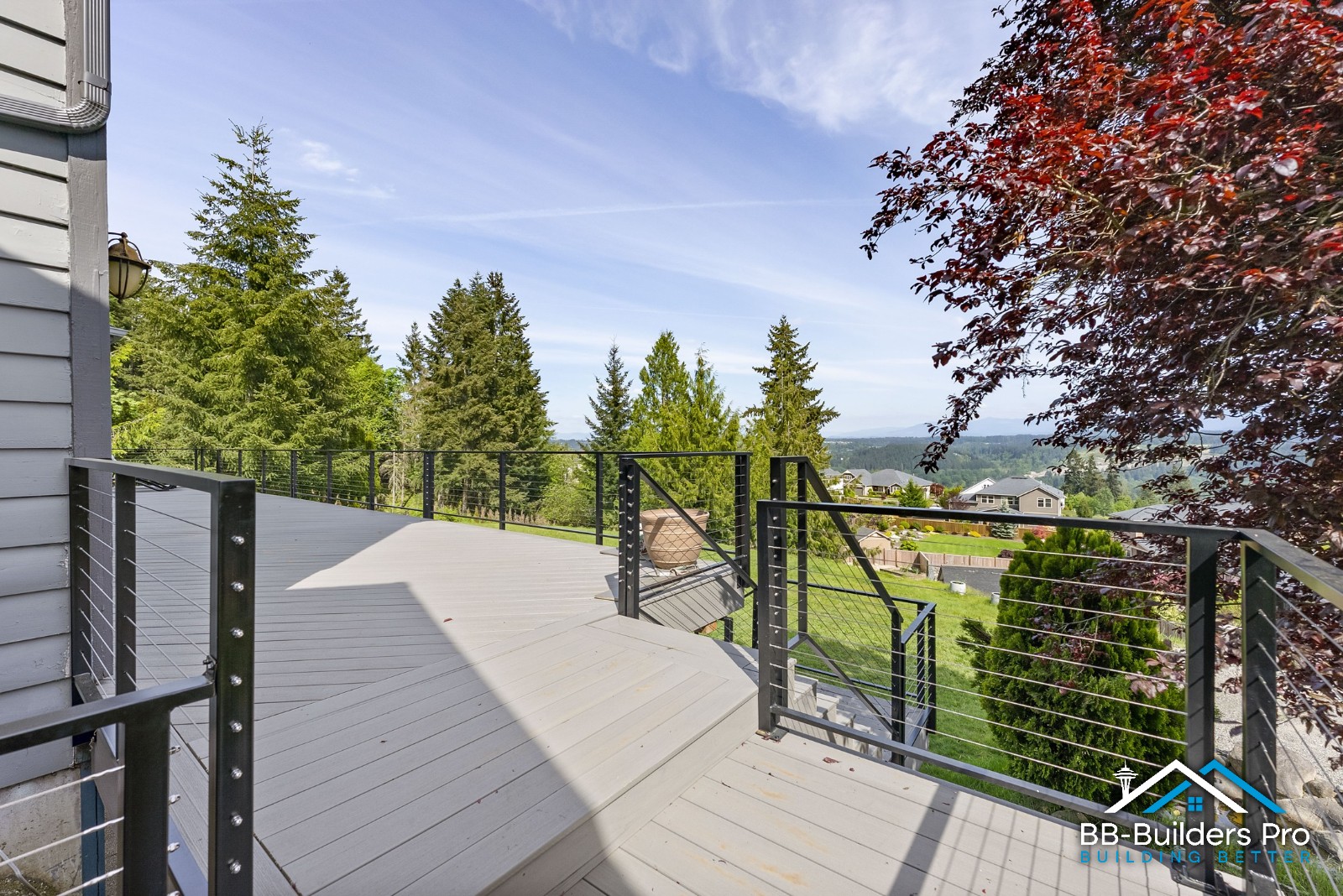
Nine months of rain a year isn’t just a maintenance issue — it changes how a deck should be built in the first place. We flash every ledger board, use coated or stainless fasteners to stop rust streaking, and grade footings to keep water moving away from the structure. On composite decks we still frame with pressure-treated lumber underneath, since the substructure is what actually needs to survive the wet Northwest winters. Skipping any of this to save money upfront is the most common reason we get called out to fix another contractor’s deck within a few years.
What This Has Looked Like on Real Projects
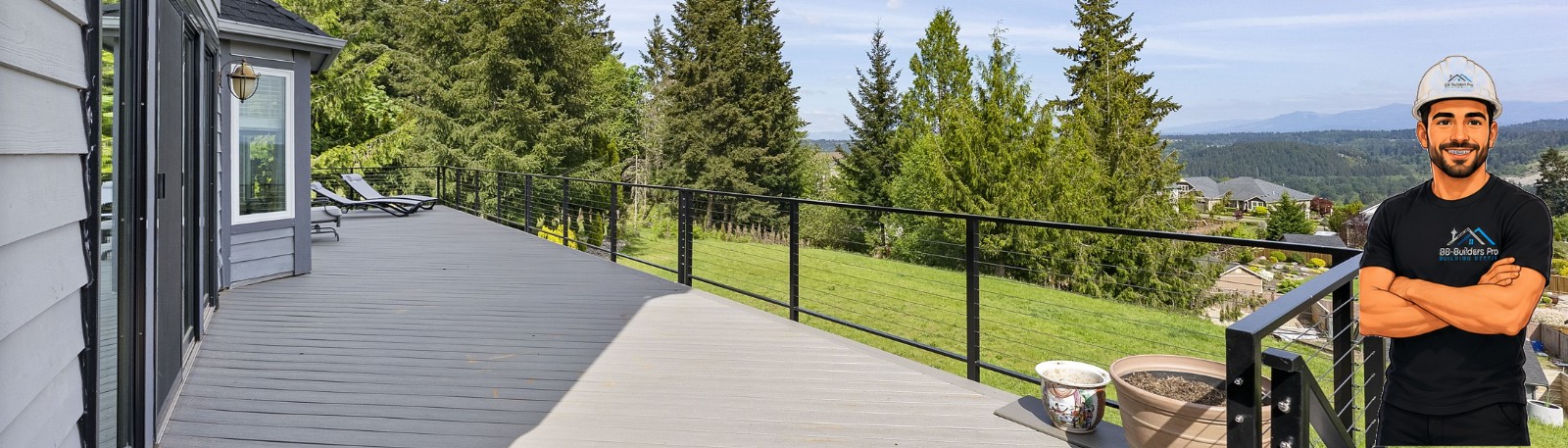
Recent composite deck builds for us have ranged from a straightforward ground-level replacement to a large multi-level deck on a view lot in Sammamish with cable railing and a full drone-to-ground rebuild. Every project starts the same way: a walk-through, a straight answer on what your lot will add to the cost, and a written estimate before anything gets ordered. See more of our work on the Seattle deck installation page.
FAQ
Is composite decking worth the extra cost in Seattle?
For most homeowners planning to stay in their home more than 5–7 years, yes. The upfront cost is higher, but you skip staining, sealing, and the board replacement that wood eventually needs — and composite handles our wet climate with less maintenance.
How much does a 300 sq ft deck cost in Seattle?
As an estimate, a 300 sq ft pressure-treated wood deck typically runs $18,000–$24,000 installed, and composite runs $25,000–$30,000+, depending on elevation, railing, and permit scope. Get a firm number from a walk-through — square footage alone doesn’t capture lot conditions.
Do I need a permit to build a deck in Seattle?
If the walking surface is more than 18 inches above grade, yes. Lower platforms not attached over a basement or story are typically exempt. Rules shift by city — see our permit guide for Renton’s threshold and general permit-fee ranges.
What’s cheaper long-term, composite or wood decking?
Composite, in most cases. Wood costs less to install but needs restaining every 2–3 years and board replacement within 15–20 years. Composite’s higher upfront cost is usually offset by near-zero maintenance within about a decade.
What adds the most cost to a deck build in King County?
Elevation and lot slope. A second-story or hillside deck needs deeper footings, more engineering, and more labor than a ground-level build — that’s typically a bigger swing in price than the choice between composite and wood.
Get a Straight Number for Your Deck
Every lot is different, and the fastest way to get an accurate number is a walk-through, not a square-footage guess. If you’re planning a deck in Seattle, King County, or Snohomish County, call us at 206-851-4233 or reach out here and we’ll get you a written estimate.