Seattle homeowners have more options for building an ADU than almost anywhere else in the country. The city has made it easier to add a second living space to your property. You no longer need to live on-site to build one. You can now have two ADUs on the same lot. And a new backyard cottage can generate $2,000–$3,500 per month in rental income.
But ADUs in Seattle are also one of the most expensive home projects you can take on. Costs are high, permits take time, and the process has many moving parts. This guide gives you honest numbers, explains what drives the cost, and helps you decide which type of ADU makes sense for your property.
Key Takeaways
- A detached backyard cottage in Seattle costs $280,000–$650,000 in 2026.
- A garage conversion ADU is the most affordable option, typically $90,000–$180,000.
- A basement or attached ADU costs $80,000–$450,000 depending on the scope of work.
- Seattle allows up to two ADUs per residential lot as of 2019.
- Permit review at SDCI takes 8–16 weeks for ADU projects.
- Rental income from a Seattle ADU ranges from $2,000 to $3,500 per month depending on size and neighborhood.
- Short-term rentals like Airbnb and VRBO are not allowed for ADUs in Seattle.
What Is an ADU?
An ADU is a separate, self-contained living space on the same property as your main home. It has its own kitchen, bathroom, and entrance. It is not a spare bedroom or a finished basement used for storage. It is a complete living unit that someone can call home.
In Seattle, you will hear several names for these spaces. Backyard cottage. Mother-in-law unit. Granny flat. In-law suite. They all refer to the same thing: a legal, permitted secondary dwelling on your property.
Seattle recognizes two types:
A detached ADU, often called a DADU, is a standalone structure separate from your main house. Most are backyard cottages, though converted garages also qualify. A detached ADU has its own foundation and is completely independent from the main home.
An attached ADU, often called an AADU, is connected to your main house or built within it. Basement conversions, above-garage apartments, and internal home conversions all count as attached ADUs.
You can have one of each on the same lot. That means your property could eventually have three units total: your main home, a backyard cottage, and a basement apartment.
2026 ADU Cost Overview for Seattle
Seattle is one of the most expensive construction markets in the country. Skilled labor is in short supply. Materials cost more here than in most other cities. And the permit process adds both time and fees to every project. These factors combine to push ADU costs well above national averages.
Here is how the three main ADU types compare in 2026:
| ADU Type | Typical Cost Range | Best For |
|---|---|---|
| Detached backyard cottage (new build) | $280,000–$650,000 | Maximum privacy, highest rental income, strongest property value boost |
| Garage conversion ADU | $90,000–$180,000 | Most affordable path to a legal ADU, fastest timeline |
| Basement or attached ADU | $80,000–$450,000 | Homes with existing space to convert, lower upfront cost |
These are all-in numbers. They include design, permits, construction, and utility connections. They do not include furniture or appliances beyond what is built into the kitchen.
The wide ranges reflect real variation in lot conditions, finish level, and project scope. A small garage converted to a simple studio will land at the low end. A custom two-story backyard cottage with high-end finishes on a sloped lot will land at the high end.
Detached ADU (Backyard Cottage): Costs and What to Expect
A detached ADU is a brand-new structure built in your backyard. It sits on its own foundation, has its own roof, and is completely separate from your main home. This is the option most Seattle homeowners picture when they think about adding a rental unit or a space for family.
What it costs:
Most Seattle homeowners spend $350,000–$600,000 for a standard 600–800 square foot detached ADU. Smaller studios start around $280,000. Larger two-bedroom units or custom designs can exceed $650,000.
The cost per square foot for a new detached ADU runs $400–$700. Smaller units cost more per square foot because design, permits, and utility connections are fixed costs spread over less square footage.
Where the money goes:
Design and architecture: $8,000–$18,000. You need a licensed architect to draw plans that meet SDCI requirements. An architect who knows ADU projects well can reduce back-and-forth with the city and speed up your permit.
Permits and fees: $20,000–$45,000. This includes the SDCI building permit, electrical and plumbing permits, and the King County sewer capacity charge. The sewer charge alone runs about $14,000 total, paid either over 15 years or as a lump sum at permit issuance.
Site work and foundation: $30,000–$60,000. A new foundation is one of the biggest single costs. Sloped lots, poor soil conditions, or lots in designated liquefaction zones can push this higher. Site work includes grading, drainage, and excavation before any framing begins.
Utility connections: $10,000–$30,000. Running water, sewer, and electrical service from your main home to the new structure adds significant cost, especially if trenching through hardscape or concrete.
Framing and exterior: $50,000–$100,000+. This covers the structure itself: walls, roof, windows, doors, and exterior finish. Materials and design complexity are the main variables here.
Interior finish and systems: $80,000–$150,000+. Plumbing, electrical, HVAC, insulation, drywall, flooring, kitchen, and bathroom. This is where finish level has the biggest impact on cost.
Seattle-specific site factors:
Sloped lots are common across Seattle neighborhoods. A steeply sloped backyard can require retaining walls, more complex foundations, or extra excavation, adding $15,000–$40,000 or more to site costs.
Alley access is a significant advantage. Many Seattle lots, especially in Ballard, Fremont, and Capitol Hill, back up to an alley. Alley access makes construction staging easier and can reduce utility connection costs. Properties with alley access can sometimes build right up to the rear property line with zero setback.
Environmentally critical areas include steep slopes, wetlands, and landslide-prone zones. If your property is in one of these areas, SDCI requires additional reports from a geotechnical engineer or arborist. These reports can add $3,000–$10,000 to your pre-construction costs.
Size limits:
Seattle caps detached ADUs at 1,000 square feet, or 60% of the main home’s floor area, whichever is smaller. Most practical DADUs land between 400 and 800 square feet.
Garage Conversion ADU: Costs and What to Expect
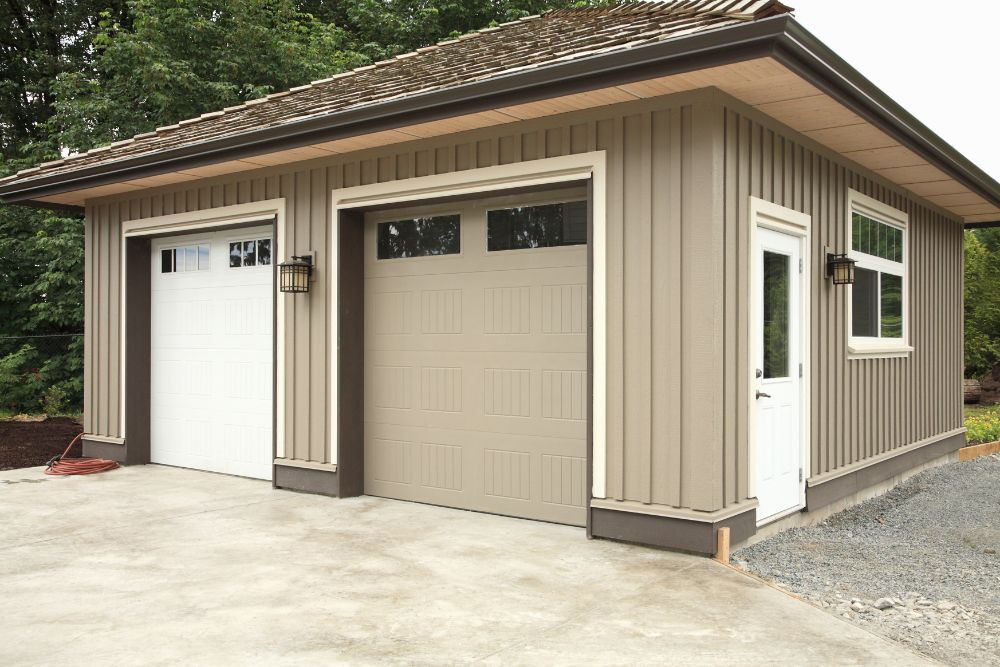
Converting an existing garage into a livable ADU is the most affordable and fastest path to a legal second unit in Seattle. You already have a foundation, walls, and a roof. The work focuses on bringing the space up to residential code and adding a kitchen, bathroom, and utility connections.
What it costs:
A complete garage-to-ADU conversion in Seattle typically runs $90,000–$180,000 all-in. That includes design, permits, and all construction work. The wide range reflects the difference between a straightforward conversion of a well-built modern garage versus an older, smaller structure that needs significant upgrades.
What drives garage conversion costs:
Slab condition: Garage slabs are typically 4 inches thick and are not insulated. For a livable floor, you either pour a new slab, install framing over the existing one, or use an insulated subfloor system. This work alone runs $5,000–$15,000.
Utility connections: A detached garage needs separate water and sewer lines run from the main house. If those lines have to go through concrete, hardscape, or a significant distance, this is often the biggest surprise cost in a conversion, running $10,000–$30,000.
Structural upgrades: Older garages common in Seattle neighborhoods like Ballard and Wallingford were built as storage structures. They often have undersized framing, no insulation, and outdated electrical. Bringing them up to residential code requires meaningful structural work.
Kitchen and bathroom: Adding a kitchen and bathroom is required for the unit to qualify as a legal ADU. Bathroom rough-in, fixtures, and a basic kitchen typically add $20,000–$40,000 to a conversion.
HVAC: Garages have no heating or cooling systems. A ductless mini-split is the standard solution for Seattle ADU conversions. It handles both heating and cooling efficiently and does not require ductwork. Expect to pay $5,000–$10,000 for the unit and installation.
When a garage conversion does not work:
Not every garage is a good conversion candidate. Single-car garages under 300 square feet are difficult to make livable. Very old structures with deteriorated framing may cost as much to convert as building new. If the garage is attached to the house, the permitting and structural requirements become more complex. Your contractor should assess the structure before you commit to a conversion approach.
Basement or Attached ADU: Costs and What to Expect
An attached ADU is built within your existing home or connected to it. The most common version in Seattle is a basement conversion, though above-garage apartments and internal home conversions are also options.
What it costs:
A basic basement conversion to an ADU starts around $80,000. A full conversion with a separate entrance, complete kitchen, full bathroom, and all code-required upgrades typically runs $150,000–$300,000. Complex projects involving significant structural work, lowering the floor for ceiling height, or adding a new exterior entrance can reach $350,000–$450,000.
Key cost drivers:
Separate entrance: A legal ADU needs its own entrance. If your basement does not already have one, adding a door and egress pathway is required. This involves structural work and may affect your landscaping or walkway.
Egress windows: Any room intended for sleeping must have an egress window that meets minimum size requirements. In Seattle, the opening must be at least 5.7 square feet and the sill cannot be more than 44 inches from the floor. Cutting an egress opening in a concrete foundation wall costs $2,500–$5,000 per window.
Ceiling height: Seattle code requires at least 7 feet of ceiling height in living areas. Many Seattle basements were not built with this clearance. Lowering the floor by breaking up and re-pouring concrete is possible but expensive, adding $15,000–$40,000 to a project.
Plumbing: Adding a kitchen and bathroom to a basement requires cutting into the concrete floor to run drain lines. If your basement already has rough-in plumbing, costs are lower. If it does not, expect $5,000–$15,000 for this work alone.
Soundproofing: Attached ADUs share walls and ceilings with the main living space. Good soundproofing improves livability for both the tenant and the main home residents. Adding acoustic insulation and resilient ceiling channels typically costs $3,000–$8,000 but is worth doing during construction rather than retrofitting later.
Seattle Zoning and Rules: What You Need to Know
Seattle has some of the most homeowner-friendly ADU rules in the country. Major changes came in 2019 and have been expanded since. Here is what applies in 2026.
Two ADUs per lot: Seattle allows one attached ADU and one detached ADU on the same residential lot. That means your property could have three units: the main home, a basement apartment, and a backyard cottage.
No owner-occupancy requirement: You do not need to live on the property to build or rent an ADU. You can build a backyard cottage and rent both it and your main home while living elsewhere. This change opened ADU development to a much broader group of property owners.
No parking requirement: If your property is close to a major transit stop, you are not required to provide parking for the ADU. Many Seattle lots qualify, which removes a significant construction cost.
Size limits: Both attached and detached ADUs are capped at 1,000 square feet, or 60% of the main home’s floor area, whichever is smaller.
Height limit: Detached ADUs can be up to 32 feet tall in Neighborhood Residential zones. This allows for two-story designs that maximize usable space on smaller lots.
Setbacks: Detached ADUs must be at least 5 feet from side and rear property lines in most cases. Properties with alley access may be able to build right to the rear property line.
Short-term rentals are not allowed: You cannot list a Seattle ADU on Airbnb or VRBO. The city prohibits short-term rentals in ADUs. All ADU rentals must be long-term leases.
ADUniverse: The City of Seattle offers a free tool called ADUniverse on the SDCI website. It includes pre-approved DADU floor plans, a property eligibility search, and a step-by-step guide to the process. Using a pre-approved plan can reduce permit review time to as little as 2–6 weeks.
The Permit Process in Seattle
All ADU projects require permits through the Seattle Department of Construction and Inspections, known as SDCI. Understanding the timeline helps you plan your project realistically.
What permits you need:
Every ADU project requires a building permit for the main construction. You also need separate electrical, plumbing, and mechanical permits for the trade work. A change-of-use permit is required when converting a garage or non-residential space to a living unit.
Timeline:
Plan review at SDCI currently takes 8–16 weeks for most ADU projects. Using a pre-approved plan from the ADUniverse library can reduce this to 4–6 weeks. Once permits are issued, construction typically takes 3–6 months for a garage conversion and 6–12 months for a new detached structure.
From your first consultation with a contractor to your first tenant moving in, a realistic timeline is 12–18 months for a new detached ADU. Attached ADUs and conversions often run 9–14 months.
Permit fees:
SDCI permit fees for ADU projects typically run $3,400–$10,200 for the building permit alone, based on the 2026 fee schedule. Add electrical, plumbing, and mechanical permits and total permit fees commonly reach $6,000–$14,000. The King County sewer capacity charge adds approximately $14,000 on top of that.
Inspections:
SDCI inspects at multiple stages: foundation, framing, rough electrical and plumbing, insulation, and a final inspection. Every inspection must pass before the next phase of work can begin. Your contractor should build these inspection holds into the project schedule.
Do not skip the permit. Unpermitted ADU work in Seattle can result in daily fines, stop-work orders, forced removal of the work, problems at sale, and voided homeowner’s insurance. There is no legitimate shortcut here. Learn more about ADU permits and the SDCI process in Seattle.
Rental Income and Return on Investment
The financial case for building an ADU in Seattle is strong. The rental market is competitive, vacancy rates are low, and demand for smaller well-located rental units is consistent.
Rental income ranges by unit type:
A studio or one-bedroom ADU in most Seattle neighborhoods rents for $1,800–$2,500 per month. A larger one-bedroom or two-bedroom ADU in high-demand neighborhoods like Ballard, Capitol Hill, or Queen Anne can command $2,500–$3,500 per month. Location, unit size, and finish quality drive the range.
Property value impact:
Homes with permitted ADUs in Seattle typically sell for 10–20% more than comparable homes without them. In some premium neighborhoods, DADUs have sold separately for $700,000–$800,000 after a 2025 rule change that allows detached ADUs to be subdivided and sold as independent lots with their own title. Learn more about ADU property value and resale in Seattle.
Payback period:
A $450,000 detached ADU generating $2,500 per month in rent produces about $30,000 per year in gross rental income. At that rate, the project pays back in roughly 15 years before factoring in property value appreciation. A garage conversion costing $130,000 and generating $1,800 per month pays back in about 6 years. These are simplified estimates and do not account for maintenance, vacancy, or taxes. But they show why ADUs remain one of the most discussed investments in Seattle real estate.
Multigenerational use:
Not every ADU is built for rental income. Many Seattle homeowners build a backyard cottage or basement unit for a parent, adult child, or other family member. This use eliminates vacancy risk and does not require managing a tenancy. The unit still adds property value and can always be rented later. Learn more about multigenerational home design and ADUs in Seattle.
How to Keep Costs Under Control
Use a pre-approved floor plan
SDCI’s ADUniverse library includes dozens of pre-approved DADU designs created by local architects. Using one of these plans reduces permit review time significantly and eliminates the cost of custom architectural drawings. Pre-approved plans are a good fit for homeowners who do not have unusual site constraints or specific design requirements.
Hire an architect with ADU experience
Not every architect knows the SDCI review process well. An architect who regularly submits ADU permit packages can anticipate reviewer comments, reduce revision cycles, and keep your project moving faster. Ask specifically how many ADU permits they have submitted in Seattle and what their average review timeline looks like.
Get three to four contractor bids
ADU contractor pricing in Seattle varies considerably. Get at least three detailed written bids. Each should break out site work, foundation, framing, utility connections, and interior finish separately. A lump-sum bid without line items makes it impossible to compare proposals fairly or identify where cost overruns are coming from.
Set a 15–20% contingency
Old construction, poor soil, and unexpected utility conditions are common surprises in Seattle ADU projects. Plan for them in your budget before you start. Homeowners who do not set aside contingency funds often face very difficult decisions mid-project.
Explore financing early
ADU projects are large enough that most homeowners use some form of financing. A home equity line of credit is the most common option and often provides the best rates. Home equity loans are another option for homeowners who prefer a fixed payment. Some contractors also offer financing programs. Know your financing limit before you start collecting bids, not after. Learn more about ADU financing options for Seattle homeowners.
Choosing the Right ADU Contractor in Seattle
Seattle has a growing number of contractors who specialize in ADU projects. This specialization matters because ADU work involves permits, zoning rules, utility coordination, and construction that is different from standard remodeling.
Verify their license
Every contractor working in Washington state must hold a current contractor’s license. Verify the license number on the Washington Labor and Industries website before you sign anything.
Ask about their ADU permit history
Ask specifically how many ADU permits they have pulled through SDCI. Ask what their average permit review timeline has been on recent projects. A contractor who submits complete, accurate permit packages gets approvals faster and reduces costly delays.
Check references from ADU projects specifically
A contractor with strong general remodeling experience may not have the same depth with ADU projects. Ask for references from homeowners who built ADUs with that contractor in the last two years. Call those references and ask about timeline accuracy, budget management, and how surprises were handled.
Understand what is and is not included
Get a full written proposal that itemizes every phase: pre-construction reports, design fees, permits, site work, foundation, framing, utility connections, interior work, and final landscaping or patching. Know whether permit fees are included or billed separately. Know what the contractor does and does not handle directly versus subcontracting out.
Ask about the SDCI inspection process
A good ADU contractor manages the inspection schedule proactively. They schedule inspections in advance, know what each inspector looks for, and have a track record of passing inspections the first time. Failed inspections cause delays that quickly add cost to a project.
Frequently Asked Questions
How long does it take to build an ADU in Seattle?
A new detached ADU typically takes 12–18 months from start to move-in. This includes 2–4 months of design and permit preparation, 2–4 months of permit review at SDCI, and 6–12 months of construction. Garage conversions and basement ADUs often take 9–14 months total.
Can I rent my ADU on Airbnb or VRBO?
No. Seattle does not allow short-term rentals in ADUs. All ADU rentals must be long-term leases. Violating this rule can result in fines and loss of your rental license.
Do I need to live on my property to build an ADU?
No. Seattle removed the owner-occupancy requirement in 2019. You can build an ADU and rent both the main home and the ADU without living on the property yourself.
How many ADUs can I have on my property?
Seattle allows up to two ADUs per residential lot. You can have one attached and one detached, two attached, or two detached. This means your property could eventually have three separate living units.
What is the maximum size for a Seattle ADU?
Both attached and detached ADUs are capped at 1,000 square feet or 60% of the main home’s floor area, whichever is smaller. Most practical ADUs in Seattle land between 400 and 800 square feet.
Can I sell my backyard cottage separately from my house?
Yes, under rules that took effect in 2025. Detached ADUs can now be subdivided and sold as independent lots with their own title. This created a new market for backyard cottages as standalone for-sale properties. In premium Seattle neighborhoods, DADUs have sold for $700,000–$800,000 as independent units.
What is ADUniverse?
ADUniverse is a free tool on the City of Seattle’s SDCI website. It lets you search whether your property is eligible for an ADU, browse pre-approved DADU floor plans, and follow a step-by-step guide to the permit process. Using a pre-approved plan can cut permit review time to 2–6 weeks.
What is the King County sewer capacity charge?
This is a fee King County charges when a new unit connects to the county’s sewer system. It totals approximately $14,000 and is either paid monthly over 15 years or as a lump sum at permit issuance. It applies to most new detached ADUs and some attached units depending on configuration.
Why do ADU costs in Seattle vary so much between quotes?
Site conditions, finish level, and what is included in each proposal all create wide variation. Sloped lots, poor soil, alley access, and proximity to environmentally critical areas all affect site costs significantly. Always compare bids line by line, not just the total number.
Is a garage conversion or a new backyard cottage a better investment?
It depends on your lot and your goals. A garage conversion is faster, cheaper, and lower risk, but it produces less rental income and adds less property value than a purpose-built cottage. A new backyard cottage takes longer and costs more, but generates higher rent and has a stronger impact on resale value. If your garage is small, old, or in poor condition, a new build may end up being more cost-effective once conversion costs are totaled.