In Seattle, homeowners are required to apply for inspections before proceeding with each key step of their bathroom remodel. This is to ensure compliance with the city’s building code, which aims to keep the project safe for everyone involved. Now, let’s talk about how inspections work for bathroom remodels in Seattle.
Why Inspections Are Necessary
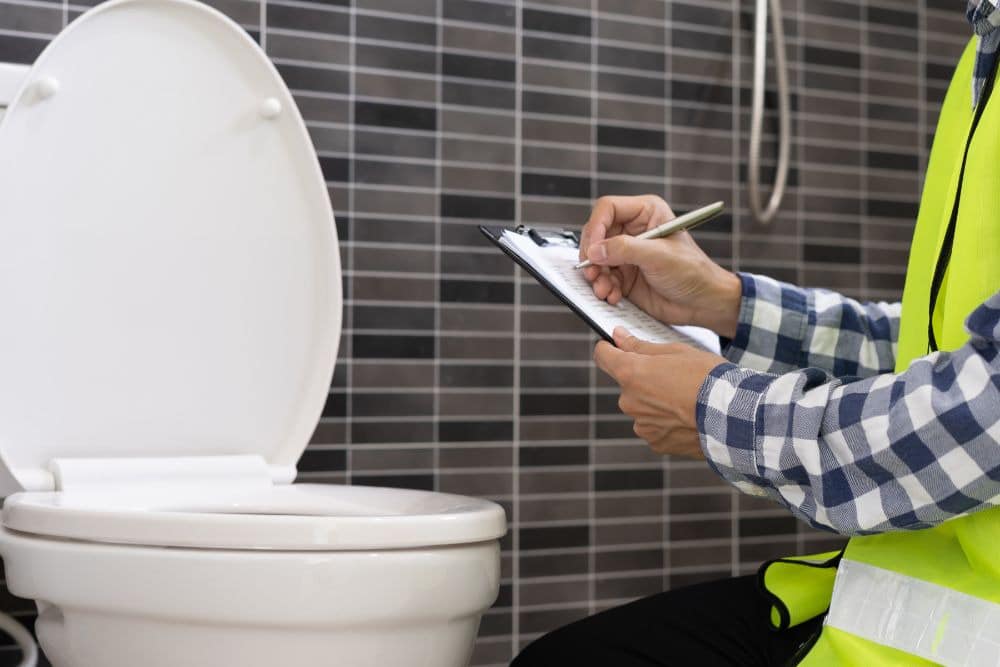
Inspections ensure that bathroom remodels and other home improvement projects are built in accordance with Seattle’s building codes and relevant regulations. These codes establish safety standards based on sound engineering and construction practices.
By flagging any signs of non-compliance, inspectors prevent substandard projects from proceeding. The pause gives the homeowner time to rework their project to comply with Seattle’s building codes. This keeps everyone involved safe until the proper corrections are made.
How to Schedule a Bathroom Remodel Inspection

To schedule a bathroom remodel inspection, contact the Seattle Department of Construction and Inspections (SDCI). The SDCI handles all construction permitting requirements, including inspections. There are two ways to get in touch with the agency:
1. Online Via the Seattle Services Portal
Currently, the best way to schedule an inspection is through the Seattle Services Portal, a site Seattle city departments use to handle requests and applications. Here’s how you can book an inspection through this website:
- Access the Seattle Services Portal.
- Find the permit associated with your bathroom remodel in the My Records tab.
- Find the Inspections link in the details of your permit.
- Schedule or request an inspection through the link. Select the inspection type and your preferred date.
- Verify your identity and contact number.
- Finalize and submit your request.
2. By phone
You may also contact SDCI via phone. There are three ways to do this:
- 24-hour phone line. You may dial (206) 971-9780 at any time to reach the 24-hour line. The call is fully automated, so be sure to have your permit number, your name, and your contact details on hand. The inspections booked are typically scheduled on the same day as the call, but those requested after 3:00 PM will proceed on the next business day.
- Seattle Inspection Support Staff. To get a real human to help you schedule your inspection, call (206) 684-8950. However, this channel is only available from 8:00 AM to 5:00 PM. As with contacting the 24-hour line, be sure to have your permit number, name, and contact information to ensure a smooth scheduling process.
- Text-to-schedule service. The most convenient option is to text SDCI at (206) 971-9780 or (844) 413-2653 and book a schedule using your permit number.
How Inspections Work For Bathroom Remodels: 4 Key Stages
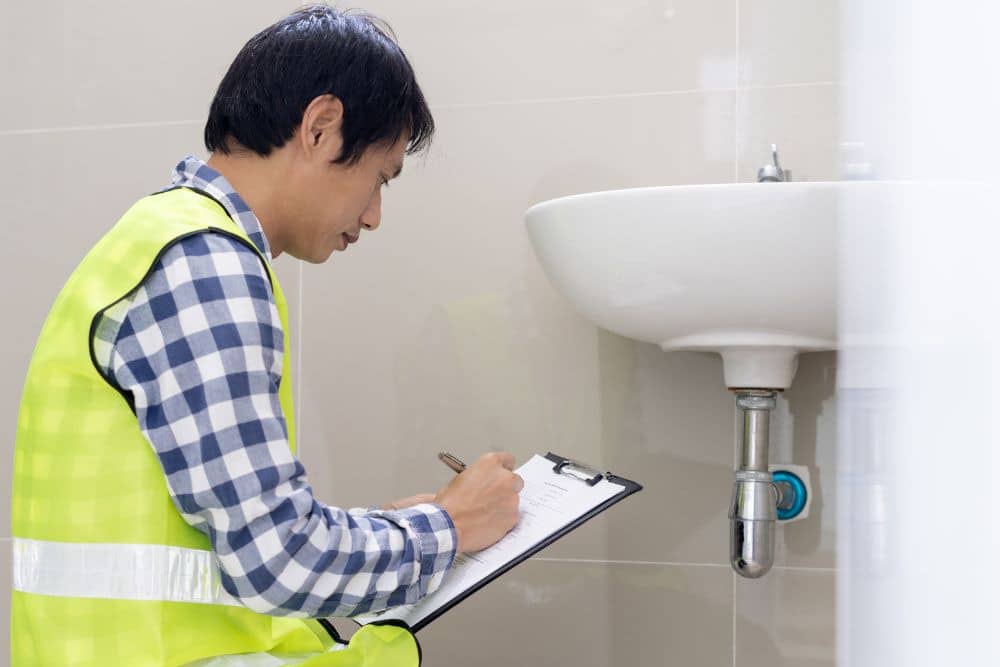
Bathroom remodel inspections in Seattle are held in four distinct stages. Each one is conducted whenever a certain portion of the work is completed.
Cover Inspection
During a cover inspection, SDCI inspectors review rough-ins before they are hidden behind drywall. The goal here is to ensure that all rough-ins comply with Seattle’s seismic and energy codes. This checks these rough-ins:
- Plumbing rough-ins. The drain, waste, and vent (DWV) lines should have the correct slope to allow for the effective egress of waste and foul odors. Your water supply lines should also be properly secured.
- Electrical rough-ins. Electrical components, including junction boxes, grounded wires, and circuits, should be present in the bathroom. The outlets should have ground fault circuit interrupter (GFCI) protection and be connected to a 20-amp dedicated circuit.
- Mechanical rough-ins. The ventilation fan should comply with Seattle’s strict moisture control requirements. It should vent the bathroom air to the exterior of the house, not to the ceiling, to prevent moisture buildup. Additionally, it should have an airflow rate of 50 cubic feet per minute (CFM) for intermittent operation (20 CFM for continuous work) and a noise rating of 1.0 sone or less.
Waterproofing Inspection
After the rough-ins pass inspection, you’ll need to schedule another inspection for your bathroom’s waterproofing. This inspection focuses on the shower area, specifically on the following:
- Shower pan. Inspecting the shower pan requires a flood test that calls for the homeowner’s participation. At least 24 hours before the inspectors arrive, with the drain plugged, the owner will have to fill the shower base to the curb with water. The inspectors will check for any significant drop, which signals a leak that needs immediate attention.
- Shower walls. Your bathroom’s walls should be protected by a waterproofing membrane. It needs to extend at least 3 inches above the showerhead, or, in the case of fully enclosed showers, to the ceiling. They will also check if the benches and wall niches are sloped outward to keep water from pooling at the back.
- Flashing. For curbless showers, the waterproofing membrane should extend at least 12 inches beyond the shower pan’s threshold. However, given Seattle’s damp climate, some inspectors prefer that the waterproofing layer cover the entire floor.
Insulation and Energy Inspection
The insulation and energy inspection comes after the cover inspection, but before the drywall comes up. This checks your bathroom’s insulation and thermal efficiency, with focus on the following:
- Wall and ceiling insulation. Your bathroom’s insulation should have a high-performance insulation rating of R-21. Meanwhile, for top-floor bathrooms, the ceiling should have an insulation rating of R-49 or R-60. The insulation material should not be compressed too tightly or have any significant gaps, especially around electrical boxes.
- Air sealing. Holes where pipes and wires go through should be sealed with fire-rated caulk or expanding foam. This keeps warm, humid air from leaking into the attic space.
- Vapor retarders. The warm side of your insulation should have a layer of Class II vapor retarder. This keeps condensation from forming inside the walls, preventing mold growth.
- Lighting. In compliance with the Washington State Energy Code (WSEC), at least 90% of your bathroom lighting should be high-efficacy LEDs.
- Glazing. Per Seattle’s building codes, the bathroom’s window or skylight glazing should have a heat-loss rating (U-factor) of 0.30 or lower. The inspectors verify compliance through the National Fenestration Rating Council (NFRC) sticker on the glass pane.
Final Inspection
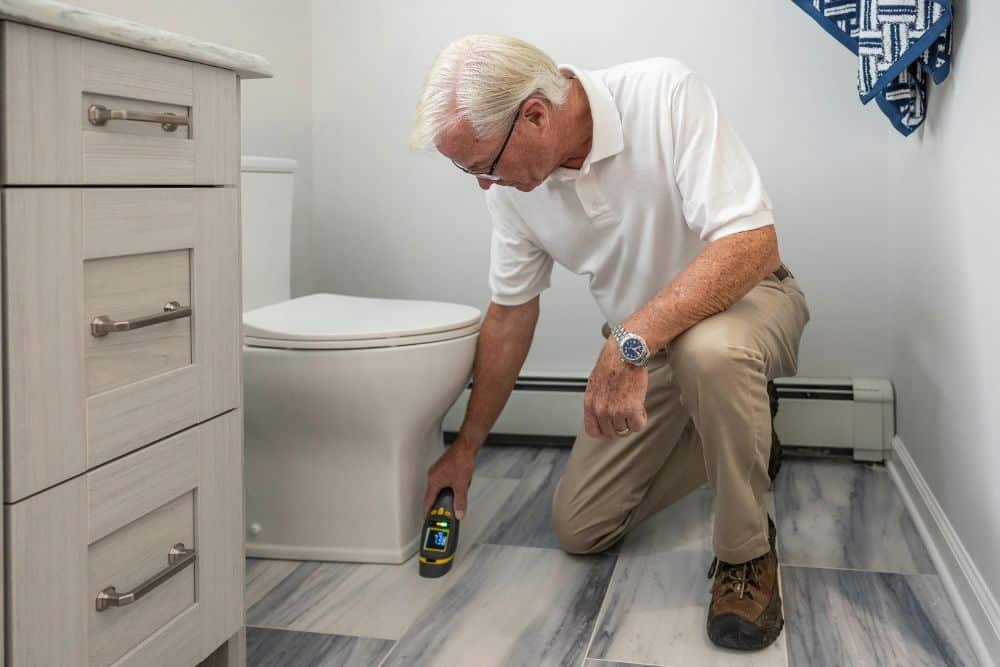
During the final stages of your remodel, SDCI inspectors conduct a comprehensive walkthrough of your project. They want to ensure that the finished bathroom matches the approved designs, so be sure to have your permits and city-stamped plans ready. Your remodel passes the final inspection if it fulfills these conditions:
- The fixtures and plumbing do not leak.
- The ventilation works and vents the air to the home’s exterior.
- The window glazing is properly tempered and safety-rated.
- The outlets are GFCI-protected.
- The lighting meets WSEC’s LED requirements.
- It meets the clearance requirements of the Seattle Residential Code (SRC)—15-inch clearance from the center of the toilet to the nearest wall or fixture on either side and at least a 21-inch clearance at the front.
Summing Things Up
Bathroom remodel inspections are necessary to ensure the project remains legal, safe, and on track. Understanding how inspections work for bathroom remodels is key to ensuring these reviews proceed smoothly and without delay.
BB-Builders Pro has the edge when it comes to bathroom remodels that meet SDCI’s standards. Our years of experience remodeling bathrooms in Seattle and neighboring cities like Edmonds have given us a full understanding of Seattle’s permitting and inspections landscape. Contact us today and learn how we can give your bathroom a stress-free transformation.
FAQs
What is the first thing an inspector wants to see?
The first thing inspectors would like to review is the remodel’s paperwork. They will look for the appropriate permits, licenses, proof of compliance, and supporting documents such as compliance reports and safety data sheets.
What is the biggest red flag in a bathroom inspection?
Unpermitted, illegal, and substandard work collectively raise the biggest red flag during the inspection. This is a sign that the remodel does not comply with existing building codes and may have unsafe modifications.
What happens if an inspector finds unpermitted work after?
Should the inspector find any unpermitted work, the homeowner will be fined and required to apply for the appropriate permit. Additionally, the existing remodel may need to be demolished and reworked in accordance with the building code.