The sink is the heart of your kitchen’s cleanliness. It’s where all the washing happens and where your wastewater exits. In Redmond, WA, when it starts leaking, you know your kitchen could be in trouble. An urgent repair is in order, starting with identifying the source of the leak and applying the appropriate fix.
Most single-unit Redmond homes are built with wood frame construction. Leaking sinks may be challenging to detect until the wastewater starts spilling out of the cabinet. It could even remain unnoticed until water damage starts to threaten the structural integrity of your kitchen and floor. With that in mind, let’s discuss everything about kitchen sink leak repair Redmond homeowners should know about.
Is a Kitchen Sink Leak an Emergency?
Every kitchen leak, including leaking sinks, should be treated as an emergency. Thankfully, Redmond homeowners can handle simple issues causing the leak themselves. Investing in a licensed plumber’s services is up to residents’ discretion, but it’s highly recommended for more complex repairs.
Failing to address sink leaks promptly can ruin your kitchen. Remember, water can’t just keep pooling on the waterproof laminate. It would spill onto the floor, reach the crevices, and infiltrate the wood beneath. If the water has already reached the subfloor or the cabinet boxes, you are usually past a plumbing fix and into a kitchen remodel in Redmond — get a line-item scope before committing to the repair.
The wooden framework can weaken and become soggy when exposed to constant water. It also serves as an ideal environment for molds and wood-eating insects like termites. The leak and the subsequent water damage, if left unchecked for long, could spread beyond the kitchen, compromising parts of your home’s structure.
What Are the Most Common Undersink Leak Causes?
There is no single cause for leaking sinks. It can be one or a combination of any of the following factors:
- Loose connections. Nuts and seals can loosen over time, causing wastewater to inadvertently spill out of the connections.
- Pipe corrosion. Rusted pipes can be brittle and vulnerable to cracking, breaking, and punctures. They cannot reliably hold water and are prone to leaking.
- Faulty faucets. A faucet’s internal parts can wear out over time, leading to improper shut-offs and dripping.
- Damaged strainer. Strainers can deteriorate over time and no longer maintain a watertight seal with the surrounding plumbing.
- Worn washers. Degraded washers, such as gaskets and seals, eventually lose their flexibility and allow gaps to form, letting water escape.
- Water supply issues. Pressure fluctuations in the water supply can cause your mainline to deliver a volume of water that your plumbing can’t handle. This causes your faucet to drip and stress your pipes, leading to damage and leaks.
- P-trap issues. Debris and garbage can clog the U-shaped bend in your sink plumbing, causing the wastewater to back up. This can stress your plumbing, potentially damaging it and causing leaks.
- Clogged drains. Clogging in the drains causes wastewater to go back up the pipes, exerting pressure on your plumbing and causing it to fail and leak.
- Pipe overflow. During an overflow, excess water cannot drain and forces its way through seals, gaskets, and fittings, degrading them under pressure and creating gaps through which the fluid can escape.
Handy DIY Kitchen Sink Leak Repair Redmond Residents Could Use

When it comes to kitchen sink leak repair, Redmond residents don’t always need to call a plumber. They may repair minor leaks—like those caused by loose pipes or fittings—on their own, but will have to resort to professional help for complex issues. For DIY repair work, homeowners will need to follow these general steps.
1. Prepare the workspace.
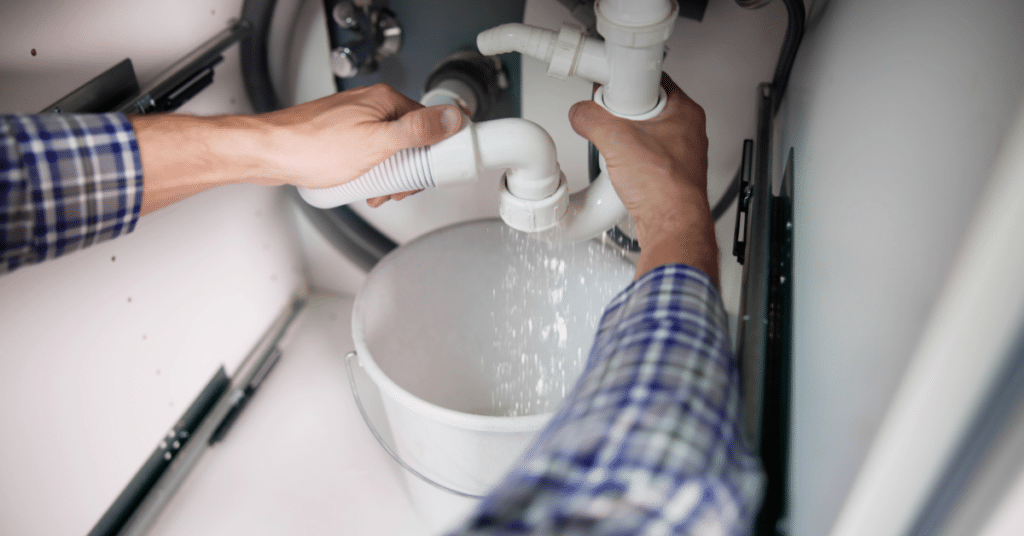
Look for two valves under your sink and turn them clockwise until the water is turned off. Remove everything under the sink and clean the area, then place a catch bucket under the drain pipes.
2. Identify the source of the leak.
Wipe the pipes dry and run the water down the drain. You should be able to pinpoint the source by watching closely where the water starts dripping. If the leak starts at the connections, it may be due to loose joints or worn seals. If it begins somewhere in the middle of hoses and pipes, you will need to replace the leaking section with a new one.
3. Apply the appropriate fix.
Different kitchen sink leaks require different solutions, but here’s what you can do depending on the leak’s source:
- P-trap or drain pipe connections. Start by tightening the nuts, but don’t wind them too tight, especially in plastic pipes, as the pipes may crack. Run the water again, and if the leak remains, disassemble the connection and check for damage in the gasket or washer. Replace it with a new one of the same size, reassemble, and test for leaks. You may need to tighten the nuts if the leak persists.
- Sink strainer. Disassemble the undersink pipe assembly and remove the strainer. Clean the old putty off the strainer’s underside and sink basin. Apply new putty to the underside edge of the strainer flange to reseal. Reinstall the strainer and tighten the retaining nut until it squeezes out the excess putty.
- Water supply line. Tighten the connections and see if it solves the problem. If not, and if you find the leaking starts somewhere in the mid-section of the hose, you will have to replace the line. If the leak starts at the shut-off valve, replace the entire valve.
4. Test and monitor.
Turn your faucet on and run water down the drain to see if your repair attempt stopped the leak. If the leak persists, re-examine the connections and see if you need to redo your work or replace a different component.
When In Doubt, Call a Professional

Note that this DIY method is only advisable for leaks caused by minor issues or loose plumbing. If the leaking is caused by extensive damage to the pipes or the sink itself, you will need to call a licensed plumber. They will have the know-how to deal with major plumbing issues, and have the right tools for the job. Meanwhile, if the leak has already caused widespread water damage to your kitchen, you might want to call a kitchen remodeling company instead.
How Much Does It Cost To Fix a Leak Under a Kitchen Sink?
Repairing a kitchen sink will cost between $250 and $850. This is based on national plumbing repair rates—a job under sink leak repair falls under. The cost varies according to the complexity of the work. Meanwhile, for DIY tasks involving minimal work and zero alteration or replacement, the repair expense could be negligible.
Final Thoughts
Kitchen sink leak repairs can range from simply wrenchwork to complex kitchen overhauls. Catching the leak early and immediately addressing the problem is key to an easy fix. Left undetected, small leaks can turn into major damage to your cabinet and subfloor. Check your sink regularly, learn to handle small leaks, and know when to call the pros.